

























How to Get to Heaven From Belfast: McGee’s Female-Led Mystery Garners Rave Reviews

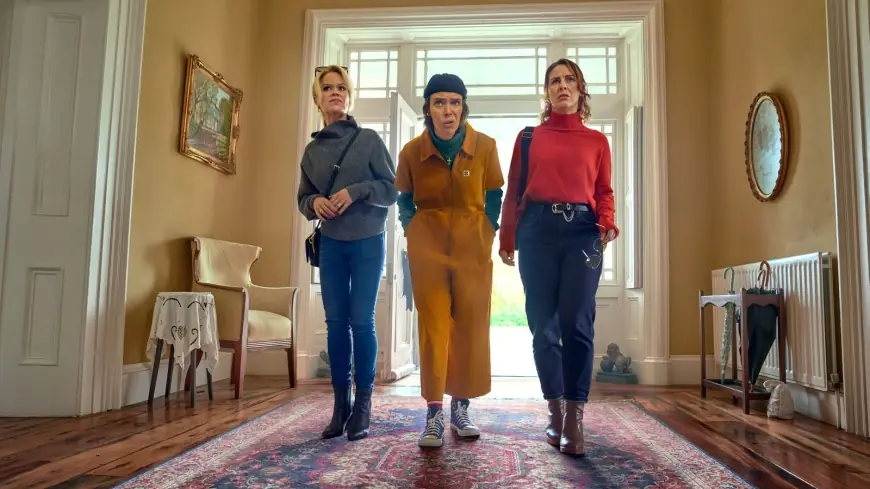
Lisa McGee’s latest series lands as a bracing, chaotic and often very funny murder caper that leans into the writer’s sharp Northern Irish voice. The show reunites old friends after the apparent death of a fourth member of their teen gang and mixes whip-smart comedy with a twisting, sometimes eerie mystery — a formula that is already earning enthusiastic reaction from critics and viewers.
Plot, tone and a deliberate female focus
The series follows three middle-aged women — Dara, Saoirse and Robyn — who are pulled back together when their missing childhood friend Greta is mourned at a local funeral. Flashbacks and shared secrets from a fire in a forest shack two decades earlier form the emotional and narrative backbone, while the present-day investigation reveals simmering resentments, controlling partners and long-buried loyalties. Key cast members include Caoilfhionn Dunne, Roisin Gallagher, Sinéad Keenan and Natasha O’Keeffe, with compelling turns from Emmett J Scanlan and Michelle Fairley in supporting roles.
McGee has deliberately shaped the show as a female-led story that embraces messiness and humour as much as tension. She hassaid she’s long been obsessed with murder mysteries and wanted to marry that interest with her trademark comic instincts, creating a series that at once pokes fun at genre tropes and leans confidently into them. The result is a tone that can veer from slapstick warmth to genuinely unnerving moments, anchored by strong character work.
Critical reaction and standout performances
Early assessments highlight the show’s momentum and performances. One review described the series as a “frenetic, witty caper” and singled out an especially sensational performance from one of the leads. Critics have praised the way the narrative balances brisk plotting with quieter scenes that allow the three protagonists to feel lived-in and complex, and many have noted how the mystery unfolds with a pace that rarely lets the energy drop.
Beyond the central trio, the portrayal of small-town dynamics and the local police chief’s unnervingly watchful presence add additional layers. Reviewers have flagged the writing’s knack for blending sharp, often very funny dialogue with darker undercurrents — making the show feel both familiar to fans of McGee’s earlier work and distinct in its ambitions.
Background and creative approach
McGee has drawn on personal memory and a lifetime of storytelling, describing an early habit of staging plays in her neighbourhood and a longstanding affection for mystery shows. Elements of her upbringing in Northern Ireland inform the show’s texture: small details of daily life that feel specific and lived-in, and an approach to humour that leans on truth rather than pastiche. She has said she wanted to make the project very much in her own voice, prioritising female perspectives and a messy, human heart.
For audiences, the series offers both the pleasures of a classic whodunit and the warmth of well-drawn friendships tested by time and trauma. Interest in how to get to heaven from belfast has spiked as viewers discover a show that privileges character as much as mystery, while still delivering twists that keep you guessing.
Released this season on a major streaming platform, the series is already shaping up as one of the more distinctive debuts of the year: a genre piece that wears its humour proudly and lets its female characters drive the action.