
























Jesse Jackson, civil rights leader and pioneering Black presidential candidate, dies at 84

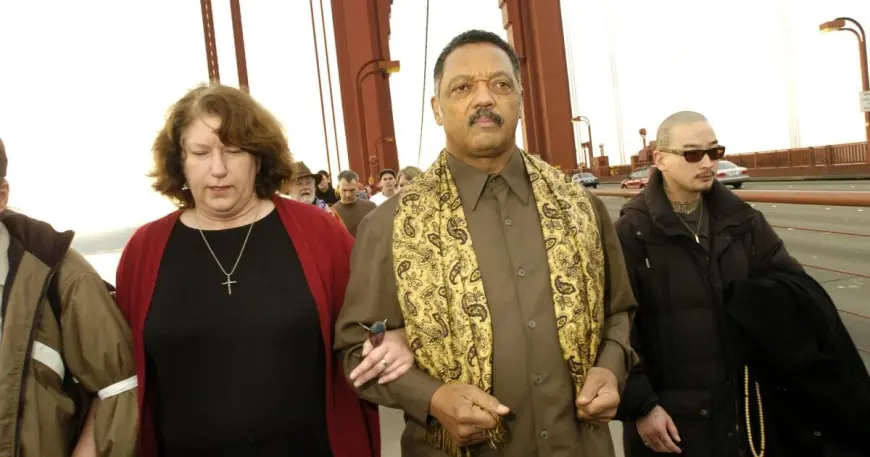
The Rev. Jesse Jackson, a fixture of the civil rights movement and Democratic politics for more than half a century, has died at 84. His family said he spent his final hours at home surrounded by loved ones, and they urged supporters to honor his legacy by continuing the pursuit of justice and equality.
From Greenville to the national stage
Born on Oct. 8, 1941, in Greenville, South Carolina, Jackson rose from the segregated Jim Crow South to become one of the most recognizable voices for Black economic and racial equality in modern American history. His activism began early: as a teenager he joined a peaceful protest at the white-only Greenville public library on July 16, 1960, an action that helped dismantle segregation in the city’s library system. That episode, and others from his youth, informed a career spent challenging institutional discrimination.
Jackson left the University of Illinois after his freshman year and transferred to a historically Black college, where he excelled as a student leader and athlete. His charisma, rhetorical skill and organizing instincts brought him into the broader civil rights movement, where he worked alongside its leaders and later became a national figure in his own right.
Campaigns, rhetoric and a lasting imprint
In the 1980s Jackson transformed his national profile into presidential politics. In 1984 he declared "our time has come" and drew roughly 3. 5 million votes in the Democratic primaries, becoming the first Black candidate for president to attract a major following. Four years later, running again on the slogan "Keep hope alive, " he won about 7 million primary votes and provided one of the emotional high points of the 1988 convention with a powerful speech that resonated with many working-class and marginalized voters.
Jackson’s talent for memorable phrasing and moral appeals — lines such as "I am... somebody" — made him a galvanizing presence. He spoke directly to people who felt overlooked by politics, absorbing broader grievances and reframing them as demands for dignity and inclusion. That approach won him ardent supporters and fierce critics; his career also included controversies and personal failings that drew scrutiny in later years.
Beyond electoral politics, Jackson maintained a decades-long role as a negotiator and advocate, pressing for improved health care access, economic opportunity and criminal justice reform. During the COVID-19 pandemic he highlighted racial disparities in care and outcomes, arguing that long histories of inequality shaped why some communities fared far worse than others.
Illness, family and legacy
Jackson had lived with the neurodegenerative disorder progressive supranuclear palsy for more than a decade after an initial Parkinson’s diagnosis. He was hospitalized with COVID-19 on at least two occasions in recent years. In his later interviews he reflected on the burdens and breakthroughs of his life, calling himself a trailblazer who had faced doubt about whether a Black candidate could compete on the national stage.
His family described him as "a servant leader — not only to our family, but to the oppressed, the voiceless, and the overlooked around the world. " They asked that his memory be honored by continuing the fight for the values he championed: justice, equality and love.
Jackson’s influence on American public life is deep and complicated. He helped open political space for future generations of Black leaders and provided a voice for millions who felt sidelined by mainstream politics. At the same time, his career embodied the tensions of visibility, scrutiny and the high expectations often placed on a small number of public figures to speak for vast and diverse communities.
As institutions and activists weigh his contributions, many will remember Jackson as a tireless organizer, an electrifying speaker and a relentless advocate for those he called the overlooked. His passing marks the end of a distinct era in American civil rights and electoral politics, while his life's work continues to shape debates over equality and power.