























Nancy Guthrie Update: Sheriff Clears Family as Search Enters Third Week and Investigators Focus on New Evidence

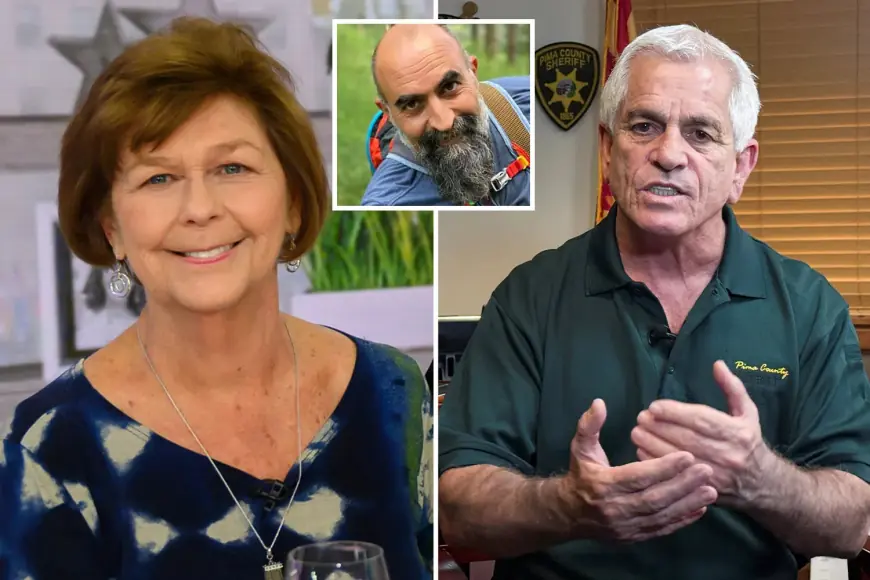
Authorities in southern Arizona issued a major update Monday, February 16, 2026 ET in the disappearance of 84-year-old Nancy Guthrie: the sheriff publicly cleared her immediate family of any involvement and said investigators now consider them victims in an ongoing kidnapping investigation.
Nancy Guthrie was last seen the evening of Saturday, January 31, 2026 ET, after returning to her home near Tucson following dinner with relatives. She was reported missing the next day when she did not appear for a planned virtual church gathering. Officials have said they do not believe she left voluntarily.
What happened: the latest confirmed developments
The most consequential shift in the case is the formal decision by law enforcement to remove the family from suspicion. That step both narrows the investigative focus and aims to tamp down speculation that can derail tips, intimidate witnesses, and intensify harassment of relatives.
Investigators continue to work through physical evidence and digital clues. Key items and lines of inquiry discussed publicly in recent days include:
-
Doorbell-camera footage showing a masked individual near the home in the early morning hours of Sunday, February 1, 2026 ET
-
A glove recovered near the home believed to be connected to the person seen on video, with DNA testing underway
-
Expanded searches and evidence collection around the neighborhood and areas tied to the timeline of Nancy Guthrie’s last known movements
-
A false-claim incident in which a person was arrested after allegedly impersonating a kidnapper and attempting to exploit the case
Officials have not identified a suspect, announced an arrest tied to the abduction, or confirmed a single dominant theory.
What’s behind the headline: why clearing the family matters
Clearing relatives is not just a human-interest detail; it’s a strategic inflection point.
Context and incentives:
-
In high-profile kidnappings, investigators often scrutinize family and close contacts early because those relationships provide opportunity, knowledge of routines, and leverage.
-
Public suspicion can also choke off cooperation from peripheral witnesses who fear getting pulled into a circus or wrongly blamed.
By clearing the family publicly, the sheriff is trying to achieve three goals at once:
-
Protect the relatives from escalating public accusations
-
Encourage more open cooperation from anyone who interacted with the family without fear of being lumped into a “family did it” narrative
-
Re-center tips on the timeline, the neighborhood, and the unidentified person seen on video
Stakeholders:
-
Law enforcement needs credible tips and clean evidence collection.
-
The family needs privacy, safety, and the fastest possible recovery of Nancy Guthrie.
-
The local community needs clarity about whether there is an ongoing threat.
-
Potential witnesses need reassurance that coming forward won’t make them targets online.
The missing pieces: what investigators still haven’t answered
Despite the high visibility, the case remains defined by unanswered questions that will determine whether it breaks open:
-
Where exactly did the abduction occur: inside the home, at the entry, or outside?
-
Was this targeted or opportunistic?
-
Is the masked individual on camera definitively linked to Nancy Guthrie’s disappearance, or a separate suspicious presence?
-
What does the forensic evidence show once lab results return, especially DNA and any trace evidence tied to the home’s entry points?
-
Was there any credible communication from a kidnapper, or have all alleged messages been false or unverified?
Until those gaps close, it is difficult to separate noise from signal, which is why authorities are emphasizing verified evidence and actionable tips.
Second-order effects: the risks of a headline-driven investigation
A nationally watched kidnapping can create pressure that changes behavior on all sides:
-
Tip volume explodes, but tip quality often drops as rumor spreads.
-
Con artists emerge quickly, including impersonators and ransom scammers.
-
Witnesses may hesitate to come forward if they fear becoming public characters in the story.
-
The family may become hyper-visible, complicating grief, sleep, and decision-making.
That’s why the public clearing of the family is also a containment move: it reduces one of the biggest engines of misinformation in these cases.
What happens next: realistic scenarios and triggers to watch
Over the next several days, the investigation is likely to move in one of these directions:
-
A suspect picture sharpens if DNA from the recovered items matches a known individual or connects to a previous case.
-
A targeted-theft theory gains traction if investigators confirm forced entry patterns, missing property, or a clear burglary pathway.
-
The case pivots to a known-contact lead if the timeline reveals a recent interaction that only someone in Nancy Guthrie’s circle would know.
-
A broader public-safety alert escalates if the masked figure is linked to additional incidents in the area.
-
Investigators announce a focused tip request, such as neighborhood camera footage for a narrow time window, if they identify a vehicle or route of travel.
For now, the core update is clear: the family has been ruled out publicly, the case remains active with no named suspect, and investigators are leaning heavily on physical evidence and video leads as the search enters its third week.