





















Renowned Documentarian Frederick Wiseman, Icon of Institutional Films, Dies at 96

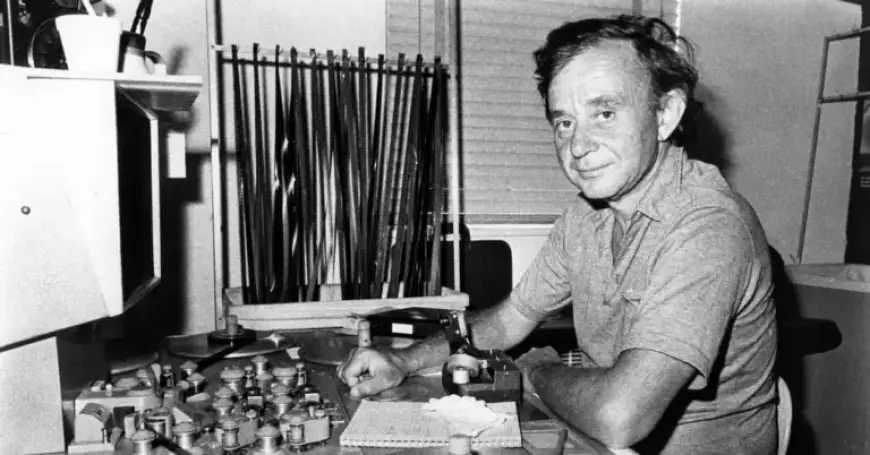
Frederick Wiseman, a seminal figure in American documentary filmmaking, passed away at 96 in Cambridge, Massachusetts. His family confirmed his death through Zipporah Films, a company he established in 1971. Renowned for his objective depictions of social and cultural institutions, Wiseman received an honorary Academy Award in 2016.
Legacy of Institutional Filmmaking
Wiseman’s work transcended traditional documentary labels. He preferred the term “films,” arguing that “documentary” limited the scope of his storytelling. His hallmark style was the vérité documentary, characterized by observational filmmaking. Despite his claims of neutrality, his films often stirred controversy.
Groundbreaking Works
- Titicut Follies (1967) – A stark portrayal of a Massachusetts psychiatric hospital, notable for being the only film banned in the U.S. for non-obscene reasons.
- High School (1968) – An insightful look at the American education system.
- Welfare (1975) – A critical examination of social welfare systems.
- Public Housing (1997) – An exploration of urban living conditions.
- Domestic Violence (2002) – A poignant depiction of a serious social issue.
- In Jackson Heights (2015) – Celebrated for its rich representation of a diverse New York neighborhood.
- Ex Libris: The New York Public Library (2017) – lauded as one of his finest works.
- City Hall (2020) – A detailed look at urban governance in Boston, lasting four and a half hours.
- Menus-Plaisirs — Les Troisgros (2023) – A four-hour examination of a prestigious French restaurant.
Early Life and Education
Born on January 1, 1930, in Boston, Wiseman was influenced by a family deeply rooted in storytelling. His father, Jacob, was a lawyer who aided Jewish immigrants, while his mother, Gertrude, had aspirations of being an actress.
After a lackluster academic start, he attended Williams College and Yale Law School. His early experiences with law shaped his later filmmaking, particularly during his time teaching at Boston University.
Film Career Development
Wiseman’s cinematic journey began with his production role in The Cool World (1963). This experience inspired him to direct. His notable documentary style features no narration and captures institutions’ inner workings through a lens of accessibility.
Artistic Philosophy
Wiseman viewed his films as reflections of everyday life rather than exposés of societal flaws. He emphasized that his work aimed to create dramatic structures from ordinary experiences, examining how institutions reflect broader societal trends.
His distinctive filmmaking approach involved extensive shooting, often resulting in films with a high footage-to-runtime ratio. For instance, La Danse comprised around 150 hours of footage condensed into a 2-hour 45-minute film.
A Lasting Impact
- Wiseman is survived by his two sons, David and Eric, and his three grandchildren.
- He was married to Zipporah Batshaw Wiseman until her death in 2021.
- A recipient of numerous accolades, including the Golden Lion for lifetime achievement from the Venice Film Festival in 2014.
Frederick Wiseman leaves behind an extraordinary legacy as a pioneer in institutional films, shaping the documentary landscape for future generations. His unique perspective and artistic vision will continue to inspire filmmakers and audiences alike.