




















Michael Jordan’s NASCAR Team Wins the Daytona 500 as Tyler Reddick Steals the Victory on the Final Lap

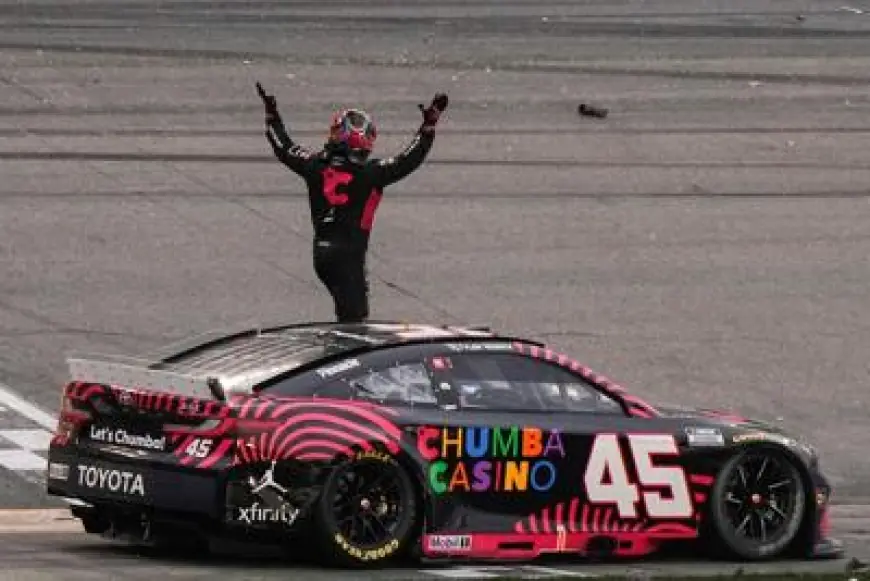
Tyler Reddick won the 2026 Daytona 500 on Sunday, February 15, 2026 ET, delivering a landmark victory for the team co-owned by Michael Jordan and Denny Hamlin and answering the weekend’s biggest question in one name: Reddick. The win came in classic Daytona fashion, decided in the closing sprint and defined by timing, drafting partners, and a last-lap move that left almost no room for a counterpunch.
Reddick’s victory is also a rare kind of headline in modern stock-car racing: a global sports icon’s ownership investment paying off on the sport’s biggest stage, with the “Great American Race” trophy becoming a business milestone as much as a competitive one.
Daytona 500 results 2026: who won, and how the finish shook out
Reddick took the checkered flag after leading only the final lap, edging Ricky Stenhouse Jr. at the line. Joey Logano finished third, followed by Chase Elliott in fourth and Brad Keselowski in fifth. The margin was tight enough to underline the central truth of Daytona: you can do almost everything right for hours and still lose in the last few hundred yards.
The path to that finish began before the green flag. The starting lineup placed Kyle Busch on the pole with Chase Briscoe alongside him on the front row, setting up a field that featured early track-position urgency and late-race opportunism. But as the race unfolded, the familiar superspeedway pattern emerged: long stretches of pack racing, constant lane formation, and a final sequence where clean air and a committed push matter more than who looked “best” at mid-distance.
Michael Jordan at Daytona: why this win hits differently
Jordan’s presence is not a novelty anymore; it’s part of the modern NASCAR landscape. But the Daytona 500 is the one trophy that changes how a team is discussed for years. For a relatively young organization, winning the season’s most visible race validates everything that’s harder to measure week to week: engineering decisions, driver development, sponsor confidence, and the ability to execute under the brightest lights.
Behind the celebration is a deeper incentive structure. Team ownership in racing is both sporting ambition and long-horizon business strategy. A Daytona 500 win can improve sponsor leverage, strengthen recruiting for top-tier personnel, and turn a team from “promising” into “proven” in a single afternoon. It also helps explain why Jordan has stayed visibly engaged: the upside is not just emotional, it’s structural.
Tyler Reddick, Bubba Wallace, and the 23XI spotlight
Reddick’s win lands as a franchise-defining moment for the Jordan-Hamlin operation, but it also intensifies attention on the team’s broader goals. Bubba Wallace remains a central figure for the organization’s identity and visibility, and a Daytona win for the team raises expectations across the board. The internal dynamic shifts from “can this team contend on the biggest days?” to “how often can this team contend everywhere?”
That shift matters because Daytona wins can be misunderstood. They require skill, but they also amplify variance. The real test is what follows: whether the team turns the attention into sustained performance on intermediate tracks, road courses, and short tracks where control replaces chaos.
Tyler Reddick’s family storyline adds another layer to the moment
Reddick’s victory also carried a personal dimension that resonated across the garage. In recent months, his family faced a serious medical scare involving his infant son, Rookie George, who underwent major surgery in October to remove a chest tumor that affected vital function. The child’s recovery has been described as strong, and the family was present to celebrate at the finish.
That context doesn’t change what happened on track, but it changes how many people hear it. Sports fandom is fueled by narrative, and this is the kind that cuts through the usual noise: relief after fear, joy after a season of stress, and a public moment that feels earned beyond the standings.
What we still don’t know: the details that will define the next two weeks
The Daytona 500 answers “who won” instantly, but it leaves key questions that matter more for the season:
-
How much of the finishing order was late-race positioning versus repeatable speed?
-
Which teams showed the best long-run control before the final scramble?
-
How will rivals adjust drafting alliances now that one organization has proven it can close the deal at Daytona?
The other missing piece is momentum itself. Superspeedway success can inflate expectations, and it can also distract teams from the grind of weekly execution. The smartest organizations treat Daytona as a trophy and a data point, not a forecast.
What happens next: realistic scenarios and triggers
-
Reddick’s win becomes a launchpad if the team follows it with top-10 pace on non-drafting tracks within the next three races.
-
The victory becomes a standalone highlight if performance reverts to the middle of the pack once the schedule shifts away from superspeedways.
-
Sponsor and partnership activity accelerates if the team sustains visibility through consistent stage points and clean finishes.
-
Internal pressure rises if the organization struggles to match the Daytona moment with weekly discipline, especially in pit execution and late-race strategy.
-
Rival teams respond with more aggressive drafting tactics against the Jordan-Hamlin group, changing who gets help and who gets boxed out in the next pack finish.
For fans searching “who won the Daytona 500 today” or “Daytona 500 winner 2026,” the answer is straightforward: Tyler Reddick. The bigger story is what that single lap led at the end might unlock for a team built to be more than a headline.