
























Pawtucket Shooting at Dennis M. Lynch Arena Shatters Youth Hockey Game, Leaves Three Dead and Three Critically Injured

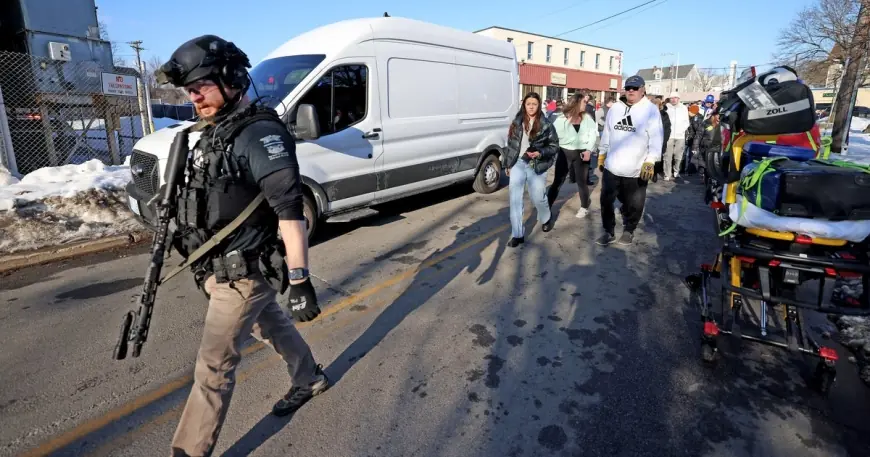
A shooting at the Dennis M. Lynch Arena ice rink in Pawtucket, Rhode Island turned a boys high school hockey game into a crime scene Monday, February 16, 2026, after gunfire erupted inside the venue at about 2:30 p.m. ET. Authorities said three people died, including the suspected shooter, and three others were hospitalized in critical condition.
Police described the incident as targeted and said early indicators point to a family dispute rather than a random attack. Names of victims were not immediately released as investigators worked to notify relatives and confirm identities.
What Happened at the Pawtucket Ice Rink
The shooting unfolded during a crowded youth hockey event, with players, coaches, and families in attendance. Witness accounts described sudden panic as spectators rushed for exits and sought shelter nearby while officers secured the area and began evacuations.
Investigators said the suspected shooter also died at the scene, with preliminary information indicating a self-inflicted gunshot wound. The arena and surrounding roads were shut down for hours as detectives processed evidence, interviewed witnesses, and reviewed video to reconstruct the timeline.
Local and federal law enforcement resources were called in to assist, reflecting both the scale of the scene and the urgency of clarifying motive, weapon sourcing, and any potential warning signs.
Behind the Headline: Why This Case Is Being Framed as Targeted
The early emphasis on a family dispute matters because it shapes both public risk assessment and investigative priorities. In a targeted incident, detectives focus quickly on relationships, custody issues, recent disputes, restraining orders, and digital communications that might explain why the attack occurred at a specific time and place. It also influences how communities interpret safety at youth sports, where families expect open access and a low-threat environment.
The incentives are grim but real. A public venue connected to a child can be chosen because it guarantees proximity, visibility, and emotional impact. That is why security at youth sports has become a growing concern nationwide: open doors and predictable schedules create vulnerability unless organizations invest in screening, controlled entry, and rapid response training.
Stakeholders include far more than the immediate victims. Students who witnessed violence during a school-affiliated game may face lingering trauma. Coaches and school administrators must manage grief, counseling, and communication with families. City leaders face pressure to explain how weapons entered the building and what changes will be made before events resume. And the rink itself becomes a focal point for community mourning and policy debate.
Second-order effects can arrive quickly. Youth leagues may pause schedules, implement bag checks, or require additional security, raising costs that smaller programs struggle to absorb. Schools may tighten visitor policies and reconsider how games are staffed. Families may reduce attendance, altering the culture and economics of local youth sports.
What We Still Don’t Know
Key details remained unconfirmed late Monday night, February 16, 2026, ET, and will likely determine how the story evolves:
-
The identities of the deceased and injured, and their relationship to one another
-
The exact sequence of events inside the arena, including where the shooter entered and how the confrontation began
-
The type of weapon or weapons used and how they were obtained
-
Whether there were prior threats, restraining orders, or warning signs that could have triggered intervention
-
The full medical outlook for the three critically injured patients
Because early casualty figures can shift as hospitals update conditions and investigators finalize timelines, official updates in the next 24 to 48 hours will be crucial.
What Happens Next: Realistic Near-Term Scenarios
-
A clearer motive narrative emerges quickly
Trigger: investigators confirm relationships and recover communications that explain the shooter’s intent and planning. -
Security policies change for youth hockey and school events across Rhode Island
Trigger: city, school district, and league leaders announce immediate screening, controlled entry, or added police details. -
Charges and legal findings expand beyond the shooter’s death
Trigger: investigators pursue any unlawful purchase, transfer, or storage issues tied to the firearm, or any failures to comply with court orders. -
Mental health response becomes the central community effort
Trigger: schools and leagues mobilize counseling support as more witnesses report stress reactions after the incident. -
Event scheduling and venue operations shift for weeks
Trigger: the rink undergoes extended closure for investigation, repairs, or security upgrades, affecting multiple teams and school calendars.
Why It Matters
The Pawtucket shooting is not only a local tragedy but a sharp reminder of how quickly everyday community spaces can become flashpoints when personal disputes collide with easy access to lethal force. The targeted framing may reduce the fear of an indiscriminate attacker, but it does not erase the broader vulnerability of open, family-centered venues.
In the days ahead, the most consequential questions will be practical: how the shooter got in, how the weapon was brought to a youth event, what safeguards were missing, and what changes can be implemented without pricing families out of participation. The answers will shape not just the investigation, but how Rhode Island communities decide to protect the spaces where children gather to play.