























Rupert Lowe launches Restore Britain as far‑right challengers coalesce

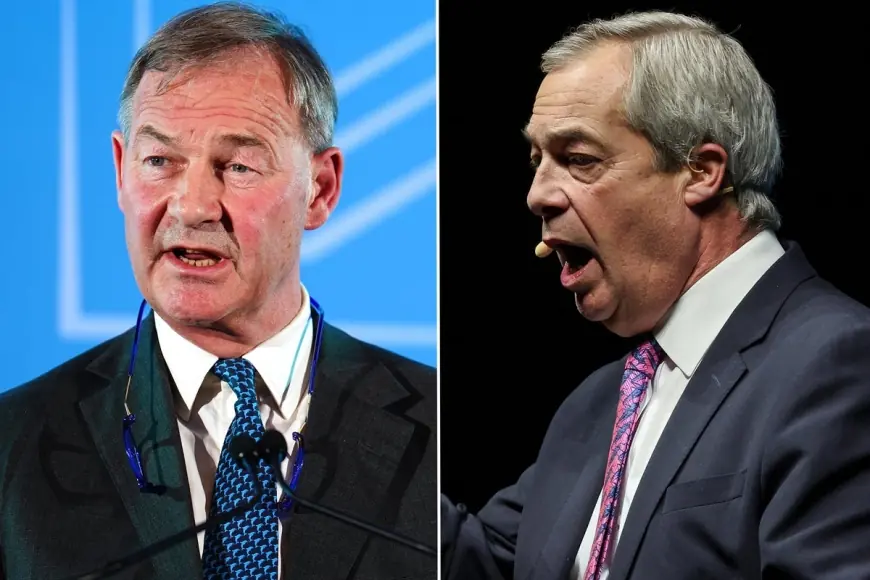
Rupert Lowe formally unveiled Restore Britain as a national political party at a packed event in Great Yarmouth, positioning the new grouping as a harder‑line alternative to other right‑of‑centre forces and drawing immediate interest from a cluster of activists and smaller parties. The move risks fragmenting an already crowded right‑wing landscape and could have tactical consequences in tightly fought constituencies.
Local launch turns national with hard‑line pledges
The launch in a Victorian theatre drew hundreds of supporters for what began as a local “Great Yarmouth First” gathering before Lowe announced Restore Britain would expand beyond Norfolk. Lowe, who represents Great Yarmouth and now sits as an independent, set out a combative anti‑immigration platform during the event, telling the crowd that “millions will have to go” as part of a mass deportation policy. He introduced a slate of councillors who will contest the next county council elections under the local banner, and said the national party will act as an umbrella for locally based groups.
The new party grows out of a movement Lowe formed after his suspension from a national populist outfit last year. That split has left Lowe with a reputation as a maverick and has attracted a cohort of younger activists who favour a more exclusive, ethnically defined vision of national identity. Several public figures and influencers on the right have voiced approval or signalled support in recent days, and one prominent tech entrepreneur’s amplification of Lowe’s message on social media has raised the new party’s profile.
Coalition building on the far right raises stakes for Reform and Conservatives
Within 48 hours of the launch, other hard‑right groupings signalled an openness to collaboration, with at least one party saying it would consider merging. Party organisers argue that Reform has drifted toward respectability and that Restore Britain will reclaim a more uncompromising stance on immigration and national identity. One former deputy leader on the right described the new effort as “the old Reform” in spirit and has channelled funding into his own small campaign vehicle.
Strategists across the political spectrum are watching closely because even modest vote splits on the right could flip dozens of marginal seats. After the last general election many constituencies were decided by margins under a few thousand votes; in that environment, a small hard‑line challenger can be a decisive spoiler. Conservative figures who had previously lent their names in an advisory capacity to Lowe’s movement have indicated they will step away now that it has become a formal party, underscoring the reputational and tactical sensitivities at play.
Outlook: a pebble that could make ripples
Restore Britain remains organisationally small but could punch above its weight if it succeeds in drawing together activists, local campaigns and sympathetic donors. Its ability to field candidates beyond Norfolk and coordinate with other far‑right actors will determine whether it is a long‑term political force or a transient irritant for larger parties on the right. Analysts note that the arrival of another hard‑line grouping has already altered campaign dynamics in coastal and former industrial seats that are fertile ground for anti‑establishment messaging.
For now, the debut of Restore Britain crystallises a broader question facing the right: whether unity behind a single populist brand is attainable, or whether competition among challengers will dilute their overall parliamentary impact. Lowe’s next steps — including candidate recruitment, policy development and local alliances — will reveal whether the movement can broaden its appeal beyond its current activist base and convert high‑energy shows of support into durable electoral gains.