

























Olympic hockey: United States one point from Group C bye in showdown with Germany

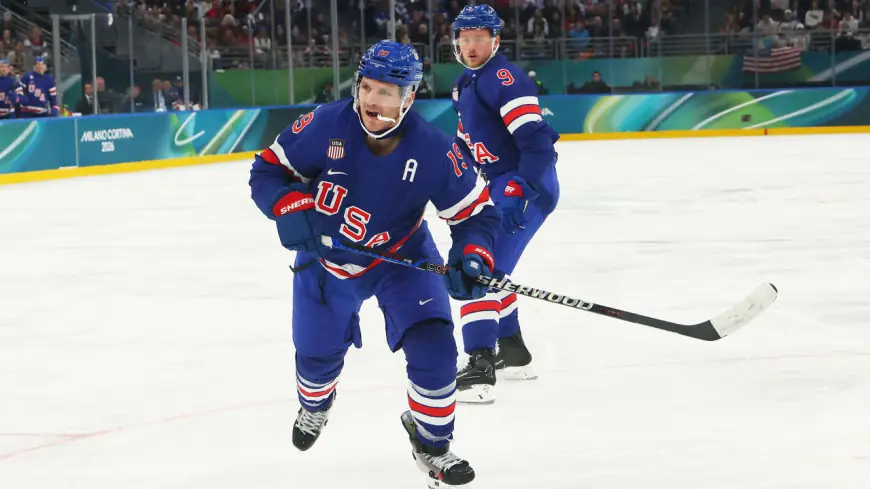
The United States arrives at the Milano Cortina 2026 preliminary finale needing just one point to secure first place in Group C and a direct berth into the quarterfinals. The decisive matchup with Germany is set for Sunday at 3: 10 p. m. ET, and the Americans are bracing for a challenging opponent carved largely around a handful of elite impact players.
What’s at stake in Milan
It’s a simple scoreboard equation for the U. S.: any point — earned through a regulation win, an overtime victory or even an overtime loss — guarantees top spot in Group C and the coveted bye into the quarterfinal round. The team arrives with a 2-0-0-0 record after a 6-3 victory over Denmark, while Germany sits with a 1-0-1-0 mark following a close loss to Latvia.
But simplicity on paper does not mean the Americans are taking the contest lightly. The mechanics of tournament advancement mean a regulation loss by the U. S. opens the door for goal-differential scenarios and leaves the outcome dependent on the result of the Latvia–Denmark game. U. S. coach Mike Sullivan framed the mindset succinctly: keep focus on execution and heed the opponent’s threats.
Germany’s concentrated star power
Germany’s roster may be light on depth measured by top-league representation, but it is heavy on game-changing talent. The team features several high-caliber forwards and a top-level goalkeeper who can tilt the balance of a tight contest. Those individuals can turn turnovers, extended possession or special-teams chances directly into scoring opportunities.
U. S. leaders make no secret of the respect they hold for Germany’s top names. The German attack includes an established scorer with a recent history of elite production, a No. 1-caliber defenseman who quarterbacks the blue line, and dynamic forwards who create offense at even strength and on the power play. That mix forces opponents to balance aggressive puck pursuit with disciplined defensive structure and careful penalty avoidance.
U. S. approach: discipline, matchups and the margin for error
For the Americans, the path to clinching the group is straightforward in concept: play the U. S. game, limit costly penalties, and control the areas that lead to high-danger chances. Matthew Tkachuk emphasized a wins-first mentality — whatever the scoreline needs to be — and highlighted the team’s readiness to do the small things that eke out results in tournament play.
Veteran center Dylan Larkin pointed to matchup awareness as a key detail. Familiarity with Germany’s top contributors, including teammates who face them regularly during the club season, gives the U. S. some tactical advantages, but it does not change the underlying work required in front of the net and along the boards.
Special teams will loom large in a game that could be decided by a single goal. The Americans know that taking penalties hands chances to a German group that can be lethal on the power play if given time and space. Conversely, the U. S. depth attackers and transition speed can create difficulties for a German defensive unit that must defend for extended stretches.
With the quarterfinal bye dangling in sight, the U. S. will aim to control tempo and protect the lead if they secure it, while Germany will look to leverage its top-end talent to force errors and generate the kind of momentum swings that upend tightly matched games.
Sunday’s result will define the final seeding in Group C and set the tone for the knockout phase. For now, the United States holds all the leverage: one point and the team will be headed straight to the quarterfinals.