
























Federica Brignone storms to giant slalom gold, claims second Alpine skiing title at 2026 Winter Olympics

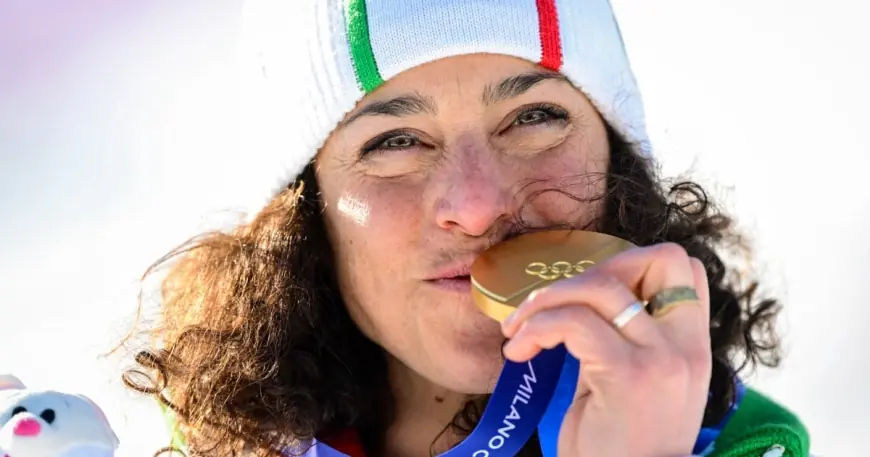
Federica Brignone added a second gold medal to her tally at the home Games, producing a commanding giant slalom performance on the Olympia delle Tofane slopes that left rivals trailing and sent the Cortina crowd into raptures. The result further reshaped narratives in the 2026 winter olympics alpine skiing competition, as a high-profile rival battled to regain confidence after a serious crash last season.
Seismic margin and a shared silver on a sunlit course
Brignone completed the giant slalom with a margin of 0. 62 seconds over the next-best finishers, an unusually large gap in a discipline decided by hundredths. Sweden’s Sara Hector and Norway’s Thea Louise Stjernesund shared the silver medal after posting identical combined times, dropping to their knees in the finish area in a striking gesture of respect before Brignone.
The Italian’s lead after the first run—about three-tenths—allowed her to ski a measured but aggressive second run in pristine conditions among the jagged Dolomite peaks. Her teammate Lara Della Mea was also close behind in the cluster of athletes separated by mere hundredths, underlining how dominant Brignone’s two runs were relative to the rest of the field.
From near immobility to Olympic double champion
The victory capped a remarkable comeback. Roughly 300 days earlier Brignone suffered a devastating crash that broke her left knee in multiple places and tore her anterior cruciate ligament. She underwent three operations and had plates and screws fitted before enduring seven months of intensive rehabilitation. The comeback now yields a second gold at these Games and brings her Olympic medal total to five — the most by any Italian skier.
“I crossed the finish line and I said: ‘I don’t know if it’s enough, ’” Brignone said after the race. “Then I heard the crowd and I said: ‘Oh, maybe yes. ’ Then I turned around and I saw number one. ” Fans in the grandstands responded with sustained chanting and cheers, turning the medal ceremony into a celebration of a hometown hero who has pushed through persistent pain and major surgery to reach the top of the podium twice in a matter of days.
Mikaela Shiffrin's struggles and the bigger picture for alpine skiing
The broader storyline in Cortina takes in the difficulties of another dominant figure. Mikaela Shiffrin, who has won more World Cup races than any other skier, finished 11th and nearly a full second off Brignone’s winning time. The American has openly wrestled with physical and psychological fallout since a violent crash in November 2024 that caused life-threatening injuries; she has described working through post-traumatic stress while relearning aspects of racing she once took for granted.
Shiffrin’s teammate commented that Sunday’s giant slalom was “one of the greatest shows of GS skiing we’ve had in a really long time, ” a nod to Brignone’s technical mastery and the spectacle of the race itself. For Shiffrin, redemption remains possible in the slalom later in the program, the event that has usually produced her best Olympic outcomes.
Brignone’s double-gold performance has shifted momentum in the alpine skiing program at these Games: it is both a personal triumph over injury and a reminder of how quickly fortunes can change in elite winter sport. With the Dolomites as backdrop and a vociferous home crowd in attendance, Cortina has produced moments that will be replayed in Olympic lore for years to come.