





















Trump Plans Executive Order to Enforce Voter IDs Before Elections

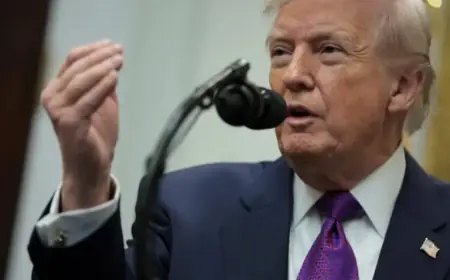
President Donald Trump has announced plans for an executive order that would mandate voter identification before issuing ballots. This move reflects his frustration with Congress for not advancing voter ID laws. Trump’s recent social media statements emphasize the urgency of the situation.
Details of Trump’s Executive Order on Voter IDs
In his post, Trump stated, “This is an issue that must be fought, and must be fought, NOW.” He suggested he would outline legal reasons to enforce voter ID laws through an executive order soon. The legal basis for this action remains unspecified.
This announcement follows the House of Representatives’ recent passage of a bill requiring proof of citizenship for voter registration. However, this legislation may not progress in the Senate.
Concerns About Voter Fraud and Election Integrity
Trump and several Republican allies allege widespread voter fraud, although studies show it is exceedingly rare. Additionally, Trump has persistently claimed false victories in the 2020 presidential election, despite bipartisan rejection from election officials.
The upcoming midterm elections are a focal point for Trump. He sees potential risks in losing the House of Representatives to the Democrats, fearing that this could pave the way for a possible third impeachment. Trump has already been impeached twice during his presidency—once for abusing power and again for instigating an insurrection on January 6, 2021.
Public Support for Voter ID Laws
Trump is urging Republicans to prioritize voter ID laws in their campaign strategies. A 2025 Pew Research Center study indicated that 95% of Republicans and 71% of Democrats support requiring photo identification for voting. However, voter ID laws face opposition from voting rights advocates, particularly due to concerns about accessibility for marginalized communities.
- Approximately 36 states have implemented various voter ID requirements.
- The midterm elections are influencing renewed discussions on voting legislation.
The Constitutional Debate Over Elections
The U.S. Constitution designates states as responsible for managing election processes. Yet, Trump has suggested that the federal government should exert greater control over elections, citing the need for a national approach.
Amid these discussions, the newly introduced Safeguard American Voter Eligibility (SAVE) Act now requires proof of citizenship, with opposition highlighting its potential unconstitutionality. The House passed this act with 218 votes in favor and 213 against, but it faces challenges in the Senate.
Future Implications for Voter IDs and Elections
Trump denounced the Senate filibuster and accused Democratic leadership of disingenuous behavior regarding voter ID laws. Groups such as the Brennan Center for Justice have criticized the SAVE Act as a means to undermine trust in elections.
As debates over voting rights continue, the outcome of upcoming elections may significantly shape the future of voter ID legislation in the United States.