

























Wuthering Heights book: why Emily Brontë’s stormy novel still divides readers and shapes modern pop culture

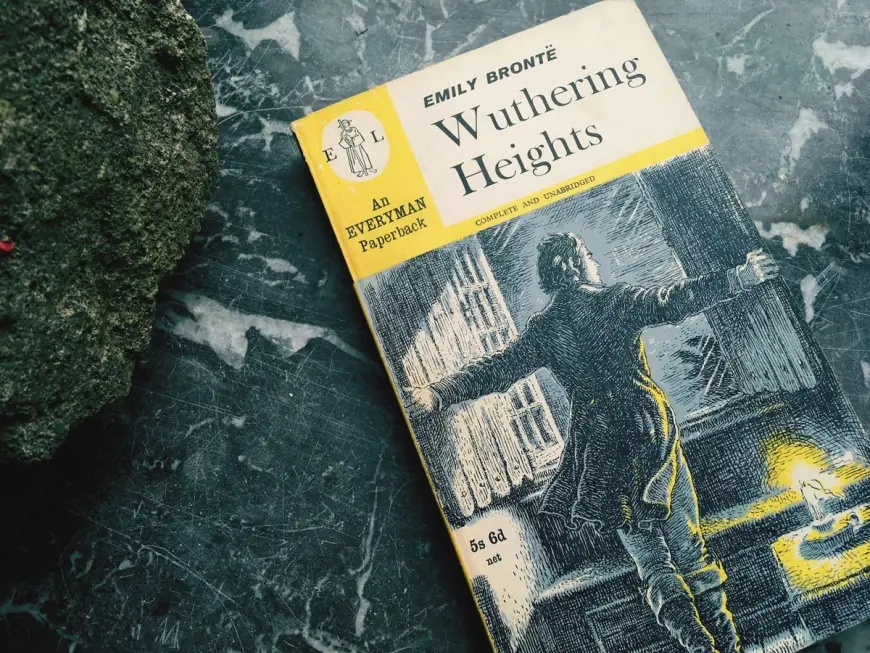
Emily Brontë’s Wuthering Heights is a gothic romance, a family saga, and a psychological tragedy all at once—set on the harsh Yorkshire moors and driven by obsession, revenge, and the wreckage of social class. First published in 1847, it has become one of the most debated English novels because it refuses to behave like a conventional love story: its central relationship is intense, destructive, and morally messy, and the book never asks you to “approve” of its characters so much as to witness what they do to each other.
What the book is about
At its core, the novel follows the intertwined fates of two neighboring households—Wuthering Heights and Thrushcross Grange—over two generations. The story is framed through layered narration: an outsider tenant hears the history from a longtime servant, creating a sense of rumor, memory, and partial truth.
The emotional engine is Heathcliff, an orphan brought into the Earnshaw family, and Catherine Earnshaw, the wild, charismatic daughter who grows up alongside him. Their bond becomes the novel’s central force—part love, part identity, part rivalry with the world. When Catherine chooses the socially advantageous Edgar Linton over Heathcliff, the decision triggers a long arc of retaliation and manipulation that consumes not only the original characters but also their children.
Main characters you should know
-
Heathcliff: Foundling turned outsider, later a powerful landowner; driven by humiliation, possessiveness, and revenge.
-
Catherine Earnshaw: Fierce and impulsive; torn between social ambition and her deeper attachment to Heathcliff.
-
Edgar Linton: Catherine’s husband; refined, gentler, and aligned with status and stability.
-
Nelly Dean: Servant and key storyteller; observant but biased, shaping how we interpret events.
-
Hareton Earnshaw, Cathy Linton, Linton Heathcliff: The next generation, caught in the aftermath of earlier choices.
What makes it “gothic” (and why it feels so modern)
The book uses classic gothic ingredients—isolated settings, storms, ghosts, confinement, violence—but it also feels modern because it’s obsessed with psychology: trauma, power, coercion, and cycles of abuse. Love isn’t presented as redemptive by default; it’s presented as something that can distort into control.
It also tackles class and legitimacy. Who “belongs” in a family? Who is considered human, marriageable, respectable? Heathcliff’s outsider status shapes how others treat him and how he treats the world back.
The big themes (without the homework-y vibe)
-
Obsessive attachment vs. healthy love: The novel makes you ask where devotion ends and possession begins.
-
Revenge as inheritance: Pain isn’t just experienced—it’s passed down.
-
Nature vs. civilization: The moors and Wuthering Heights feel raw; the Grange feels polished. Neither is purely “good.”
-
Narration and truth: Because the story is filtered through multiple voices, you’re always evaluating bias, gossip, and memory.
Why readers argue about it
People often come in expecting a sweeping romance and leave shocked by the cruelty. That gap is the point: Wuthering Heights is less “relationship goals” and more “what happens when people confuse identity with desire and refuse to let go.” Some readers see it as a masterpiece of emotional extremity; others find the characters unbearable. Both reactions are valid—and both are evidence the book works.
If you’re about to read it: quick tips
-
Don’t try to “like” everyone. Focus on patterns, motives, and consequences.
-
Track the two houses and the two generations—names repeat and relationships overlap.
-
Pay attention to who is telling the story and what they might be minimizing or exaggerating.
If you tell me what you need—summary, themes for an essay, key quotes (short excerpts only), chapter-by-chapter guide, or help understanding a specific scene—I’ll tailor it.