





















Dual moguls debut delivers chaos and U.S. medal surge at Winter Olympics

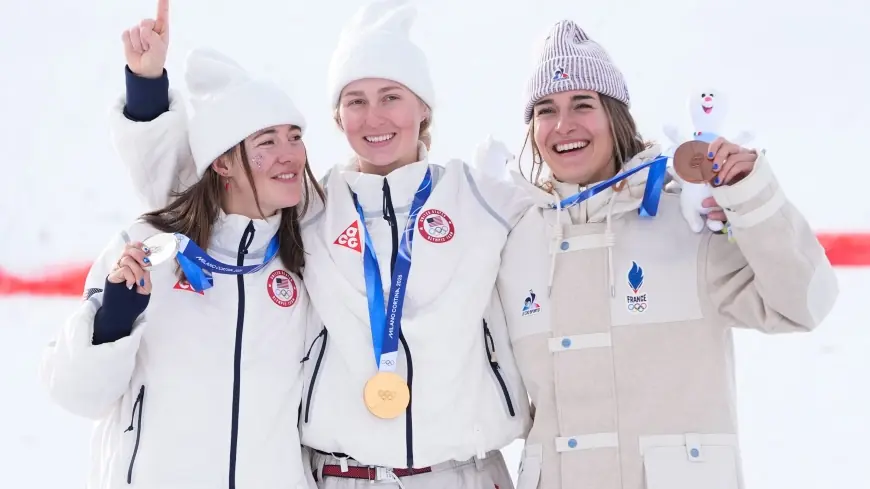
LIVIGNO, Italy — Dual moguls exploded onto the Olympic stage Saturday (ET), producing high drama, gutsy recoveries and three medals for two American skiers as Jakara Anthony claimed gold while Jaelin Kauf and Liz Lemley earned silver and bronze.
Head-to-head format fuels unpredictability
The event’s knockout, side-by-side format pits two skiers against each other on parallel courses. Judges score runs on turns (roughly 60 percent), aerials (20 percent) and time (20 percent). Each judge can award up to five points, leaving a maximum possible score of 35. That judgment mix, combined with direct elimination, turns the discipline into a volatile, spectator-friendly contest where a single mistake can flip the bracket.
American skiers stand tall amid mayhem
The United States enjoyed a dominant presence: half of the final eight competitors wore U. S. colors. Jaelin Kauf added a silver medal to the silver she won in the classic moguls event four days earlier, becoming the most-decorated U. S. mogul skier with three career Olympic silver medals. Liz Lemley, who claimed a surprise gold in the single moguls earlier in the Games, battled back to take bronze.
Crashes, course deviations and gritty advances
Dual moguls’ chaos was on full display in the semifinals. Kauf crashed midway through her run but remained in bounds and finished; her opponent skied outside the course boundary, handing Kauf the win and a spot in the final despite the spill. Lemley’s semifinal tumble came late on the hill when she under-rotated a final jump, lost a ski and finished with a hyperextended elbow—yet still pushed through to the medal round. Those sequences underlined how the head-to-head setup can reward opportunism and resilience as much as clean execution.
Champion on a mission
Anthony, who had earlier lost out on repeating as Olympic moguls champion, skied with intensity in the final. Her performance left little doubt; she seized the gold by delivering technical polish and strong aerials under pressure. The result capped a day that showcased the discipline’s blend of speed, precision and theatricality.
New event, new energy for the Games
Although dual moguls has been a mainstay on the World Cup circuit for years, this marked its Olympic debut. Athletes and fans embraced the change, describing the format as both electrifying and unforgiving. Competitors said the format brings out bold lines and risk-taking that can create memorable moments—both triumphant and heartbreaking—throughout the bracket.
Broader impact on the U. S. medal haul
The results further boosted the U. S. free skiing contingent: two mogul skiers are now responsible for a significant share of the country’s medals at these Games. Teammates Tess Johnson and Olivia Giacco also made noise, advancing to the quarterfinals and contributing to a deep American showing in the field. With the sport’s intensity and the head-to-head format’s potential for surprises, moguls will likely remain a must-watch event for the remainder of the Olympics.
After the podium ceremonies, Kauf acknowledged the physical toll of the sport—she said hip and back soreness flared after her semifinal fall, and she planned to manage discomfort ahead of future competitions. Lemley, too, fought through pain and focused on recovery. For the athletes, the rewards of medal finishes in an inaugural Olympic event will carry weight beyond the aches and strains.