



















House passes SAVE America Act in 218–213 vote, setting up Senate test

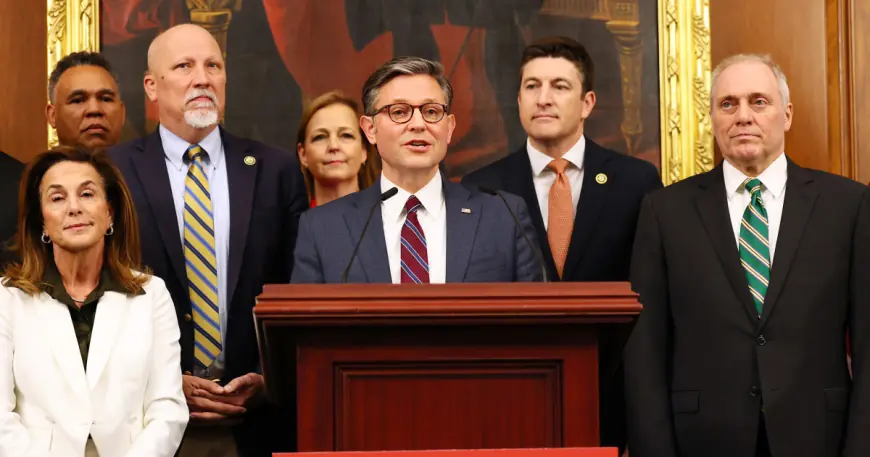
The House on Wednesday approved the SAVE America Act, a sweeping election bill championed by President Donald Trump, in a 218–213 vote. The measure now moves to the Senate, where several Republicans have raised objections that leave its prospects uncertain.
What the bill would do
The Safeguard American Voter Eligibility legislation would require in-person documentary proof of U. S. citizenship — such as a passport or birth certificate — to register for federal elections. It would also mandate government-issued photo identification to vote in person. For mail voting, the act sets two ID checkpoints: voters must submit a copy of an eligible ID both when requesting an absentee ballot and again when returning it.
The bill establishes penalties for election officials who register a voter without obtaining the required citizenship documentation. It also creates a process for people whose names have changed, including through marriage, to present supplemental records that verify their identity and eligibility.
How the vote broke down
Republicans backed the package unanimously. All but one Democrat opposed it; Rep. Henry Cuellar of Texas crossed the aisle to vote yes. House leaders aligned behind the proposal after revisions sought by the White House, framing the overhaul as a security measure aimed at standardizing voter identification and eligibility checks ahead of federal contests.
Supporters’ case
Backers argue the act is a basic safeguard that brings elections in line with common identification requirements in everyday life. “It’s just common sense. Americans need an ID to drive, to open a bank account, to buy cold medicine, to file government assistance, ” Speaker Mike Johnson said. “So why would voting be any different than that?”
Supporters further contend that noncitizen voting is already illegal but that verification protocols are inconsistent, especially across mail and same-day registration systems. The bill’s sponsors, Rep. Chip Roy of Texas and Sen. Mike Lee of Utah, positioned the plan as enforcement of existing standards through clearer documentation, not a redefinition of who can vote.
Democrats’ objections and constitutional concerns
Democrats call the measure a voter suppression effort that would erect barriers for eligible Americans, emphasizing that federal law already limits voting to U. S. citizens and that violations carry criminal penalties. “The so-called SAVE Act is not about voter identification, it is about voter suppression, ” House Minority Leader Hakeem Jeffries said, casting the vote as a distraction from broader attempts to exert federal control over elections.
They also highlight constitutional issues raised by recent rhetoric about “nationalizing” elections, noting that states are charged with administering federal races. Some Democrats point to recent law enforcement activity involving ballots and voter records in Georgia as they warn against federal overreach and renewed efforts to relitigate 2020.
What happens in the Senate
The bill faces a steep climb. Republicans hold 53 seats, but there is visible dissent within the conference. Sen. Lisa Murkowski of Alaska said she does not support efforts that would federalize election administration, recalling prior opposition to nationwide mandates. Sen. Susan Collins of Maine has voiced support for limiting voting to citizens while signaling that the revised version of the act presents problems she cannot back in its current form.
Even if the measure secures a floor vote, the Senate’s narrow margins and procedural thresholds put its path in doubt. Any significant changes could send the legislation back to the House, prolonging an already contentious timeline as the election calendar advances.
What polling and research show
Photo ID at the polls enjoys broad public support. A national poll last August found that 83% of adults favor requiring government-issued photo identification to vote, including strong majorities across party and demographic groups. At the same time, research indicates that access to underlying documents is uneven: an estimated 21 million Americans do not have citizenship papers readily at hand, and about 2. 6 million lack any government-issued photo ID. Voting by noncitizens remains illegal and documented instances are exceedingly rare, researchers and election administrators have noted in recent years.
That tension — widespread backing for ID checks alongside gaps in documentation — has shaped the debate over whether the SAVE America Act tightens safeguards or risks disqualifying eligible voters who face hurdles obtaining records. With Trump urging swift passage and Senate skeptics demanding changes, the next phase will test whether Congress can reconcile those competing imperatives before the next federal election cycle.