
























USA Hockey Rolls Past Latvia 5–1 in Men’s Olympic Opener as Brock Nelson Leads, Jack Eichel Chips In, and Group C Picture Sharpens

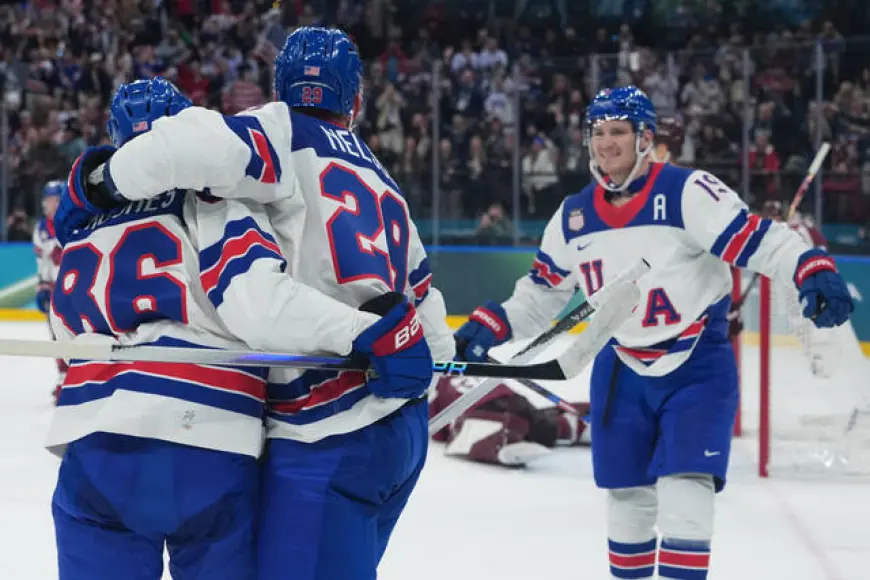
Team USA opened its men’s Olympic hockey tournament with a 5–1 win over Latvia, using a dominant second period to turn a choppy start into a statement result. Brock Nelson scored twice to headline the night, while goals from Brady Tkachuk, Tage Thompson, and Auston Matthews gave the Americans both depth scoring and a clean runway in Group C.
The win matters because the early group games are less about style points than about positioning: a strong start reduces the margin for error later, especially in a pool that can tighten quickly if a favorite drops points.
What happened in USA vs Latvia
The U.S. looked dangerous early but couldn’t immediately turn momentum into a lead on the scoreboard. Two first-period goals were waved off, and Latvia briefly kept the game within reach. The tone shifted in the second period when the Americans began layering pressure: quicker puck movement, heavier net-front presence, and more clean exits that kept Latvia from setting up forechecks.
Nelson’s two goals were the centerpiece of that surge, with Jack Hughes repeatedly finding seams that Latvia struggled to close. Thompson added a power-play goal that widened the gap and forced Latvia into a chase game. By the third period, the contest had the feel of a controlled closeout rather than a scramble.
The names fans searched for: Nelson, Eichel, Thompson, and the U.S. stars
A major takeaway was the distribution of impact across the lineup. Nelson’s finishing drew the spotlight, but the connective tissue came from the Americans’ skill spine:
-
Jack Eichel helped drive play and created chances that didn’t always show up as highlight goals but changed the ice tilt.
-
Quinn Hughes logged heavy minutes, pushing transition pace and keeping the U.S. from getting stuck defending for long stretches.
-
Matthew Tkachuk added two-way bite and helped keep Latvia’s pushbacks from turning into extended zone time.
-
Thompson’s power-play marker signaled that the U.S. can punish penalties without relying on one unit or one shooter.
This is the profile Olympic contenders want: top-end stars creating edges, and secondary lines turning those edges into goals.
Latvia’s night: resilience early, then overwhelmed
Latvia came in with a roster that can frustrate bigger teams when games stay tight. The group is built around structure, opportunistic offense, and goaltending capable of stealing stretches. Leaders like Zemgus Girgensons and Kaspars Daugaviņš give the team identity, while defenders such as Uvis Balinskis help keep the middle of the ice congested.
But once the U.S. began winning races and drawing penalties, Latvia’s margin shrank. Chasing a two- or three-goal deficit against a deeper lineup forces risk, and risk against elite finishers tends to end in odd-man looks and rebound chaos.
Behind the headline: why Team USA leaned on depth instead of pure star power
The broader context is that Olympic tournaments compress pressure. There’s little time to “play into form,” and a single flat period can flip a group. The U.S. approach in this opener looked intentional: spread responsibility, keep shifts short, and let multiple lines push the pace so no one unit has to carry the entire load.
The incentives are clear. A team that can win games when its biggest names are merely “good” becomes harder to eliminate when those names become “great.” Latvia tested whether the U.S. would get impatient after goals were disallowed. Instead, the Americans kept building, which is often the difference between a contender and a team that just looks like one.
What we still don’t know
Even with a 5–1 final, several questions remain open:
-
Can the U.S. avoid early-game looseness against opponents that convert quickly off mistakes?
-
How stable is special teams play as the schedule tightens and opponents adjust scouting?
-
Will Latvia’s path depend on stealing a game in goal, or can it generate enough five-on-five offense to climb back into contention?
These are the hinge points that determine whether this opener is simply a strong start or the first step toward a top seed.
What happens next: realistic scenarios and triggers
-
U.S. locks up prime group positioning early
Trigger: A win in the next preliminary game that turns the final group date into a seeding tune-up. -
Latvia turns the page with a tighter defensive script
Trigger: Cleaner special teams and a low-event game that stays within one goal into the third period. -
Group C becomes a three-team squeeze
Trigger: An upset elsewhere that compresses the standings and forces favorites to chase goals late in games. -
U.S. shifts from “depth-first” to “stars-first” deployment
Trigger: A closer game that requires heavier minutes from the top puck movers and finishers.
Why it matters
The U.S. didn’t just beat Latvia; it showed it can absorb frustration, adjust mid-game, and still win comfortably. That combination travels in an Olympic bracket where weird bounces and short rest can punish fragile teams. For Latvia, the loss doesn’t end anything, but it does raise the stakes: the next result has to come with points, not moral victories.