

























Yuma Kagiyama keeps gold in sight after trailing Malinin in short program

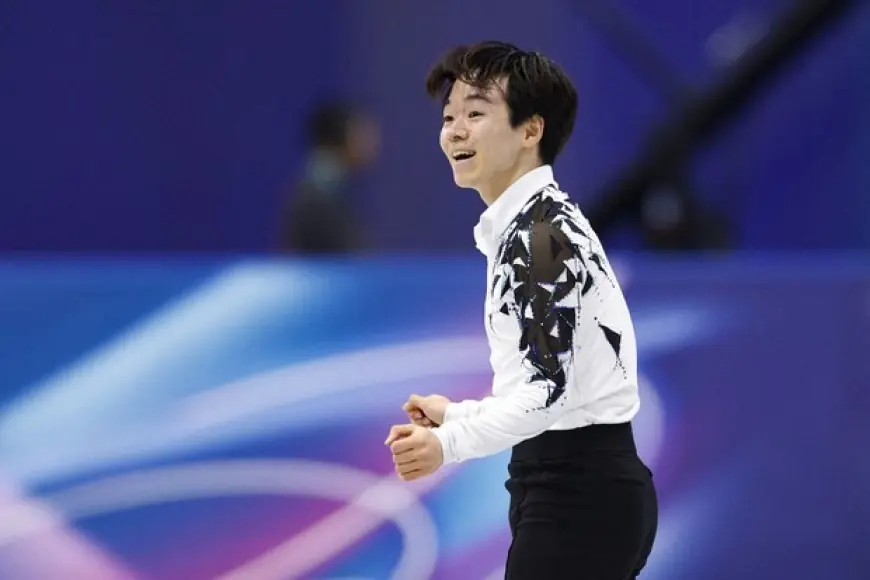
Yuma Kagiyama left Tuesday’s short program (ET) within striking distance of the lead and made clear the objective has not changed: he is still aiming for gold. The Beijing 2022 silver medalist and three-time world silver medalist posted 103. 07 points to place second, with American Ilia Malinin setting the pace at 108. 16.
Scoreline sets a high-stakes free skate
Kagiyama entered the men’s event as one of the prime contenders and opened with clean, high-quality elements, but the gap to first place offers no margin for error in the free skate. The 5. 09-point deficit contrasts with his performance earlier in the week, when he outscored Malinin in the team event short program with a season-bright 108. 67. The swing underscores how narrow the margins are at this level: one program can redraw the map for the next.
The scoreboard is only part of the story. Kagiyama’s short program again highlighted the attributes that have made him a mainstay on podiums since his Olympic debut: finely calibrated jump entries, seamless transitions, and a calm, musical command of the rink. On a night when technical firepower dominated the headlines, his skating reminded judges and fans that clarity and shape between elements carry weight, too.
Mindset: gold remains the only goal
Kagiyama did not hedge when asked about targets after the short program. He emphasized that you do not aim for second or third in elite sport, and that once competition begins anything can happen. That stance mirrors his competitive arc since Beijing: a refusal to scale ambitions downward even when the standings demand a chase. With one program left, his calculus is straightforward—maximize base value where possible, execute with conviction, and keep the pressure firmly on the leader.
The confidence is not unfounded. Recent head-to-head results this week show he can match or surpass the top score in a short program. Translating that into a free skate means sustaining quality across a longer, more complex layout—precisely where his training has placed emphasis.
Artistry sharpened in Italy’s ‘laboratory’
Kagiyama’s evolution this cycle has been as much artistic as technical, shaped in part by a 2023 trip to Italy to work with his coach, Carolina Kostner. He has described that period as a creative laboratory, a place to experiment with musical phrasing, body line, and attention to detail in step sequences. The result has been a more expansive on-ice persona, with programs that breathe and build rather than simply link one jump to the next.
Those Italian sessions have filtered visibly into his performance identity: deeper edges, more nuanced carriage through turns, and an unhurried sense of storytelling even under the bright lights. Against jump-centric rivals, the added refinement gives him multiple scoring paths—quality grades of execution, component scores, and the ability to stabilize momentum when a technical element doesn’t net maximum value.
Tactical outlook for the free skate
To overhaul a five-point gap, Kagiyama’s path likely hinges on two levers: program construction and bulletproof delivery. He has room to push base value strategically without sacrificing the flow that courts high component marks. Clean landings on early jumping passes can set a tone the judges reward through the second half, where bonus time amplifies scores. Just as pivotal will be the connective tissue—turns, steps, and musical accenting—that secure strong grades of execution even on high-difficulty content.
Momentum favors skaters who combine nerve with nuance on the sport’s biggest stage. Kagiyama has shown both in the past week. If he reproduces the clarity of his team-event short while scaling to free-skate demands, the chase becomes very real.
What the standings mean for the men’s field
With Malinin opening the door to a technical duel and Kagiyama anchoring the artistic vanguard, the free skate is poised to be a clash of styles as much as scores. A measured, composed Kagiyama can put scoreboard pressure on even the most ambitious layouts. Conversely, any wobble invites the field to compress around the podium. That volatility is the hallmark of this men’s event—and the reason Kagiyama’s insistence on aiming only for gold resonates heading into the decisive skate.
All eyes now turn to the final program later this week (ET), where execution will decide whether the deficit remains a footnote or a plot twist. For Kagiyama, the equation is simple: skate his plan, trust the work forged in that Italian laboratory, and make the closing argument he came to deliver.