





















Russia’s Olympic ban holds as Milano Cortina nears, with AIN pathway defining who gets to compete

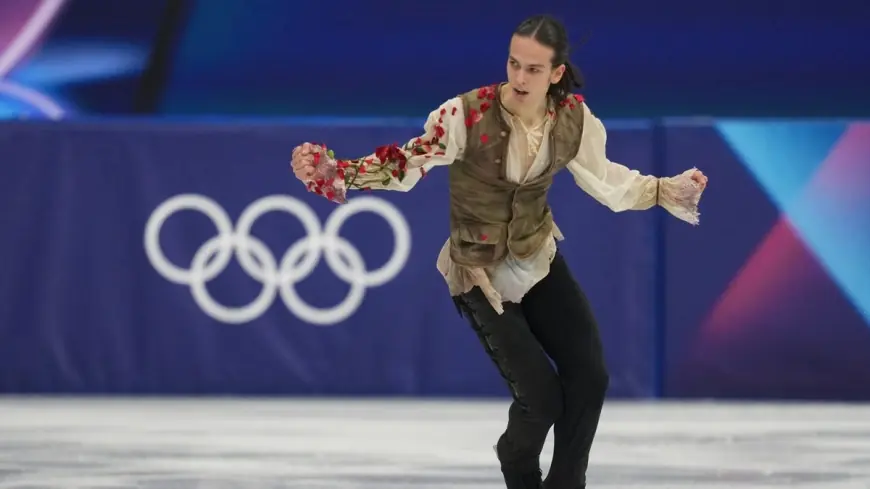
With the Milano Cortina Winter Games opening on February 6, 2026 (ET), Russia remains barred from competing under its flag. A limited number of competitors with Russian and Belarusian passports will enter as Individual Neutral Athletes, a tightly screened designation that keeps national symbols off the ice and snow. The arrangement sits atop a broader clash over anti-doping compliance and the war in Ukraine that continues to shape who gets to appear on the world’s biggest stage.
What AIN means — and why it’s not a country
In late January (January 29, 2026, ET), the IOC listed 13 Russian and seven Belarusian competitors cleared to take part as Individual Neutral Athletes, or AINs. The badge is not national. There are no flags, anthems, or team uniforms in state colors, and AINs will not march in the Opening Ceremony. Should an AIN win gold, a wordless anthem commissioned for neutrals will play. Team sports are off-limits under the current rules, so participation is confined to individual events where international federations have opened qualification pathways.
For fans searching “ain country, ” the answer is simple: there is no country. AIN is a status created to separate individual competitors from state representation, reflecting the Olympic truce breach and other eligibility barriers.
Two hurdles to a full Russian return
Russia’s path back to full national participation faces two major obstacles. The first is the legacy of state-directed doping that exploded into view after 2014. Investigations led to the loss of international certification for the Moscow lab and Rusada, with sanctions that forced Russian athletes to compete at the Tokyo and Beijing Games without the national flag. When testing data were finally handed over, tech experts identified extensive deletions, triggering further penalties and reinforcing mistrust.
In 2025, Rusada chief Veronika Loginova re-emerged on the global stage, declaring that the agency had met the necessary conditions. The international anti-doping body has maintained that non-compliance remains in effect. Loginova has signaled ambitions for leadership at the global level, but for now, the compliance gap still blocks a clean reinstatement of Russia’s program.
War in Ukraine keeps national teams out
The second obstacle is the ongoing invasion of Ukraine, a violation of the Olympic truce that led to sweeping bans on Russian and Belarusian teams beginning in 2022. Under the current framework, international federations set their own eligibility policies for neutrals. Some opened the door; others kept it shut. The International Skating Union and International Ski Mountaineering Federation offered pathways for qualified athletes to compete as AINs. By contrast, the International Bobsleigh and Skeleton Federation did not give Russians a route to qualification, and the International Biathlon Union has continued to bar neutrals. Legal challenges have followed in winter sports including skiing, snowboarding, and luge, underscoring how fragmented the landscape remains.
Team sports are barred outright for athletes from the banned countries. That means the long-awaited return of NHL players to the Olympics will not bring Russian stars such as Alexander Ovechkin or Evgeni Malkin to the ice in Milano Cortina.
Shifting lines across global sport
While the Olympic stance has stayed firm, the wider world of sport is less uniform. Tennis re-integrated Russian players earlier under neutral designations. In September 2025, the International Paralympic Committee ended its full ban, clearing the way for Russian athletes to participate fully at the 2026 Winter Paralympics. In November 2025, judo, sambo, and European gymnastics authorities also lifted restrictions. These moves highlight a gradual loosening in some disciplines even as others keep enforcement tight or maintain outright exclusions.
At home, pride rhetoric meets medal realities
Inside Russia, some politicians and commentators have cast the Olympics as devalued and unworthy, framing the bans as grounds to walk away. The public posture of spurning the Games masks a deeper reality: international sport has long served the Russian state as a showcase of national prowess. From the Soviet era through today, medals function as political currency, especially when domestic challenges—from infrastructure to health and education—cloud the narrative of progress. That pressure to deliver podium results remains, even without a flag.
Football flashpoint shows the stakes
Debate over reinstatement stretches beyond the Olympics. In early February (ET), the head of world football’s governing body floated the idea of revisiting the ban on Russian national and club teams. Ukraine’s sports minister Matvii Bidnyi pushed back forcefully, arguing that any rollback would risk legitimizing the invasion and undercut a key lever of international pressure. The exchange shows how decisions in one marquee sport can ripple across the entire sanctions regime.
What to watch next
With the AIN roster settled for Milano Cortina and the Opening Ceremony set for February 6, 2026 (ET), attention shifts to results on the field of play and to the vetting process that continues behind the scenes. A dedicated IOC panel screens athletes’ activities and public statements, with any endorsement of the war or direct ties to military structures cause for exclusion. Litigation by federations and athletes is likely to persist through the Games. A comprehensive resolution—full reinstatement or long-term separation—is unlikely without verifiable anti-doping compliance and a meaningful shift in the geopolitical backdrop.