

























Aleksandr Selevko rebounds from fall to reach Milano Cortina free skate

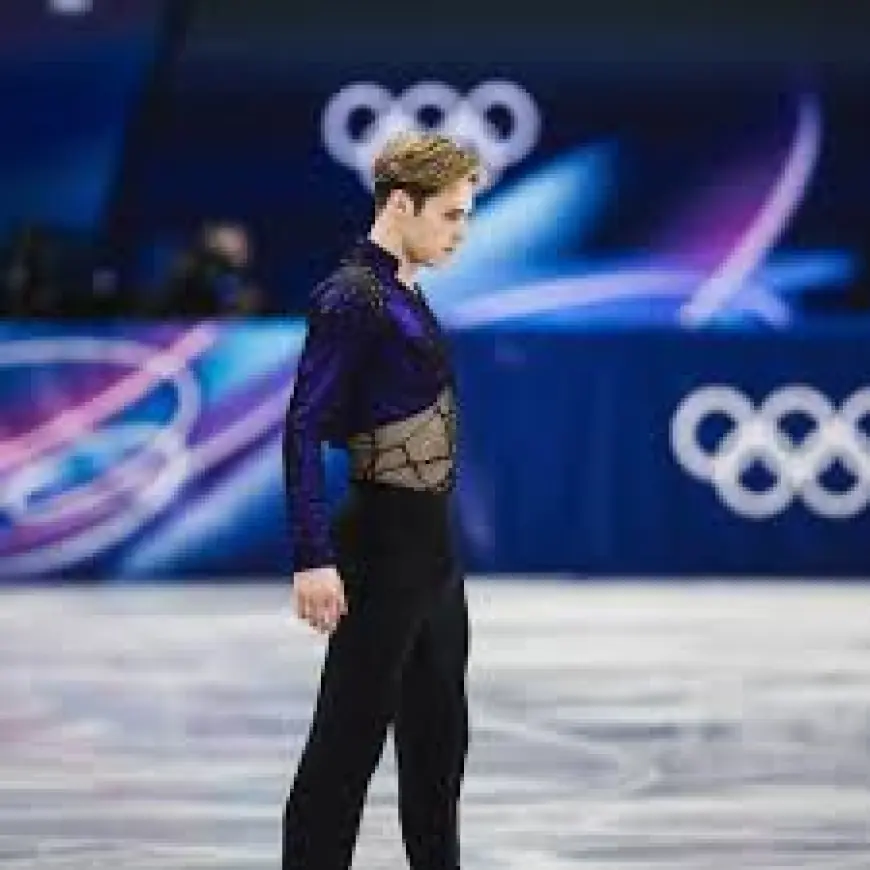
Estonia’s Aleksandr Selevko advanced to the men’s free skate at the Milano Cortina Winter Olympics on Tuesday (ET), banking a vital 82. 02 points in the short program despite a late error that cost him a combination. He will start Friday’s free skate from 18th place.
Selevko lands big jumps, survives costly error
Skating in the second-to-last flight, Selevko opened with conviction, hitting a clean quadruple toe loop and following it with a confident triple Axel. The momentum wobbled on the back half of the program when he fell on a triple Lutz, losing the linked jump and valuable points. Even so, the 2024 European silver medalist stabilized quickly to close strong and keep himself well inside the free skate cut with 82. 02.
Given his season form, the Estonian record holder likely would have challenged the 90-point range without the fall. He set his personal best in the short program at 91. 28 in November and owns a best total of 257. 21, achieved at a Grand Prix in Canada where he became the first Estonian man to reach the podium at that level.
From European silver to Olympic steadiness
Selevko, 24, clinched his Olympic berth off a strong showing at last month’s European Championships in Sheffield, England, where he finished fifth overall. His younger brother Mihhail placed sixth and missed out on qualification. Milano Cortina marks Selevko’s second Olympic appearance in men’s singles; he was 28th at the Beijing Games four years ago. Tuesday’s effort underlined the evolution in his skating: bigger base value, improved consistency on quads, and a steadier command of the program under pressure.
He carried that confidence into the week. At a Sunday practice, he said his quad toe loop felt sharp, the quad Lutz was in good order, and the ice suited him. “I think I’m in good shape, ” he noted after running his short program cleanly in training.
A high-powered field sets a fierce pace
The short program featured a stacked lineup, including Italy’s Matteo Rizzo and Daniel Grassl performing in front of a home crowd. The scoreboard popped early and often. France’s Adam Siao Him Fa put down a bold, high-octane skate for a new personal best of 102. 55, briefly taking the lead before being surpassed. Yuma Kagiyama, the Beijing 2022 silver medalist, raised the bar again with 103. 07 to move into second at that point.
Ilia Malinin then detonated the arena with a gravity-defying set that also featured a crowd-pleasing backflip — a move not rewarded by the rulebook but emblematic of his daring. He didn’t need the bonus: he rocketed to the top with 108. 16, setting the pace heading into the free skate. In that elite company, Selevko’s 82. 02 stood as a composed, resilient answer, keeping him in the mix for a significant climb on Friday with a clean long program.
What Friday’s free skate means for Selevko
From 18th place, Selevko has a realistic path to upward movement if he delivers the content he has been training. He has shown reliable quads in practice and has previously held together technically demanding programs under pressure. The key will be restoring the Lutz and nailing combinations to maximize Grade of Execution and component scores over four minutes. A score near his season’s best total could lift him well inside the top 15 — and higher if others falter under the longer program’s demands.
Beyond placement, the free skate is an opportunity to cement Estonia’s growing presence in men’s skating. With his European silver earlier this season and a historic Grand Prix podium last fall, Selevko has already elevated the national benchmark; a polished Olympic long program would further that arc.
The elements at play: toe loops, Lutzes and Axels
The short program’s backbone reveals where points are won and lost. The Axel — the sport’s oldest and only forward-takeoff jump — is mandatory in the short and notoriously exacting, especially at the triple rotation. The Lutz, launched off a back outside edge with a toe pick, demands edge precision and remains among the hardest jumps after the quadruple Axel. The toe loop, often the entry into high-value combinations, provides critical scoring leverage when executed cleanly and linked as planned.
Selevko aced two of the three pillars on Tuesday (ET), with the quad toe and triple Axel setting a high technical base. Repairing the Lutz and restoring combinations in the free skate will be central to unlocking his full scoring potential as the men return to the ice Friday (ET).