






















Vladyslav Heraskevych Appeals, Acknowledges Olympic Racing Dream is Over

Ukrainian skeleton athlete Vladyslav Heraskevych faces the end of his Olympic racing dream after a disqualification prevented him from competing at the Milan Cortina Games. Heraskevych’s appeal was heard on Friday by the Court of Arbitration for Sport (CAS) in Milan, lasting approximately two and a half hours.
Disqualification and Appeal
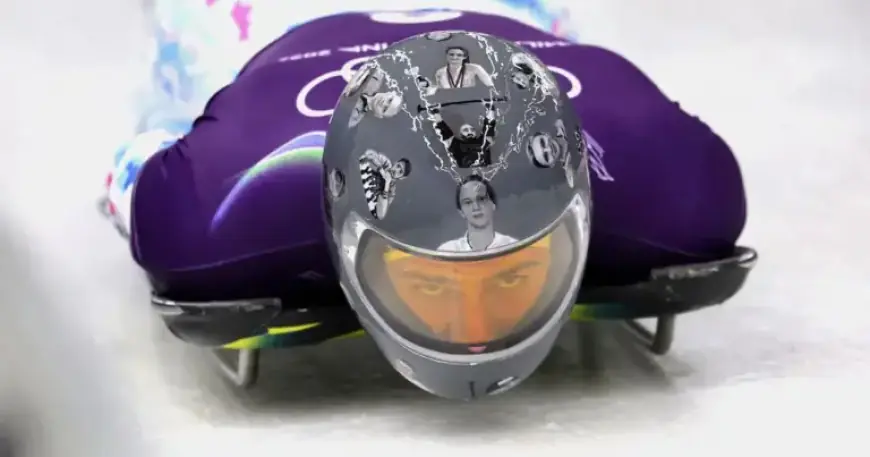
Heraskevych was disqualified by the International Olympic Committee (IOC) and his sport’s federation for competing with a helmet showcasing the names of over 20 Ukrainian athletes and coaches killed since the Russian invasion four years ago. He stated, “Looks like this train has left,” acknowledging that even if the appeal is successful, the opportunity to race is lost.
Despite this, Heraskevych remains optimistic about the appeal’s outcome. He expressed that his commitment to his beliefs was unwavering, declaring, “From Day 1, I told you that I think I’m right.” As he awaited the ruling, he confirmed his departure from the Olympic Village in Cortina d’Ampezzo, stating he would not return for the remainder of the games.
IOC’s Justification
The IOC reiterated its stance on athlete expression, underscoring the need for a focus on athletes’ performances during competitions. IOC President Kirsty Coventry expressed her dismay at the situation, stating, “I think that he in some ways understood that but was very committed to his beliefs.” Coventry highlighted that the rules are in place to protect athletes from external pressures related to political statements.
Logistical Challenges
Even if the CAS sides with Heraskevych, significant logistical hurdles could prevent his participation. The skeleton competition has already progressed, with the first runs completed before Heraskevych was disqualified. Additionally, the distance between Milan and Cortina complicates any last-minute participation.
Previous Incidents
Heraskevych commented on perceived inconsistencies regarding tributes at the Olympics, noting that other athletes have been allowed to honor their memories without penalty. Notable examples include:
- U.S. figure skater Maxim Naumov displaying a photo of his deceased parents.
- Italian snowboarder Roland Fischnaller featuring a small Russian flag on his helmet.
- Israeli skeleton athlete Jared Firestone wearing a kippah honoring 11 victims of the 1972 Munich Games.
The IOC asserted that these instances did not breach any existing rules or the Olympic Charter.
Conclusion
Heraskevych’s situation demonstrates the often complex intersection of sports and political expression, especially in the context of ongoing conflicts. As he awaits the CAS ruling, the sporting world watches closely, not just for Heraskevych’s fate but also for the implications on how athletes express their identities during the Olympics.