
























USA Men’s Hockey Powers Past Latvia 5–1 in Olympic Opener as Hellebuyck Debuts and Tkachuk Sets the Tone

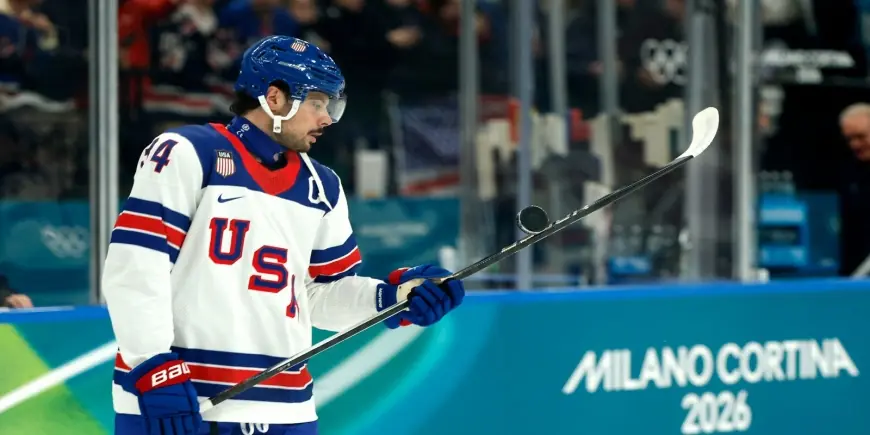
The U.S. men’s hockey team opened its 2026 Winter Olympics campaign with a statement on Thursday, February 12, 2026 ET, rolling past Latvia 5–1 in Group C play. In a game that started tense and physical, the Americans leaned on special teams, depth scoring, and a steady Olympic debut in goal from Connor Hellebuyck to turn a 1–1 first period into a decisive win.
Brock Nelson scored twice, while Tage Thompson, Brady Tkachuk, and Auston Matthews added goals as the U.S. steadily pulled Latvia out of its defensive shell and into a track meet it couldn’t survive.
USA vs Latvia hockey: what happened
Latvia matched the U.S. early and tied the game 1–1 in the first period, leaning on goaltender Elvis Merzlikins to absorb pressure and keep the contest within reach. The turning point came as the U.S. began to cash in on man-advantage opportunities and forced Latvia into extended defensive-zone sequences that tired their legs and limited clean breakouts.
The U.S. took control in the second period, stretching the lead with a mix of net-front chaos and quick-strike finishing. Matthews’ third-period power-play goal effectively shut the door, turning the final stretch into game management rather than a comeback watch.
Just as notable: Latvia successfully challenged plays that wiped out two U.S. goals, a reminder that modern international tournaments can swing on video review momentum as much as on-line matchups.
Why the win matters for USA men’s hockey
A group-stage opener can be deceptively dangerous for a tournament favorite, especially against a disciplined opponent with NHL-level goaltending. Latvia’s identity is built around structure, patience, and opportunistic counters, the exact recipe that can frustrate a star-heavy roster still learning to play together.
The U.S. avoided that trap by doing three things well:
-
Converted on special teams, forcing Latvia to defend situations where structure is hardest to maintain
-
Won the “middle of the game,” turning a close first period into separation across the second
-
Got calm, reliable goaltending that prevented an early wobble from becoming a storyline
In short, the U.S. didn’t need a miracle highlight to win; it needed a professional Olympic start. It got one.
USA hockey roster storylines: Matthews, Tkachuk, and Hellebuyck
This roster is built to overwhelm opponents in waves, and the opener showed why. Matthews and Thompson provided the kind of finishing that punishes even small defensive mistakes. Brady Tkachuk brought the edge and net-front pressure that tends to translate well on Olympic ice, where crease battles still matter and emotions rise quickly.
Hellebuyck’s role is even more significant. In a short tournament, the starting goalie is a force multiplier: one elite performance can let a team play aggressively, knowing a mistake won’t automatically hit the scoreboard. His Olympic debut also signals that the U.S. intends to set its identity early rather than rotate cautiously out of the gate.
Latvia hockey: what went right, and what broke down
Latvia’s positive takeaway is that it stayed connected early and showed it can compete physically and tactically with top teams. Merzlikins gave them a chance, and the defensive structure held long enough to keep the game level in the opening period.
What failed was the margin game. Against a roster with elite shooters and power-play threats, Latvia can’t afford extended penalty-kill time, second-chance rebounds, or fatigue-induced turnovers at the blue line. Once the U.S. got breathing room, Latvia had to open up. That’s where the gap in depth and finishing became unavoidable.
Behind the headline: incentives, stakeholders, and the pressure curve
For the U.S., the incentive is to win the group cleanly and avoid the qualification-round chaos that can end a medal run in one bad night. A strong opener reduces pressure on coaches to overthink line juggling and lets the team build chemistry with confidence rather than anxiety.
For Latvia, the incentive is survival math: steal points in the group, stay within striking distance for advancement, and make sure one loss doesn’t become a psychological slide. The stakeholders include not just players and coaches, but federations managing expectations, NHL clubs monitoring workloads, and a tournament format that rewards early clarity.
What we still don’t know
Even after a 5–1 win, several questions remain:
-
How consistent the U.S. power play will be once opponents tighten discipline
-
Whether the U.S. can maintain defensive detail against faster transition teams
-
How Latvia responds offensively after facing an elite goalie and a deep blue line
What happens next: realistic scenarios and triggers
-
The U.S. keeps rolling and locks up the group path early
Trigger: another efficient special-teams night and controlled five-on-five play. -
Latvia rebounds against a closer peer in Group C
Trigger: fewer penalties and a more assertive forecheck that creates second chances. -
Goaltending becomes the U.S. competitive advantage
Trigger: Hellebuyck (or the next starter) posts back-to-back strong performances, letting the skaters attack. -
The group turns into a seeding knife fight
Trigger: an upset elsewhere forces contenders to chase goal differential and points.
The opener delivered exactly what the U.S. needed: points, confidence, and evidence that its depth can win even when the game gets messy. For Latvia, the tournament now becomes about response, discipline, and finding goals in tighter windows.