






















Guthrie update: Why investigators are asking neighbors for specific video windows—and what it may signal about the timeline

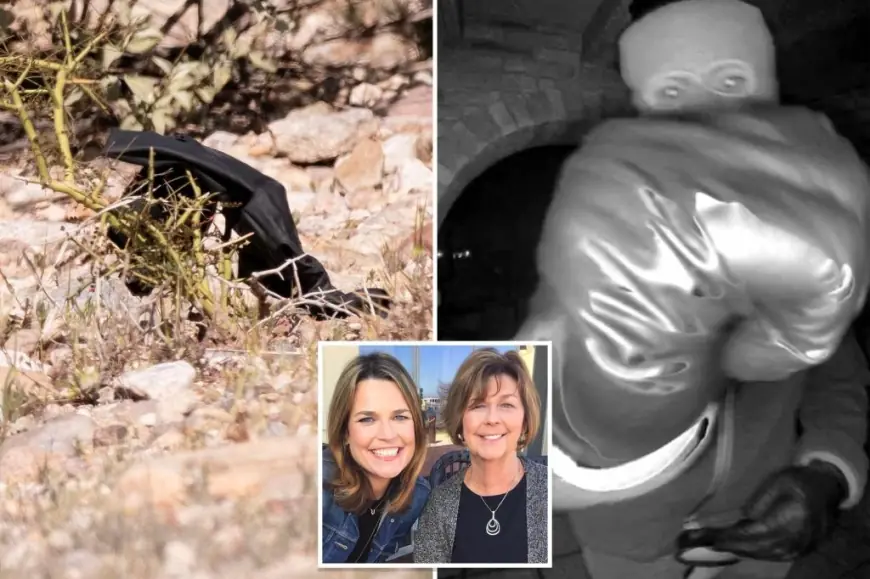
Investigators in the Nancy Guthrie case are now asking residents near her Tucson-area home to check home cameras for footage from two unusually specific time windows: the late evening of Jan. 11 and a roughly 90-minute slice of the morning of Jan. 31. The move matters because targeted time requests typically reflect a shift from broad tip-gathering to timeline testing—trying to confirm exactly when a person, vehicle, or key object entered and left a defined area.
Authorities have said Guthrie was taken against her will and has been missing since Feb. 1. They’ve also said they are analyzing multiple items of evidence recovered during searches around her home and nearby areas.
The specific video windows, in ET
The requests circulating in the neighborhood focus on two dates that stand out for different reasons: one far earlier than the disappearance, and one tightly aligned with the last known day she was seen.
Converted to Eastern Time (ET), the windows being sought are:
-
Jan. 11: about 11:00 p.m. ET to 2:00 a.m. ET (covering late evening in the Tucson area)
-
Jan. 31: about 11:30 a.m. ET to 1:00 p.m. ET (a 90-minute span that has been highlighted as especially important)
Investigators have also encouraged residents to review footage for anything out of the ordinary across a broader January timeframe, but the emphasis on these two windows is what has drawn attention.
Why narrow windows are a tell
When detectives ask for “anything suspicious,” it often means they’re still building the outline of what happened. When they ask for a specific 90-minute block, it usually signals they already have a working sequence of events and are trying to verify it with independent data points—doorbell clips, driveway cameras, street-facing views, or neighborhood traffic.
A narrow request can be used to:
-
Confirm a vehicle sighting: verifying make/model, direction of travel, and whether it appears in multiple cameras.
-
Pin down a departure or arrival: proving whether a person or car entered the area before a key event and whether it left afterward.
-
Test a witness statement: checking whether “around that time” can be tightened to a precise minute range.
-
Build a route map: stitching together a movement path across intersections and cul-de-sacs.
What Jan. 11 could mean for the timeline
Jan. 11 is the more intriguing date because it’s weeks earlier. Investigators don’t usually reach that far back unless they believe it connects to planning, scouting, or a prior incident that didn’t initially look related.
A late-night window like Jan. 11 can indicate they are looking for signs of:
-
Pre-surveillance or “dry runs” near the home
-
Repeated presence of a suspicious car on more than one date
-
A first appearance of the same clothing or person silhouette later seen on another camera
-
A test of lighting and camera coverage—late-night passes that reveal blind spots
If the same vehicle or person shows up in both January windows, it strengthens the idea that Jan. 11 was not random noise but an early marker in a longer sequence.
What Jan. 31 can reveal beyond “last seen”
Jan. 31 is the anchor day for reconstructing the disappearance. The focus on a tight morning block suggests investigators are trying to lock down one of the hardest parts of any abduction case: the exact moment when normal routine breaks and coercion begins.
A 90-minute window can help answer questions like:
-
Did a vehicle linger in the area before the critical moment?
-
Did the same car loop back?
-
Did anything change near the home—lights, doors, movement patterns—visible across multiple cameras?
-
Is there a clear “before and after” point that aligns with physical evidence recovered later?
Because home cameras often timestamp events, even a handful of clips from different angles can turn a fuzzy timeline into a minute-by-minute reconstruction.
What this shift may signal about the investigation
The targeted canvass suggests investigators may be moving into a phase where they are trying to prove sequence and movement, not just generate leads. That doesn’t guarantee a breakthrough, but it often means they believe one of these is true:
-
They have a partial timeline and need neighborhood footage to confirm the missing pieces.
-
They have identified a suspicious vehicle or person description and are attempting to track it across multiple streets.
-
They are testing whether the case involves planning over time, not a one-off encounter.
The next likely development—if the footage exists—is a tighter public request: a clearer description of a vehicle, a direction of travel, or a precise “seen here at this time” moment. If investigators can align camera clips with physical evidence already recovered, it can narrow the field from a broad neighborhood search to a focused hunt for a specific route, car, and individual actions within that short window.