

























2026 Winter Olympics women’s snowboard halfpipe: Liu Jiayu’s terrifying crash, a snow-slick final, and what it signals about risk in the medal race

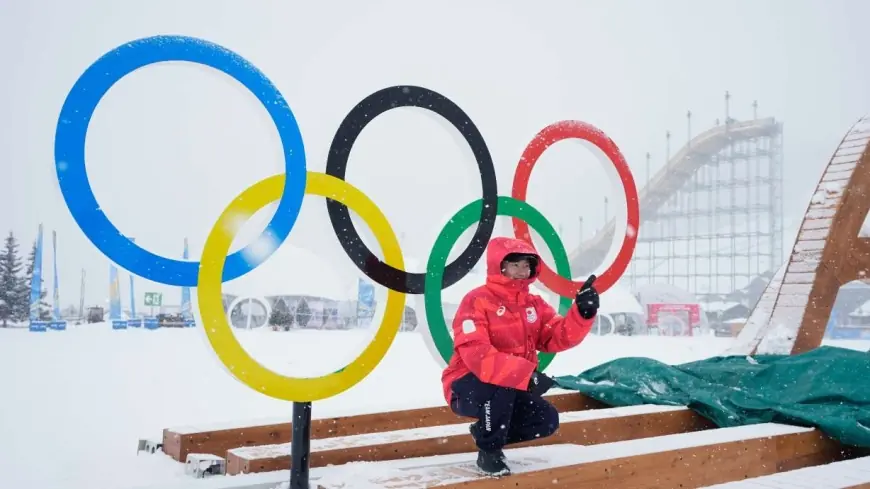
The women’s snowboard halfpipe at the 2026 Winter Olympics has become a story of razor-edge ambition colliding with unforgiving physics. In Livigno, Italy, the event’s biggest headline before the medals were even decided was a frightening qualification crash involving China’s Liu Jiayu, a veteran medalist whose fall halted the session and reminded everyone how quickly a halfpipe can turn from theater to emergency.
Now, with the women’s halfpipe final scheduled for Thursday, February 12, 2026, at 1:30 p.m. ET, the competition is unfolding under heightened attention to course conditions, athlete safety, and how much risk riders are willing to accept when a single run can define an Olympic legacy.
What happened to Liu Jiayu in halfpipe qualifying
Liu Jiayu went down hard late in women’s halfpipe qualification on Wednesday, February 11, 2026, ET. She lost control near the end of her second run, crashed heavily into the pipe, and stayed down for several minutes as medical personnel rushed in. She was ultimately placed on a rescue sled and transported to medical care on-site, then evaluated further.
The most important update afterward: officials indicated she avoided a major spinal injury. Liu was reported to be awake and responsive during treatment, and later updates described her as stable and communicating from medical care. Even so, the incident was alarming enough that it shifted the emotional temperature of the entire event.
From a competitive standpoint, Liu’s crash came while she was trying to improve her standing. Her first run score left her outside the top cutoff needed to reach the final, and the second attempt was her chance to surge into the top group. Instead, her night ended with a medical evacuation, and her Olympic halfpipe campaign ended in the qualification round.
Why the women’s halfpipe is suddenly the most fragile event on the schedule
Halfpipe is a high-wire act that rewards amplitude and difficulty, but it also punishes imperfect landings more severely than many other snow sports. Riders are launching above a steep transition, rotating at speed, and landing on a surface that can feel different run to run depending on snowfall, temperature, and how quickly the walls rutted up.
The behind-the-headline reality is that athletes and coaches make a cold calculation: the trick progression needed to medal may require pushing beyond what is comfortable in training conditions. That pressure intensifies when the field is deep and the scoring ceiling is rising. The safer run might make the final, but it usually doesn’t win it.
Liu’s crash underscored an uncomfortable truth: the same risk that produces the biggest moments is also the risk that can change an athlete’s life. When a rider goes down at the bottom of the pipe, the body can get thrown into unnatural positions in an instant, and even “lucky” outcomes can include concussions, shoulder injuries, or worse.
The medal race: favorites, challengers, and how conditions can flip the podium
Coming out of qualification, the top of the leaderboard belonged to the sport’s biggest star, Chloe Kim, who posted the leading qualifying score and entered the final as the clear favorite. Japan also loaded the final with multiple contenders, continuing a trend that has reshaped women’s halfpipe over the past two Olympic cycles: deeper depth, more technical variety, and more consistent execution across the top dozen riders.
What makes the final especially volatile is weather. If snowfall is active or visibility is flat, riders often dial back risk on their first run just to post a score. That creates a strategic second-order effect: a conservative opener can compress the standings, which tempts athletes into bigger tricks on later runs to break free. When many riders “have to send it” at once, falls can cascade.
What we still don’t know after Liu Jiayu’s fall
Several key pieces remain incomplete as the event moves from shock to reflection:
-
The full medical detail of Liu’s injuries beyond “no spinal injury,” including whether she sustained a concussion or significant shoulder damage
-
Whether the crash prompts any immediate operational changes, such as modified course prep, additional medical protocols, or altered warmup routines
-
How athletes privately recalibrate their trick selection after seeing a veteran go down hard
-
Whether the judging emphasis subtly shifts toward cleaner execution if conditions deteriorate
Those unknowns matter because they shape behavior. Halfpipe is as much psychology as athletics, and athletes respond to the tone of the day.
What happens next: realistic scenarios and triggers
-
A controlled final if conditions are stable and the top riders post high scores early, reducing desperation runs
-
A chaotic final if snowfall or wind degrades visibility, causing more conservative first runs and riskier second and third attempts
-
A judging-driven shakeup if the panel rewards execution over raw difficulty, lifting riders who keep it clean while others fall
-
A safety aftershock across the sport if Liu’s incident leads to broader conversations about course setup, medical readiness, and acceptable risk thresholds
-
A renewed focus on experience if veterans lean on run management and land on the podium while younger riders push difficulty too far
The women’s snowboard halfpipe is still a medal event, but it’s also a case study in modern action-sport incentives: the sport keeps progressing, the scoring keeps climbing, and the athletes keep facing a brutal choice between playing it safe and doing what it takes to win. Liu Jiayu’s crash put that choice in stark relief, right as the Olympic final arrives.