
























Justice Dept. Antitrust Chief Announces Immediate Departure

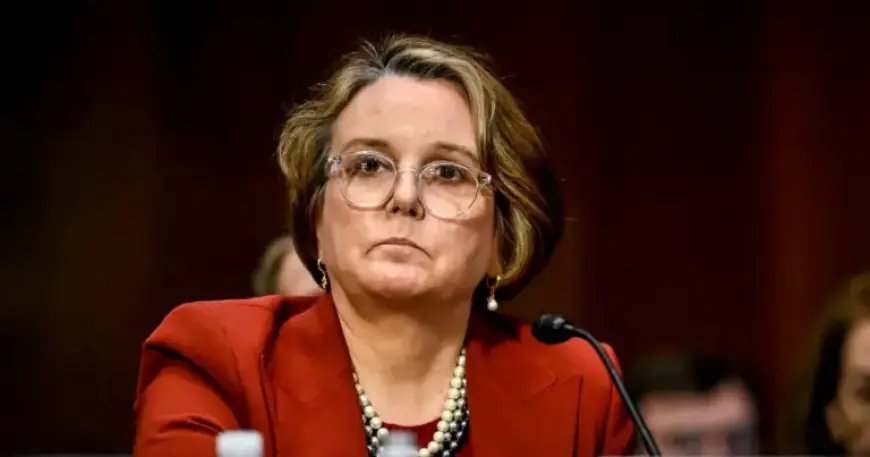
The Justice Department’s Antitrust Chief, Gail Slater, announced her immediate departure from the role amid significant corporate merger activities in the United States. Slater served as the Assistant Attorney General for the Antitrust Division, and her resignation was made public via a post on social media platform X.
In her statement, Slater expressed a mix of sadness and hope, stating, “It was indeed the honor of a lifetime to serve in this role.” She thanked her colleagues in the Department for their support during her tenure.
Impact on Ongoing Corporate Mergers
Slater’s resignation comes at a pivotal time for corporate mergers, particularly as major players like Netflix and Paramount Skydance compete for control over Warner Bros. Discovery. This battle has attracted the attention of President Donald Trump, who initially indicated he would engage in the review process of any potential Warner Bros. deal. However, in a recent NBC News interview, Trump clarified that he would refrain from involvement, letting the Justice Department handle it.
Challenges Ahead for the Justice Department
Slater’s exit also aligns with the Justice Department’s upcoming legal challenge concerning Live Nation’s ownership of Ticketmaster. This case is expected to test the administration’s commitment to regulating corporate mergers and maintaining competition.
During her confirmation, Gail Slater received strong bipartisan support, with 78 Senators voting in favor of her appointment and only 19 opposing. Her leadership has been recognized even after her departure, as Mark Hamer, her deputy, announced his own resignation, indicating that he planned to return to private practice. Hamer praised Slater, acknowledging her exceptional wisdom and integrity.
Conclusion
As the Justice Department navigates crucial antitrust issues, Slater’s departure marks a significant transition for the Antitrust Division. Her legacy and the decision-making processes will continue to influence the landscape of corporate mergers and consumer protection in the United States.