

























AI Revives Supreme Court Decisions: A Deep Dive by NPR

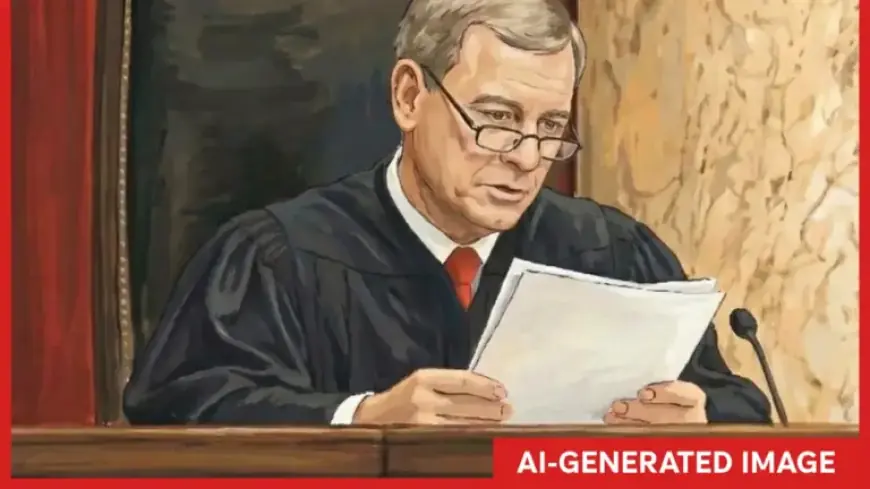
The project “On The Docket” aims to enhance public access to U.S. Supreme Court decisions by using artificial intelligence to create visual representations of justices delivering their opinions. This innovative endeavor moves beyond the traditional practices of the court, which has long relied on secrecy regarding its proceedings.
Background on Accessibility to Supreme Court Decisions
Since its inception in 1996, Jerry Goldman, a professor at Northwestern University, has focused on making the Supreme Court’s work available to the public. His project, Oyez, provided audio recordings of oral arguments and decisions dating back to 1955. Prior to the late 20th century, the public had no awareness that these sessions were being recorded, resulting in many lost tapes over the years.
Access to oral arguments was severely limited. Typically, audio recordings of a court term were only released at the start of the next term, causing significant delays. Major changes occurred in 2020 during the COVID-19 pandemic when the court allowed live broadcasts of oral arguments. This shift marked a significant step toward transparency.
Introducing AI-Generated Avatars
- The AI project uses avatars to recreate justice discussions in real-time.
- The visuals are based on public appearances of the justices to capture their mannerisms and gestures.
- Initial AI attempts faced challenges, leading to amusing failures, such as justices disappearing on screen.
Timothy R. Johnson, from the University of Minnesota, collaborated on this project with the AI design firm Spooler. Their goal was to create lifelike avatars that accurately correspond with court audio. Ethical considerations emerged regarding how to present these avatars, leading to a decision to make the videos somewhat cartoon-like and clearly mark them as AI generated.
Recent Implementation and Supreme Court Perceptions
One notable outcome of this project is an AI-generated visualization of Chief Justice John Roberts summarizing a significant 6-to-3 ruling. This ruling granted former President Trump, as well as future presidents, immunity for certain official actions taken during their terms.
Accompanying Roberts, Justice Sonia Sotomayor expressed her dissent, resulting in a powerful depiction of their spoken words. The total runtime for these summaries reached 38 minutes, with the visuals adding an eerie yet captivating layer to the spoken content.
Cultural Resistance to Transparency
The Supreme Court has historically been resistant to publicizing its proceedings. Although live broadcasts of oral arguments became common after COVID-19, justices have not embraced the notion of sharing decision announcements live. Reporters and scholars have persistently requested this accessibility but often receive no response.
Goldman emphasizes that if something is public within the courtroom, it should also be available to the public at large. Despite advancements such as On The Docket, traditional practices still dominate, highlighting the ongoing tensions between transparency and secrecy in the highest court of the land.