






















Kid Rock pushes back on lip-sync claims as new tour plans take shape

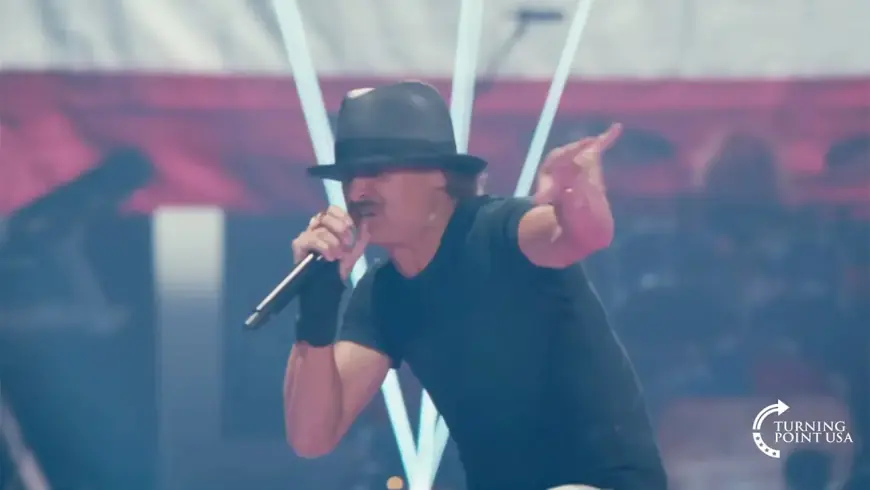
Kid Rock spent the days after Super Bowl weekend responding to online claims that his performance for a conservative alternative halftime program was lip-synced, arguing the issue was a technical mismatch rather than a fake vocal. The dispute has landed at the same moment he is promoting a newly announced 2026 tour and navigating fresh attention on past lyrics and the politics wrapped around his public appearances.
As of Wednesday, Feb. 11, 2026 (ET), no event organizer has publicly released a full technical breakdown of the broadcast sync issue. Kid Rock’s position is that he performed live at the taping and that post-production created the impression of lip-syncing.
The performance that triggered the debate
The controversy centers on a pre-recorded halftime-style performance created as an alternative to the NFL’s official Super Bowl halftime show. Clips that circulated widely show moments where Kid Rock’s mouth movements appear out of sync with the audio, prompting immediate accusations that the vocals were not live.
Kid Rock has said the performance itself was real and physically demanding, and that the apparent mismatch was created in editing—specifically, how the audio, his on-stage vocal, and supporting vocals were assembled for the final cut. He has also suggested he may share a straightforward live performance to demonstrate his current vocal condition and shut down the narrative.
Even if the explanation is accurate, the optics matter. Lip-sync accusations tend to spread faster than technical clarifications, and halftime performances—especially those connected to a major sporting event—are judged by internet standards where a few seconds of weird sync can define the story.
Why “pre-recorded” became a flashpoint
A key nuance is that the segment was taped ahead of time for broadcast. That detail, in itself, does not prove lip-syncing. Large-scale TV productions frequently pre-tape performances for logistics, timing control, or safety.
Still, the argument has become politicized: critics treat “pre-recorded” as synonymous with “fake,” while supporters frame it as a normal production choice and point to the realities of mixing audio for a broadcast. Without a neutral technical account, the public dispute is likely to persist, because both sides can keep pointing to the same clip as proof.
Tour announcement adds stakes to the spotlight
The timing is not accidental from a business perspective. Kid Rock announced a 2026 run billed as the “Freedom 250 Tour – The Road to Nashville,” with tickets scheduled to go on sale Friday, Feb. 13, 2026, at 10:00 a.m. local time.
The tour plan gives the lip-sync debate an immediate “proof point” opportunity: live shows are where an artist’s vocal authenticity is hardest to argue with. It also raises the stakes: controversy can juice attention, but it can also complicate partnerships, venues, and sponsorship arrangements that depend on predictable headlines.
Separately, the broader festival ecosystem around Kid Rock has faced turbulence. A country-focused festival series associated with his brand recently reshaped some dates after multiple artists withdrew, an example of how quickly lineups can change when performers weigh public perception against business commitments.
The lyric backlash cycle returns
Around Super Bowl weekend, a decades-old lyric referencing underage girls resurfaced in online discourse, prompting renewed backlash. This is a familiar pattern for long-tenured artists with provocative catalogs: old lines are recirculated, reinterpreted, and judged by current cultural standards.
Kid Rock has not publicly offered a detailed new explanation of that lyric in the most recent cycle of attention, and the episode has largely functioned as a reputational accelerant—fuel for critics already primed by the halftime controversy. For supporters, it is framed as selective outrage tied to politics rather than music.
What happens next
Kid Rock’s near-term story is likely to be shaped by three measurable milestones: whether the broadcast team offers any technical clarity, how the first tour on-sale performs, and whether the festival lineup stabilizes or continues to change.
If ticket demand is strong and early live footage is clean, the sync dispute may fade into a footnote. If more performance clips circulate with similar “audio vs. video” weirdness—or if venues and partners express concern—then this episode could remain attached to the tour narrative well into spring.
Key takeaways
-
Kid Rock says the viral clip reflects a technical sync issue, not lip-syncing.
-
The performance was taped ahead of time for broadcast, which became a focal point of the debate.
-
A new 2026 tour is scheduled to go on sale Feb. 13, creating an early test of whether controversy hurts—or helps—demand.
-
Renewed attention on old lyrics and shifting festival lineups adds pressure to keep headlines focused on shows, not noise.
Sources consulted: People, Entertainment Weekly, Variety, KidRock.com