

























Ring camera under scrutiny after Tucson abduction case and Super Bowl spotlight

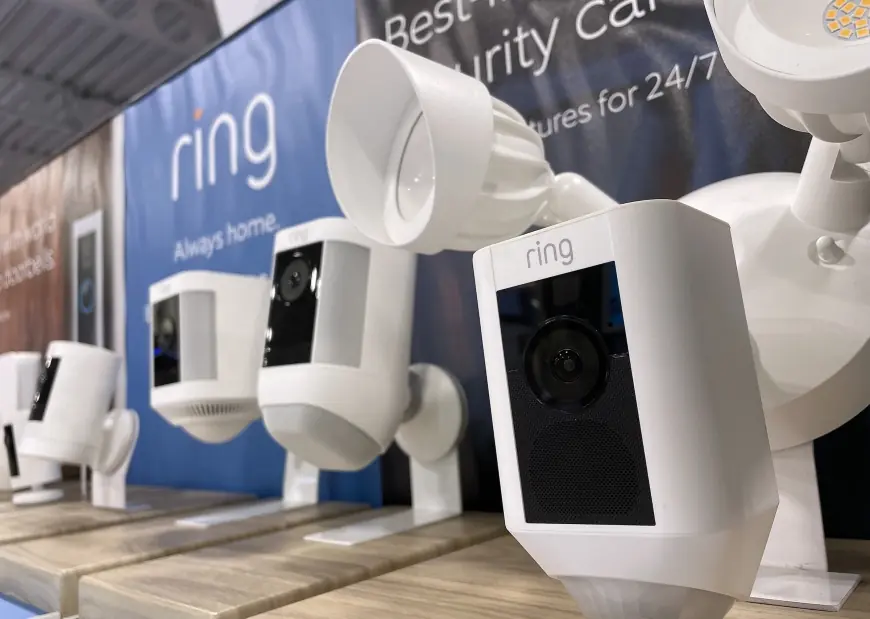
Ring doorbell cameras are facing a fresh wave of attention in early February 2026, driven by two very different headlines: a high-profile abduction investigation in Tucson where a doorbell camera went offline in the critical window, and a Super Bowl weekend marketing push that sparked renewed privacy concerns. Together, the moments are refocusing a familiar question for millions of households: what these cameras reliably capture, what happens when they don’t, and how footage can be requested or shared.
The immediate pressure point is trust. A doorbell camera is marketed as a “front door witness,” but real-world cases show how quickly gaps appear—through connectivity loss, device tampering, subscription limits, or simple configuration issues.
The Tucson case that put “offline” on the front page
In the disappearance of Nancy Guthrie in Tucson, investigators narrowed in on the early-morning hours of Sunday, Feb. 1, 2026, after a series of digital disruptions. The home’s doorbell camera disconnected at roughly 3:47 a.m. ET, and investigators later released images from recovered video in an effort to identify a masked person seen at the home during that overnight window.
The public release of images on Tuesday, Feb. 10, 2026 (ET) underscored a practical reality about doorbell cameras: when the device goes offline—or is physically interfered with—the most important evidence may depend on whether any data was stored elsewhere and whether it can be retrieved later. Authorities have indicated outside technical assistance helped recover material that was not initially available.
What “doorbell camera went offline” can actually mean
“Offline” does not always mean the same thing. In many cases it’s a connectivity failure—weak signal, router reboot, bandwidth issues, or power interruption. In other cases, it’s deliberate: a device can be covered, removed, reset, or otherwise disabled if someone reaches it.
There’s also a quieter category: the device may still log motion events but fail to save usable video if the network drops at the wrong moment, if cloud upload is interrupted, or if settings and plan limits restrict storage. For homeowners, that means the most important minute of the year can be the minute the system is least able to perform.
A Super Bowl push revives privacy fears
At the same time, Ring drew heightened attention around Super Bowl weekend for promoting a community-driven feature framed around locating missing pets using shared neighborhood footage. The rollout reignited criticism that consumer camera networks can drift toward broader tracking and surveillance, especially when paired with powerful search tools and large-scale data sharing norms.
Even when features are designed for narrow purposes, the controversy tends to center on the same core tension: convenience and security on one side, and the risk of normalization of wide-area monitoring on the other—often without users fully understanding how sharing choices work.
Law enforcement requests and the “neighbors” question
One of the most debated aspects of doorbell cameras is how footage can be requested by law enforcement. Ring maintains guidelines for official requests and also supports community request mechanisms where users can choose whether to share footage from a defined time and area.
In practice, this places the decision at the household level most of the time: residents can decline, share selectively, or share proactively. Critics argue the broader ecosystem encourages sharing under stress, while supporters say it helps solve crimes and find missing people. The reality is messier: requests can help, but they can also widen the footprint of who is captured on camera—neighbors, delivery workers, visitors—without their active consent.
Subscription changes and why they matter during incidents
Starting Jan. 14, 2026 (ET), Ring reorganized and renamed parts of its subscription lineup, automatically transitioning users to new plan names while keeping core features aligned with their prior plans. For most customers, plan changes are background noise—until something happens and they need clips, timestamps, and retention history.
That’s when questions get urgent: How many days of video are retained? Are motion events saved as clips or just alerts? Can you download quickly? If a device is stolen or damaged, does any footage remain accessible? The answers depend heavily on plan, settings, and whether the device successfully uploaded video before going offline.
Key dates that shaped the current debate
| Date (ET) | Event | Why it matters |
|---|---|---|
| Jan. 14, 2026 | Subscription plans renamed/restructured | Affects retention and feature expectations |
| Feb. 1, 2026 | Doorbell camera disconnects in Tucson case | Highlights “offline” risk during critical moments |
| Feb. 8–9, 2026 | Super Bowl weekend marketing surge | Triggers renewed privacy conversation |
| Feb. 10, 2026 | Federal agents release recovered images | Shows the value—and limits—of retrieval after disruption |
Sources consulted: Ring Support, Federal Bureau of Investigation, Consumer Reports, Electronic Frontier Foundation