























2026 Winter Olympics ice hockey heats up as men’s tournament opens and women’s rivalry explodes, while Jakara Anthony and Matt Graham surge into moguls finals

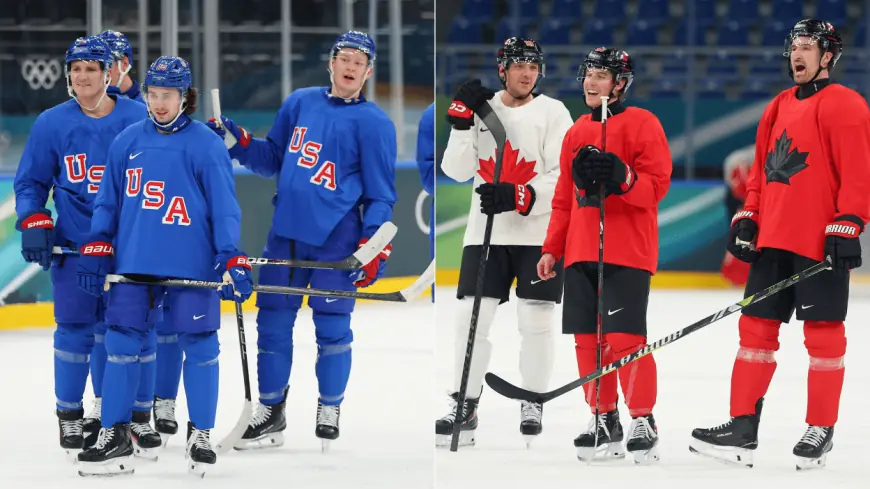
Milano Cortina 2026 is starting to feel like two Olympics at once: a tactical, grind-it-out chess match in ice hockey, and a split-second, high-risk fireworks show in moguls skiing. On Tuesday, February 10, 2026 ET, the women’s ice hockey tournament delivered its loudest statement yet when the United States routed Canada 5–0 in preliminary play, a result that shifts the psychological balance of the rivalry and reshapes knockout expectations. Now, the men’s ice hockey tournament is beginning on Wednesday, February 11, 2026 ET, adding another medal track with a very different pressure profile: fewer mistakes tolerated, and far less time to “play into form.”
At the same time in Livigno, Australia’s Jakara Anthony and Matt Graham have pushed into position to contend in moguls, one of the Games’ most unforgiving events. Anthony topped women’s qualifying even while managing a recent injury comeback, and Graham squeezed through to the men’s final after admitting his run wasn’t clean. The common thread across both sports is the same: early rounds are no longer warm-ups. They are filters.
2026 Winter Olympics ice hockey: what changed after the 5–0 and why the men’s opener matters
The United States’ 5–0 win over Canada in women’s ice hockey wasn’t just another rivalry chapter. It was a scoreboard shock that instantly alters how both teams are perceived inside the tournament. In Olympic hockey, one game rarely decides the gold medal. But a decisive result can change seeding paths, matchups, and the emotional temperature of every subsequent shift.
Behind the headline, incentives diverge. For the United States, a blowout win reduces uncertainty: it allows smarter load management, sharper tactical planning, and a clearer route through the bracket. For Canada, the immediate incentive becomes reset and protection—protect confidence, protect health, and protect the team’s identity before a potential rematch with medals at stake.
Now the men’s side begins, and that timing matters. Unlike a long club season, Olympic ice hockey has no runway. Teams have to find chemistry fast, especially when star-heavy rosters still need functional lines, reliable special teams, and disciplined puck management. The first group games aren’t about style points; they’re about avoiding a bad loss that forces a brutal quarterfinal draw.
A second-order effect to watch: the women’s 5–0 can influence how the wider hockey ecosystem behaves. Coaches and teams often react to a dominant performance by tightening systems, leaning conservative, and emphasizing mistake-free hockey. That can lower-scoring games, raise the value of special teams, and put even more weight on goaltending.
Milano venues and the logistics edge: why location and schedule can decide hockey outcomes
Milano Cortina 2026’s ice hockey footprint is heavily Milan-centered, and that matters for rhythm and recovery. Travel, practice time, and even arena familiarity can create small advantages that become decisive in a single-elimination context.
The stakeholder map is wide: federations want medals, players want peak performance without overextending, and organizers want smooth operations in packed venues. But for coaches, the biggest stakeholder is time—time to install systems, time to recover, time to adapt. Teams that simplify and execute cleanly early tend to survive longer than teams chasing the “perfect” style.
What we still don’t know on the men’s side is which rosters will settle fastest and which will be punished by early misreads: a bad change, a careless neutral-zone turnover, or a penalty parade can end a medal dream before it begins.
Moguls skiing: Jakara Anthony leads qualifying and Matt Graham survives to fight for a medal
Moguls is a sport that looks chaotic until you realize it’s a precision test disguised as violence. Speed, line choice, turn quality, and aerial execution all have to land in the same run. That’s why early qualifying results matter: they show who can manage risk on a course that punishes hesitation.
Jakara Anthony’s latest signal to the field came when she topped women’s moguls qualifying with a leading score, setting up a direct path into the final on Wednesday, February 11, 2026 ET. The detail that sharpens the story is her recent injury comeback: skiing fast and clean after disruption isn’t just physical, it’s psychological. It suggests she can take pressure, absorb it, and still attack.
Matt Graham’s path was different—and arguably more revealing. He made the men’s moguls final, but described his run as not his best, with mistakes he had to rescue. In moguls, that can be a gift: it’s a warning without a penalty. He’s through, but he knows exactly what must tighten before the final.
Behind the headline: incentives, missing pieces, and what happens next for moguls and hockey
Context: Both ice hockey and moguls reward composure more than hype. Hockey punishes undisciplined emotion with penalties and soft goals; moguls punishes overreaching with missed landings and lost rhythm.
Incentives:
-
Hockey teams will prioritize bracket position, health, and special-teams edge.
-
Moguls athletes will calibrate risk—bigger tricks can win medals, but only if turns and landings stay clean.
Missing pieces:
-
For hockey: which teams are healthiest, which lines truly click, and who gets elite goaltending at the exact right moment.
-
For moguls: how the course holds up as conditions evolve, and whether athletes dial up difficulty in the final or bet on cleanliness.
Next steps, realistically:
-
Women’s hockey narrative hardens around a rematch if both rivals advance cleanly; trigger is bracket alignment and continued shutout-level defending.
-
Men’s hockey bracket gets defined quickly by early group upsets; trigger is one heavyweight dropping points and sliding into a dangerous quarterfinal.
-
Jakara Anthony converts qualifying dominance into a medal if she repeats clean turns under final pressure; trigger is matching speed with controlled landings.
-
Matt Graham becomes a podium threat if he cleans up timing and commits to a stable line; trigger is reducing mid-course errors while keeping difficulty competitive.
-
A broader Olympic storyline emerges: nations that handle pressure best, not just those with the biggest names, will collect medals when the schedule tightens.
Milano Cortina 2026 is already delivering a clear message: in ice hockey and in moguls, the margin is not small—it’s microscopic. And the athletes who can live inside that margin are the ones who will leave with medals.