






















Annie Guthrie Update: What We Know Now, Why Investigators Returned, and What Happens Next in the Nancy Guthrie Case

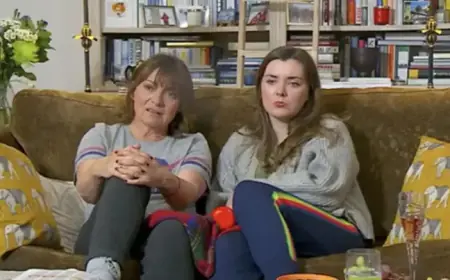
Annie Guthrie has become a central figure in the public conversation surrounding the disappearance of her mother, Nancy Guthrie, in Tucson, Arizona. Annie is best known as the sister of broadcaster Savannah Guthrie, but the reason her name is surging today is more specific: investigators have repeatedly focused attention on areas connected to Annie’s neighborhood and property as they work to identify who was near Nancy’s home around the time she went missing.
As of Wednesday, February 11, 2026 ET, authorities have not announced that Nancy Guthrie has been found. Officials have also not publicly confirmed Nancy’s condition. The investigation remains active and sensitive, with public-facing updates designed to generate tips without revealing the full evidentiary picture.
Who is Annie Guthrie, and why is she in the spotlight now
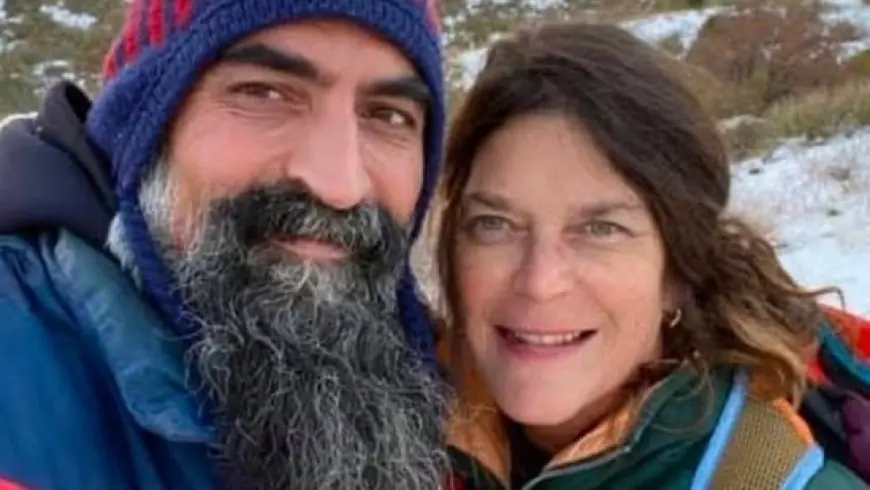
Annie Guthrie is Savannah Guthrie’s sister and Nancy Guthrie’s daughter. She lives in Tucson with her husband, Tommaso Cioni, making him Savannah Guthrie’s brother-in-law and Nancy Guthrie’s son-in-law.
In a case where timelines and last-known contacts matter, relatives naturally become part of the investigative process. That can include repeated interviews, checks of vehicles, requests to clarify movements, and searches tied to newly developed leads. None of that, by itself, proves wrongdoing. It does, however, explain why Annie’s name is repeatedly pulled into news coverage as investigators work to narrow the window of what happened.
What’s behind the headline: why investigators might return to the same area
Recent investigative activity around Annie Guthrie’s neighborhood has fueled online speculation, but repeat attention is common in serious missing-person investigations, especially when the case is treated as criminal in nature.
There are a few practical reasons investigators revisit the same location:
-
New information changes the priority of a place that was previously checked
-
Analysts re-review earlier evidence and decide a specific detail needs verification
-
Tips point to a narrow question only a targeted search can answer
-
Investigators want to compare statements against physical reality, distances, and sightlines
A second search is often less about “starting over” and more about testing a refined theory.
The camera-footage thread and why it matters
A major driver of public attention has been the release of security-camera imagery showing a masked individual with a backpack at Nancy Guthrie’s home. Authorities have described the person as someone they want to identify, and the footage appears to show interaction with the camera itself.
When investigators go public with visuals like that, it usually means they believe someone in the community can connect the dots: recognize clothing, posture, gait, or a pattern of movement, or match a person to a vehicle seen nearby. It also suggests urgency, because neighborhood camera footage can be overwritten or deleted with time.
The ransom-message narrative: signal, noise, and incentives
The case has also been clouded by claims of ransom communications and cryptocurrency demands. In high-profile kidnappings, there is a predictable second wave: hoaxes, impersonators, and opportunists who exploit fear and publicity.
That dynamic creates three pressures at once:
-
Investigators must authenticate messages before acting on them
-
Families can be pulled into emotional and financial traps
-
The public conversation becomes saturated with unverified “updates”
The incentive for hoaxers is attention, chaos, or money. The incentive for investigators is to shut down interference fast while keeping real leads confidential. The incentive for the family is to keep the focus on Nancy’s safe return and credible tips.
What we still don’t know about Annie Guthrie’s role in the timeline
Publicly, several essential facts remain unclear, and those gaps are exactly where rumor tries to rush in:
-
The last confirmed sighting of Nancy Guthrie and the verified time window of her disappearance
-
Whether investigators believe the masked individual is directly tied to an abduction
-
Which communications have been authenticated as real versus fraudulent
-
Whether there is verified proof-of-life information and why it may be withheld
Until those points are officially clarified, the only responsible framing is that the case is still developing and key facts remain undisclosed.
What happens next: realistic scenarios and triggers
Here are the most likely next steps, based on how investigations typically progress, with clear triggers to watch:
-
More images or clearer still frames released
Trigger: investigators believe broader public recognition is the fastest route to identification. -
A tighter public timeline
Trigger: officials corroborate enough timestamps from witnesses and cameras to speak more precisely. -
A shift in search geography
Trigger: a confirmed lead points away from the immediate neighborhood around Nancy’s home. -
Targeted public requests
Trigger: investigators need one specific detail, such as a vehicle description or a narrow time window. -
A major procedural milestone
Trigger: identification of the masked individual, a new warrant tied to a specific lead, or an arrest.
Why Annie Guthrie remains central to the story
Annie Guthrie is central for one reason above all: proximity to the last-known period when investigators believe Nancy Guthrie vanished. Proximity creates scrutiny, and scrutiny creates a media vortex. But proximity is not proof.
For now, the most important fact is also the simplest: Nancy Guthrie has not been publicly confirmed found, and the investigation continues. Annie Guthrie’s role in public updates is best understood as part of a family’s effort to bring a missing mother home while investigators try to turn a small number of hard facts into a coherent, provable sequence of events.