























Johnny Weir’s Milano Cortina 2026 moment blends sharp analysis and headline-making style

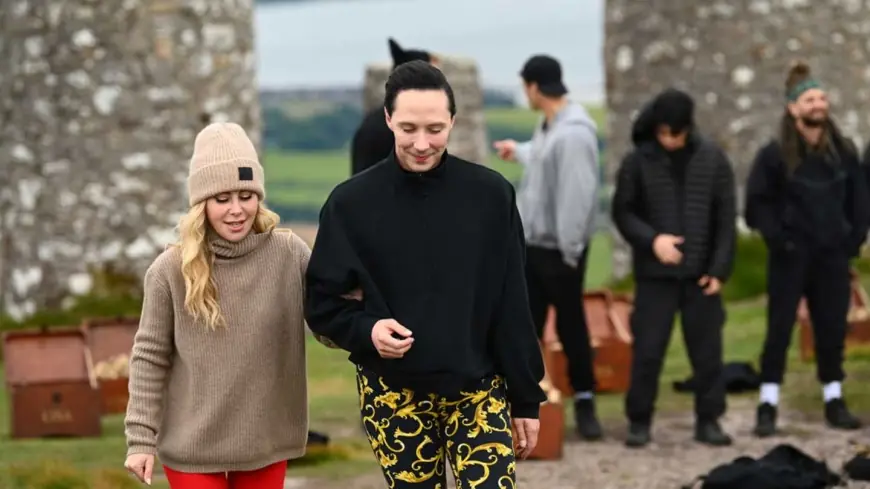
Johnny Weir has become one of the defining voices of Milano Cortina 2026, pairing technical figure-skating breakdowns with a fashion-forward presence that has repeatedly become part of the nightly conversation. As the Games move deeper into marquee medal events, Weir’s role has expanded beyond commentary: he has emerged as a cultural signal of what modern Olympic coverage looks like—equal parts sport, storytelling, and spectacle.
Weir, 41, is working his fourth Winter Games in the broadcast booth alongside longtime partner Tara Lipinski, continuing a pairing that has shaped how millions hear and see figure skating during the Olympic fortnight.
A familiar voice, a bigger spotlight
Weir’s appeal at these Games has been his ability to translate elite-level technique into plain language without flattening the nuance. His commentary has focused on the small, decisive details—edge quality, timing into jumps, and how small hesitations cascade into lost points—while keeping the tone accessible for casual viewers.
That skill matters in a Winter Games where judging and scoring can feel opaque. In tight competitions, Weir has emphasized the “math” of execution: how a slightly under-rotated landing, a missed level on a spin, or a shallow step sequence can swing tenths that decide medals. The overall effect is a broadcast that feels less like narration and more like a guided viewing experience.
The matching-silver moment and the fashion conversation
Weir’s on-air wardrobe has also drawn attention throughout the first week in Italy, including a coordinated silver look with Lipinski that quickly became one of the most talked-about fashion moments of the Games. The outfits reinforced a signature they’ve leaned into for years: intentional coordination that reads like an extension of the performance art at the center of figure skating itself.
At Milano Cortina, the styling has worked as more than a sideshow. It creates a sense of occasion—one that mirrors the sport’s theatrical roots—while also signaling a clear brand of coverage: serious about the competition, but unafraid to embrace the pageantry around it.
A renewed interest in his skating legacy
The attention around Weir’s on-air work has also revived broader interest in his competitive résumé. He was a two-time Olympian, finishing fifth in men’s singles at the 2006 Winter Games and sixth in 2010. He never won an Olympic medal, but he built a reputation as a distinctive performer with a style that stood out in an era of rapid technical evolution.
That history shapes his credibility at the desk. When he talks about the difference between “training jumps” and “Olympic jumps,” he’s speaking from experience—how pressure changes timing, how nerves change posture, and how a skater’s program can look identical on paper but feel completely different in execution on the night that matters.
Off-ice projects meet Olympic week energy
Weir’s profile has also been boosted by recent entertainment work with Lipinski that positioned them as a duo beyond the rink. The timing has mattered: interest in their off-ice appearances fed into Olympic week, and Olympic week fed back into curiosity about what they do when they aren’t calling competitions.
The result is a rare kind of crossover that still feels rooted in sport. Viewers may come in because of personality, but they often stay because the analysis helps make sense of what they’re watching—especially in events where performance can be breathtaking yet difficult to “score” by eye.
What to watch as the figure skating schedule heats up
The next stretch of Milano Cortina 2026 is where Weir’s value is likely to peak: high-pressure programs, tight fields, and medal decisions where a single element can reframe the podium. Expect his commentary to lean harder into two themes as the stakes rise.
First, risk management. The biggest names will face choices about layout—whether to chase maximum base value or protect consistency—and those decisions will be visible in real time. Second, performance under fatigue. With schedules compressing and travel between venues, the margin for error shrinks, and the best skaters often win by looking the least strained late in the program.
For Weir, it’s also the part of the Games where his signature blend lands best: a sharp technical eye paired with an understanding of performance as theater. Milano Cortina 2026 is built for that mix, and he has been one of its clearest embodiments.
Sources consulted: NBC Olympics, Sports Illustrated, Yahoo Sports, Parade