

























N.B. Power Withholds Estimated Cost for Tantramar Gas Plant Proposal

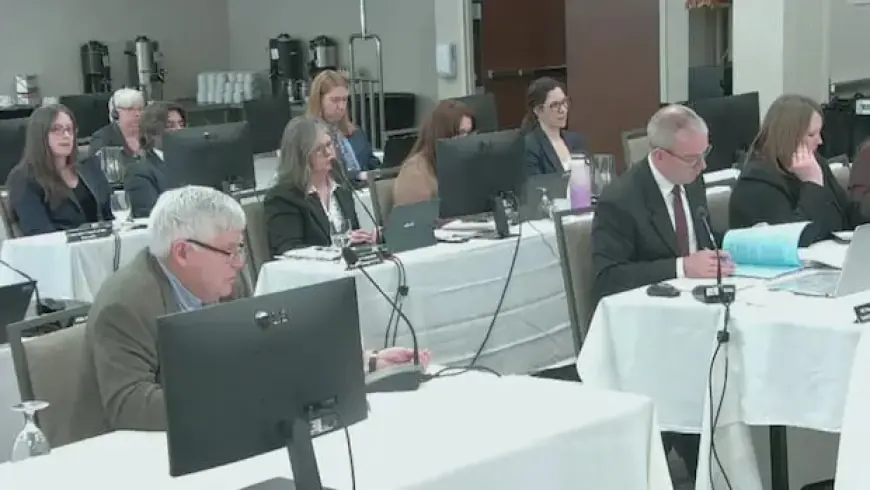
There are significant discussions surrounding the proposed Tantramar gas plant by N.B. Power, as the utility faces scrutiny over estimated costs and project feasibility. The first day of hearings on this controversial project took place recently in Moncton.
N.B. Power Withholds Estimated Cost for Tantramar Gas Plant Proposal
During the hearings, Andrew Secord, a professor from St. Thomas University, inquired about the projected costs associated with the gas and diesel generating plant. He was particularly interested in understanding whether the total expenses would reach hundreds of millions or even billions of dollars.
Confidential Financial Details
Brad Coady, vice-president of N.B. Power, stated that he could not disclose the overall cost of the project. However, he indicated that the initial capital cost to build the plant would exceed one billion dollars. This figure reflects only the construction expenses and does not include operational and maintenance costs over the project’s 25-year lifespan.
- Total capital cost: Over $1 billion
- Duration: 25 years
- Capacity need by 2028: 400 megawatts
The financial details surrounding a 25-year agreement between N.B. Power and Missouri-based ProEnergy remain confidential. Consequently, members of the public without confidentiality agreements are not privy to specific figures or terms.
Expert Opinions and Alternatives
The hearings serve to evaluate the prudence of the gas plant initiative. Lawyer Kostantina Northrup, representing the Conservation Council of New Brunswick, questioned N.B. Power executives about alternative strategies to address the capacity requirement. She suggested exploring a mix of solutions rather than focusing on a single large project.
Darren Clark, N.B. Power’s director of corporate planning, acknowledged that while multiple strategies were considered, the utility opted for a centralized approach to effectively meet immediate demand.
Demand Response Initiatives
Secord also highlighted the importance of residential demand response initiatives planned for implementation in 2027 and 2028. These will include extending peak rebate programs and introducing variable time-of-day pricing for residential customers. Coady explained that smart meters, set to be rolled out in 2024 and 2025, will enable customers to benefit from reduced rates during off-peak times.
Hearing Schedule and Future Developments
The current hearings are part of a two-part process. Testimony will resume in the coming days, with a second session scheduled for March or April to discuss an expanded proposal involving a new 10-turbine plant capable of producing 500 megawatts of electricity. The initial plan only accounted for 400 megawatts with eight turbines.
As discussions progress, the Energy and Utilities Board is expected to set new dates for further hearings, allowing more time for public consideration of N.B. Power’s latest proposals.