

























Madison Chock and Evan Bates trail by fractions after Olympic rhythm dance

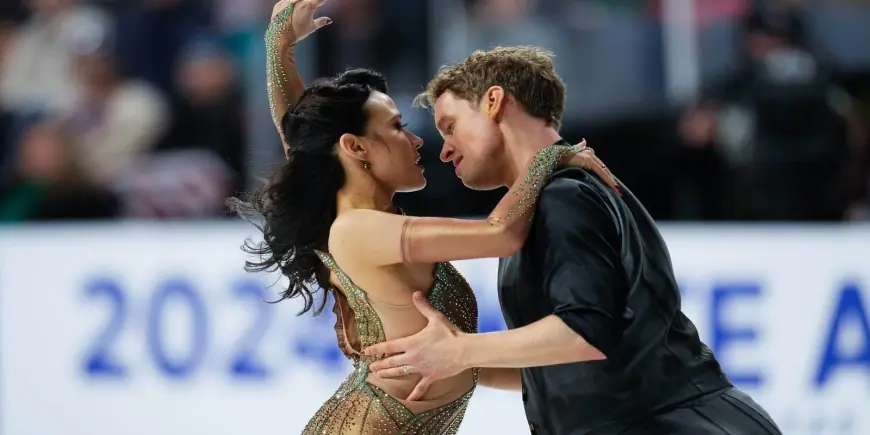
The ice dancing Olympics 2026 title race is on a knife edge after the rhythm dance left Madison Chock and Evan Bates a fraction off the lead, setting up a high-stakes free dance showdown in Milan. A new French pairing, Laurence Fournier Beaudry and Guillaume Cizeron, delivered a personal-best rhythm dance score to take first place—turning what many expected to be a U.S.-Japan-Italy-centered fight into a two-team sprint at the top.
Rhythm dance Olympics 2026: the top of the standings
Fournier Beaudry and Cizeron lead after the rhythm dance with 90.18, narrowly ahead of Chock and Bates on 89.72. The gap is small enough that a single level change or a slightly different technical review in the free dance could swing gold either way.
Chock and Bates’ rhythm dance score reflected how little margin exists at this level: a technical review reduced one element’s level, and that alone helped separate first from second. The Americans, coming off a team-event gold earlier in the week, left the rink treating the deficit as manageable rather than damaging.
Chock and Bates: why the free dance still favors them
Chock and Bates arrive at the free dance as one of the most consistent teams in the field over the last cycle, with a track record of peaking in medal moments. Their rhythm dance base is strong, but the free dance is where their packaging and execution usually create more separation—especially when they hit every feature cleanly.
Their job now is straightforward: skate clean and force the leaders to match them. If the free dance becomes a two-team shootout, the result may come down to levels and small execution edges rather than obvious mistakes.
Laurence Fournier Beaudry’s fast rise with Cizeron
Fournier Beaudry’s Olympic story is unusual even by ice dance standards. After a partner change and a switch in national representation, she formed a new team with Cizeron in 2025 and has climbed rapidly into gold-medal range. Cizeron brings rare big-event experience as a former Olympic champion, and the partnership has looked increasingly polished despite limited time competing together.
Their rhythm dance leaned into fashion-forward presentation and tight, precise positions, and it was rewarded with a score that put them in control heading to the deciding segment. The key question is whether they can reproduce that sharpness under the medal-event pressure of the free dance.
Lenny Kravitz, ’90s vibes, and the rhythm dance mood
A notable throughline in this Olympic rhythm dance has been a heavy ’90s influence, with teams using familiar pop and rock textures to create instant audience connection. Chock and Bates leaned into a Lenny Kravitz-inspired energy, emphasizing speed, attack, and performance punch—an approach that fits the rhythm dance’s demand for clarity and drive.
That musical trend matters because rhythm dance scoring isn’t just about personality; it’s about how well teams lock in edges, turns, and timing while still selling a theme. When multiple top teams are clustered within a point, the difference often comes from which team looks the most effortless while still meeting every technical requirement.
What to watch in the free dance medal event
The free dance is scheduled for Wednesday, Feb. 11 at 1:30 PM ET, and it should be the cleanest test of overall quality rather than a single-element shootout. Expect the podium picture to involve a broader pack behind the top two, with Canada, Great Britain, and Italy all positioned to capitalize if a favorite opens the door.
Key takeaways to track during the skate:
-
Whether the leaders keep their levels under pressure, especially on step sequences
-
If Chock and Bates gain back points through cleaner execution and higher component marks
-
How tightly the bronze fight compresses if several teams skate clean back-to-back
With less than half a point separating first and second, ice dance Olympics 2026 is exactly where it’s supposed to be: a medal event decided by details, not by disasters.
Sources consulted: Reuters, ESPN, NBC Olympics, U.S. Figure Skating