

























Trump Vows to Block Michigan-Canada Gordie Howe Bridge

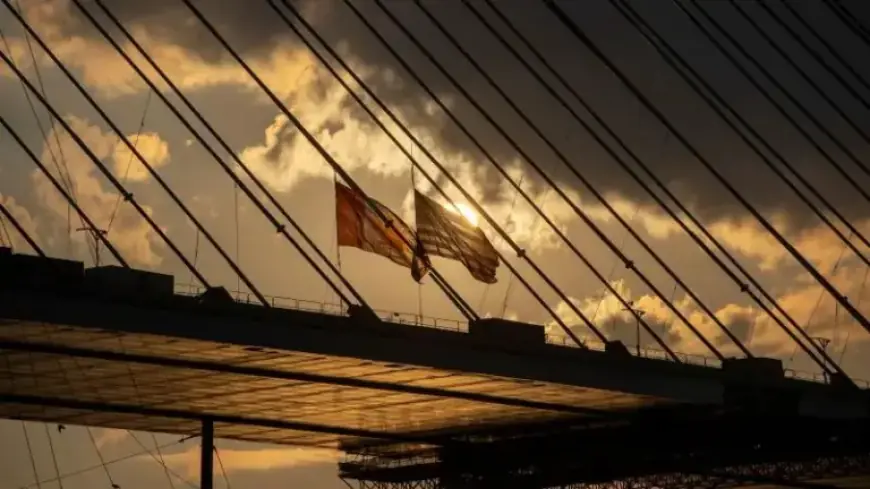
President Donald Trump recently vowed to obstruct the opening of the Gordie Howe International Bridge, linking the United States and Canada. This 1.5-mile span connects Detroit, Michigan, and Windsor, Ontario. Major construction is finished, and the bridge is anticipated to open later this year, pending testing.
Threats Over Fairness and Respect
In a post on Truth Social, Trump stated he would “not allow” the bridge to open until the U.S. was “fully compensated” for past dealings with Canada. He insisted Canada must also extend “Fairness and Respect” towards the United States. Trump declared that negotiations would commence “IMMEDIATELY.”
Bridge Ownership and Construction
The Gordie Howe International Bridge, named after renowned Canadian hockey player Gordie Howe, has an estimated cost of more than $4 billion. It is financed, built, operated, and maintained entirely by Ottawa, although it will be jointly owned by Canada and the Michigan state government, as outlined in the 2012 agreement. Some key terms of the agreement include:
- All iron and steel used in construction must come from the U.S. or Canada.
- No country should be favored over the other in the construction process.
Windsor Mayor Drew Dilkens responded to Trump’s claims, emphasizing that U.S. steel was utilized for the bridge on the Michigan side. He expressed disbelief over Trump’s statements.
Increasing Tensions in U.S.-Canada Relations
This latest incident follows a series of critical remarks from Trump about Canada. Relations deteriorated after Canadian Prime Minister Mark Carney encouraged nations to unite against major powers like the U.S. At the end of January, Trump also suggested decertifying Canadian-made aircraft and threatened steep tariffs on Canadian products.
Moreover, Trump warned he might impose a 100% tariff on all Canadian goods if Canada formed any trade agreements with China, a country he described as a threat to Canada’s economy. Recently, Carney and Chinese leader Xi Jinping developed a “new strategic partnership” that involves easing tariffs on some products, such as electric vehicles.
Impact on Trade Agreements and Local Economies
The growing friction between the U.S. and Canada arrives just before a review of the US-Mexico-Canada Agreement (USMCA) is set to take place. The trade deal was established during Trump’s first term to replace NAFTA.
Trump lamented that Ontario, Canada’s largest province, does not carry American alcoholic beverages in its stores. This was a response to U.S. tariffs on Canadian imports, leading many provinces to remove American liquor from their retail shelves.
In contrast, Michigan Senator Elissa Slotkin voiced concerns over the negative repercussions of canceling the bridge project. She highlighted Trump’s actions as detrimental to Michigan’s economy, insisting that Canada should be viewed as an ally rather than an adversary.