
























Queensland Approves New Oil and Gas Site Comparable to Singapore’s Size

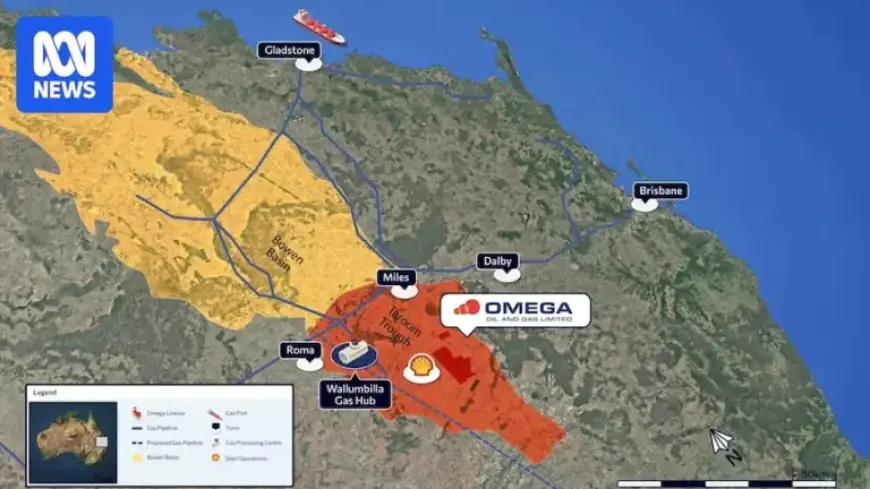
The Queensland government has granted approval for new oil and gas exploration in the Taroom Trough, located near Miles in southern Queensland. This area encompasses approximately 750 square kilometers, roughly the same size as Singapore. Energy advocates view this move as crucial for revitalizing Australia’s domestic oil production industry, a sector that has not seen significant development since the 1970s.
Possible Economic Impact of Taroom Trough
Minister for Natural Resources and Mines, Dale Last, emphasized the area’s potential to enhance local energy supplies, stating that it is a vital step to lower energy prices. He assured that any gas produced would be directed exclusively to the Australian market, aligning with the Australian Market Supply Condition.
Industry Perspectives
- Keld Knudsen, a director of the Australian Energy Producers, highlighted the project as a significant milestone for domestic oil and gas development.
- Rick Wilkinson, CEO of Energy Quest, noted promising results from existing oil exploration activities in the region, making the Taroom Trough one of Queensland’s most promising areas for oil and gas.
Wilkinson further pointed out that, unlike oil-rich countries like the USA and Saudi Arabia, Australia’s geological conditions contribute to its relatively lower oil production. The light crude oil found in the Taroom Trough is suitable for domestic refining.
Financial Considerations of Exploration
Exploration projects in the Taroom Trough present financial challenges. CEO of Omega Oil and Gas, Trevor Brown, mentioned that drilling a single well could cost between $15 million and $20 million. However, the anticipated economic and energy-security benefits make this investment appealing.
Community and Environmental Concerns
- Conservation groups have voiced strong opposition to exploration efforts, flagging issues related to groundwater quality and fossil fuel emissions.
- Ellen Roberts from Lock the Gate criticized the government for not keeping its promise to protect prime agricultural land.
Clare Silcock of the Queensland Conservation Council expressed apprehension over these developments, arguing they contradict the state’s emission reduction targets. She indicated that the government seems focused on fostering fossil fuel industries while blocking renewable energy initiatives.
In January, Queensland’s government approved three additional gas exploration sites in the Cooper-Eromanga basin, indicating a broader commitment to expanding the state’s fossil fuel sector. This recent activity raises questions about the balance between energy production and environmental protection in Queensland.