






















The child cameo stealing hearts in Bad Bunny’s halftime show, and why the clip is everywhere today

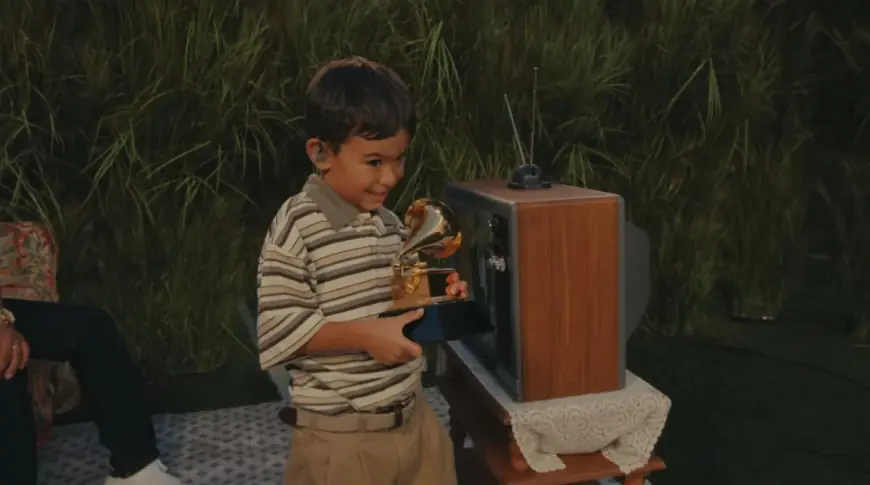
A short, tender scene at the start of Bad Bunny’s Super Bowl LX halftime show has become the most replayed moment from the performance: a small boy sitting at home, eyes wide, as Bad Bunny appears and places a Grammy trophy in his hands. The clip rocketed across social feeds on Monday, Feb. 9, 2026 (ET), partly because it’s emotionally simple—an awe-struck kid meeting his hero—and partly because a wave of mistaken identity turned it into a broader internet debate.
The child in the halftime segment has now been identified as Lincoln Fox, a 5-year-old child actor and model.
The moment that sparked the frenzy
The scene played like a mini short film: a child watching Bad Bunny on TV, then suddenly the superstar steps into the room, kneels down, and hands over the gramophone trophy. It was staged as a “dreams come true” opener—quiet, intimate, and instantly understandable even if you only caught a few seconds before the show shifted into full-stadium spectacle.
That contrast helped the clip travel. Halftime is usually loud and fast; this was gentle and slow, making it stand out and feel shareable.
Who the child is: Lincoln Fox
The child in the segment is Lincoln Fox, age 5. Representatives connected to the production clarified he is a performer who has appeared in commercials and on-camera work since early childhood. In the show’s framing, he appears to represent a younger version of Bad Bunny—an imaginative setup that turns the trophy handoff into a symbol of aspiration rather than a literal “award” moment.
The clarification matters because the internet’s first read was different, and that gap fueled the day-after obsession.
Why people thought it was someone else
Within hours of the broadcast on Sunday night, a large wave of posts claimed the child was Liam Conejo Ramos, a 5-year-old who had recently been in the news after being detained by immigration authorities with his father and later released. The resemblance—combined with the emotional tone of the segment—led many viewers to interpret the moment as a deliberate political gesture.
That interpretation spread faster than verification. By Monday, multiple confirmations pushed back on the claim, stating the child in the performance was not Ramos. The correction didn’t stop the clip; it supercharged it, because the story became two stories at once: a heartwarming cameo and a viral misidentification.
Why the clip is everywhere today
This is the rare viral moment that hits multiple “share” triggers simultaneously:
-
Instant emotion: A child’s stunned reaction needs no context.
-
Short runtime: The key beat fits in a few seconds, perfect for reposting.
-
Cultural symbolism: The trophy handoff reads like a message about dreams, identity, and origin stories.
-
A controversy-shaped boost: The mistaken-identity narrative kept people watching, arguing, and rewatching.
-
Halftime scale: Anything that pops during Super Bowl halftime has a built-in launchpad.
In practice, the clip became a canvas. Some people shared it as a pure feel-good scene. Others used it to talk about immigration, representation, or the ethics of online speculation. Both pathways drove the same outcome: massive replay.
The Puerto Rico tribute context
Bad Bunny’s halftime show leaned heavily into Puerto Rico imagery and Spanish-language performance choices, so viewers were already primed to look for symbolism. The child cameo landed inside that larger concept: a personal “origin” moment before the stadium turned into a full cultural tribute.
That framing is part of why the scene feels bigger than a cute kid on camera. It functions as the show’s emotional thesis—start with childhood wonder, then widen into community pride.
What this reveals about modern halftime culture
The speed of the misidentification—and the speed of the correction—shows how halftime moments now live in two timelines: the live broadcast and the postgame clip economy. In the clip economy, emotion outruns context, and context gets rebuilt after the fact.
It also underscores a hard lesson: viral posts can attach real people to a narrative they were never part of. In this case, the conversation around Liam Ramos gained additional attention, but the claim about his involvement in the show was false. Meanwhile, the actual child performer, Lincoln Fox, became a public figure overnight.
Bad Bunny hasn’t offered a detailed public explanation of the opening segment’s casting or intent since the show, leaving the scene to do what viral scenes do best: invite interpretations, then multiply them.
Sources consulted: Associated Press, People, Sports Illustrated, The Washington Post