
























Jutta Leerdam Olympics triumph—Jake Paul’s girlfriend turns fiancée after her women’s 1000m speed skating Olympic record in Milan

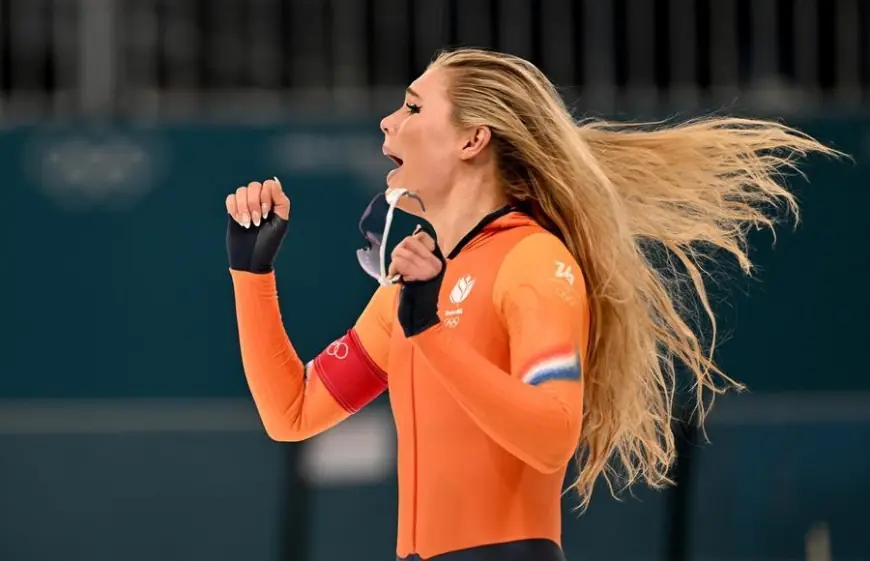
Jutta Leerdam delivered the signature moment of her Olympics on Monday, Feb. 9, 2026 (ET), powering to women’s 1000m speed skating gold in 1:12.31, a new Olympic record. The win instantly reshaped the early medal narrative in Milan: the Netherlands opened its gold account in one of its strongest sports, and Leerdam finally converted her 1000m pedigree into the title that narrowly escaped her in 2022.
In the stands and then at rinkside, the celebration added a pop-culture layer. Jake Paul, her partner since 2023 and fiancé since March 2025, reacted emotionally as Leerdam’s time held up for gold—turning what many fans loosely describe as “Jake Paul’s girlfriend” into a headline-ready “fiancée” storyline again on the sport’s biggest stage.
A record race decided by execution
The women’s 1000m is short enough that a single slip in rhythm can be fatal, but long enough that the second half still punishes anyone who overreaches early. Leerdam’s run was built on control: quick acceleration, a clean line through the corners, and a closing stretch that kept her speed from bleeding off.
Her time toppled the Olympic record after it had already been threatened earlier in the session. The sequence underscored how fast the ice has been in Milan—where record watches have become part of the week’s routine, not a once-per-Games surprise.
Dutch one-two, with Takagi on the podium
The medal results also highlighted the depth of the Dutch sprint group. Femke Kok pushed the standard early and finished with silver, while Japan’s Miho Takagi took bronze, keeping herself in the mix after years of Olympic contention.
Women’s 1000m final (Monday, Feb. 9, 2026 ET)
| Place | Skater | Country | Time |
|---|---|---|---|
| Gold | Jutta Leerdam | Netherlands | 1:12.31 (OR) |
| Silver | Femke Kok | Netherlands | 1:12.59 |
| Bronze | Miho Takagi | Japan | 1:12.?? |
(The gold and silver times were confirmed immediately after the event; the bronze time was not consistently published across early summaries.)
Why this gold matters for Leerdam
Leerdam arrived in Milan with a résumé that made the 1000m her defining distance—world titles, major wins, and years of being labeled a favorite. What she lacked was the Olympic gold to match the profile. She won silver in Beijing in 2022, a result that carried both pride and unfinished-business energy.
This win changes the framing. It’s no longer “one of the best of her generation” or “always a contender.” She now has the Olympic title—and a record—to anchor her legacy in the event most closely associated with her.
The Jake Paul factor, and the “fiancée” timeline
The relationship angle surged because Paul was visibly engaged with every phase of the moment: watching from the stands, reacting as the times posted, and celebrating with Leerdam after the race. It’s the kind of scene that pulls in people who don’t normally follow long-track speed skating, especially when it involves a figure with a large online audience.
One detail has fueled confusion: Leerdam and Paul are already engaged, after a public proposal in March 2025. So the Olympics moment didn’t “turn girlfriend into fiancée” in real time—rather, it put their existing engagement back in front of a global audience at peak visibility.
What comes next on the ice
Leerdam’s gold also lands early enough in the program to raise questions about what else she might target in Milan. Sprint skaters often treat the 1000m as a centerpiece, then manage energy and risk around additional events depending on form and team strategy.
The next few days will show whether Leerdam’s record performance becomes a springboard into more starts, or whether the Dutch approach keeps her focus narrow to protect the result she came for. Either way, her win has already set the tone: the Netherlands has its first gold, and the women’s speed skating sprint hierarchy now has a new Olympic benchmark.
Sources consulted: Reuters; Associated Press; Olympics.com; NBC Olympics