

























Simone Biles stays in the Olympics conversation as the Lindsey Vonn crash leaves the ski legend hospitalized after surgery for a broken leg

Lindsey Vonn’s terrifying downhill crash in Cortina d’Ampezzo has become one of the defining moments of the early Milano-Cortina Winter Games, with the U.S. ski legend hospitalized after orthopedic surgery for a broken left leg. As teammates and rivals absorbed the shock, another familiar Olympic voice resurfaced in the conversation: Simone Biles, whose post-Tokyo legacy has helped shape how fans and athletes talk about risk, pressure, and what “bravery” looks like on the biggest stage.
The two threads—Vonn’s high-speed crash and Biles’ ongoing role as a touchstone for athlete wellbeing—are colliding into a wider debate about how much the Olympics asks of stars, especially when they’re returning from injury.
What happened to Lindsey Vonn in Cortina
Vonn, 41, crashed about 13 seconds into the women’s downhill on Sunday, Feb. 8, 2026, after losing her line in the opening section and getting thrown out of rhythm around a gate/marker area. At downhill speeds, even minor contact can disrupt balance and timing so severely that a recovery becomes impossible.
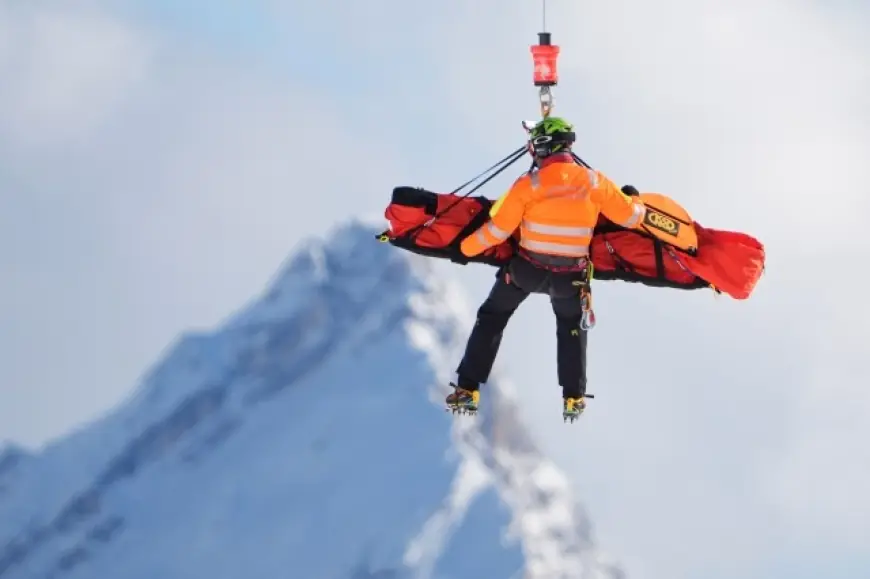
She went down hard and remained on the snow while medical staff treated her on-site. The race was paused for an extended stretch to allow care and clearance for evacuation. Vonn was then airlifted to a hospital in Treviso, Italy, where she underwent orthopedic surgery to stabilize a fracture in her left leg.
Officials said she is in stable condition and that her life is not in danger.
The latest injury update and what “stable” means
The confirmed injury is a broken left leg, treated surgically on Sunday. Public medical descriptions have not consistently specified which bone was fractured, and no detailed recovery timeline has been announced.
“Stable condition” is often misunderstood, especially in the emotional hours after a televised crash. In practical terms, it generally means:
-
Her immediate vital signs and overall status are not rapidly worsening
-
She is receiving monitored care in a controlled setting after surgery
-
It does not mean the injury is minor, or that recovery will be quick
After a crash like this, follow-up imaging and observation can also continue to check for additional issues that don’t always present clearly in the first minutes.
Why the crash hit differently for this comeback
Vonn’s return had already carried an extra layer of risk. She entered the downhill after recent knee-ligament concerns that had drawn attention to whether her body could safely absorb downhill forces: compressions, chatter on hard snow, and the torque of last-second corrections.
Downhill skiing is the most unforgiving alpine discipline. The “save” window is tiny, and equipment, line choice, and body stability all have to align. That’s why her crash landed as more than a routine racing incident: it became an abrupt end to a comeback framed around pushing limits late in a legendary career.
The emotional whiplash was heightened by what happened next for Team USA: Breezy Johnson won gold in the same event, turning the day into a split-screen of celebration and concern.
Where Simone Biles fits into this Olympic moment
Biles isn’t competing at the Winter Games, but she remains central to the way modern Olympics are discussed. Since Tokyo, her name has become shorthand for a broader shift: athletes naming pressure, setting boundaries, and treating mental and physical readiness as inseparable from performance.
In the lead-up to Milan-Cortina, Biles has again been part of the public conversation around Olympic pressure—speaking in recent interviews about how elite athletes experience fear, expectation, and the internal calculus of risk. That perspective has circulated widely during the Vonn news because it offers a framework that goes beyond the old binary of “tough it out” versus “quit.”
The point isn’t that Vonn and Biles made the same choice—they didn’t. It’s that Biles’ post-Tokyo visibility changed the vocabulary: fans now more readily ask whether the system supports athletes making difficult calls, rather than only judging the outcome.
The bigger question the Games can’t avoid
Vonn’s crash reopens a familiar Olympic dilemma: how to celebrate audacity without romanticizing danger. Winter sports already sit on the edge of acceptable risk, and the Olympics amplify that tension because every run is loaded with legacy.
The next week will likely bring two parallel storylines:
-
Medical updates on Vonn’s post-surgery recovery and travel plans
-
Renewed scrutiny of how athletes evaluate readiness—physically and mentally—when the stakes are highest
If there’s a lasting impact, it may be this: the spotlight is expanding from “what happened” to “what should happen next,” including how federations, coaches, and event organizers support stars whose careers—and bodies—have already absorbed years of punishment.
Sources consulted: Reuters; Associated Press; ESPN; Olympics.com