




















Venezuela Releases Key Opposition Leaders, Seeks U.S. Backing

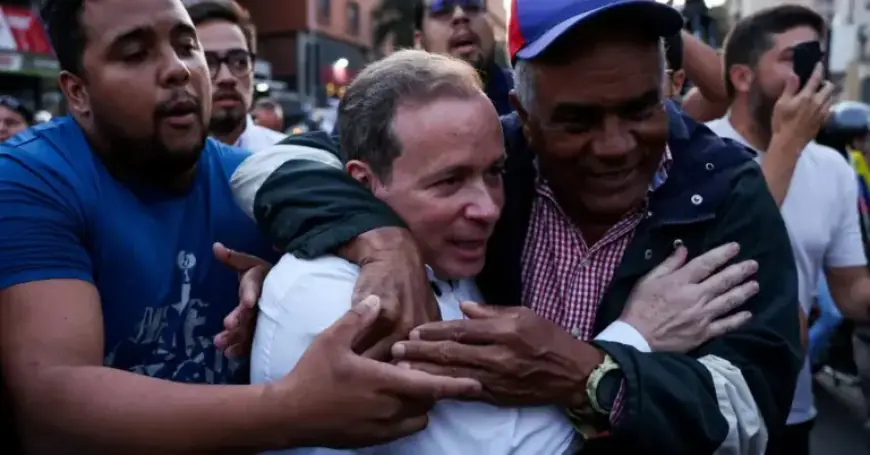
Venezuela has recently taken significant steps towards a potential political shift by releasing prominent opposition leaders, including Juan Pablo Guanipa and Perkins Rocha. According to statements from various sources, including the country’s press union, political opposition parties, and family members, a total of at least 35 political prisoners were set free on Sunday. This development follows their imprisonment, which lasted more than eight months.
Background of the Releases
Ramón Guanipa Linares, the son of Juan Pablo Guanipa, expressed relief on social media, stating that their family would soon be reunited after a year and a half apart. The human rights organization Foro Penal reported that over 650 political prisoners had been detained in Venezuela, showcasing the extent of the situation.
Government Actions
While the government did not issue an official statement on the prisoner releases, Delcy Rodríguez, the de facto leader of Venezuela, hinted at a shift in policy. Recent comments suggested an intention to close El Helicoide, a notorious prison accused of human rights abuses, and a forthcoming mass amnesty law.
- Released Leaders: Juan Pablo Guanipa, Perkins Rocha
- Total Political Prisoners Released: At least 35
- Reported Political Prisoners Detained: More than 650
- Key Government Official: Delcy Rodríguez
- Infamous Prison: El Helicoide
U.S. Relations and Political Implications
The timing of these releases coincided with evolving relations between the Venezuelan government and the United States. Since the arrest of Nicolás Maduro last month, Rodríguez has taken measures to realign Venezuela’s policies with U.S. interests, including redirecting oil exports and consolidating power.
However, analysts are questioning whether the releases indicate a genuine broadening of political freedoms. Concerns persist regarding Rodríguez’s capacity to dismantle the authoritarian structures she once supported. Critics argue that the regime might be seeking to ease tensions with Washington while maintaining control domestically.
Future Prospects
The true measure of change will be the extent to which freed prisoners and exiled political activists can engage in public protests and political organization without retaliation. The long-term aim remains to conduct credible elections.
Geoff Ramsey from the Atlantic Council mentioned that the government might be looking to gain favor with the U.S. while avoiding any substantial risk to its dominance. Conversely, political analyst Colette Capriles observed a potential willingness on the part of Rodríguez’s government to shift away from its previously intolerant stance against dissent.
María Corina Machado, Venezuela’s exiled opposition leader, celebrated the release of her colleagues, expressing hope for a collaborative future to achieve their shared vision for Venezuela.
This move could signify a pivotal moment in Venezuelan politics, as the nation grapples with its past and looks ahead to potential reforms.