
























Maxim Naumov’s Olympic spotlight grows after Team USA’s thriller—his role in the U.S. men’s plan

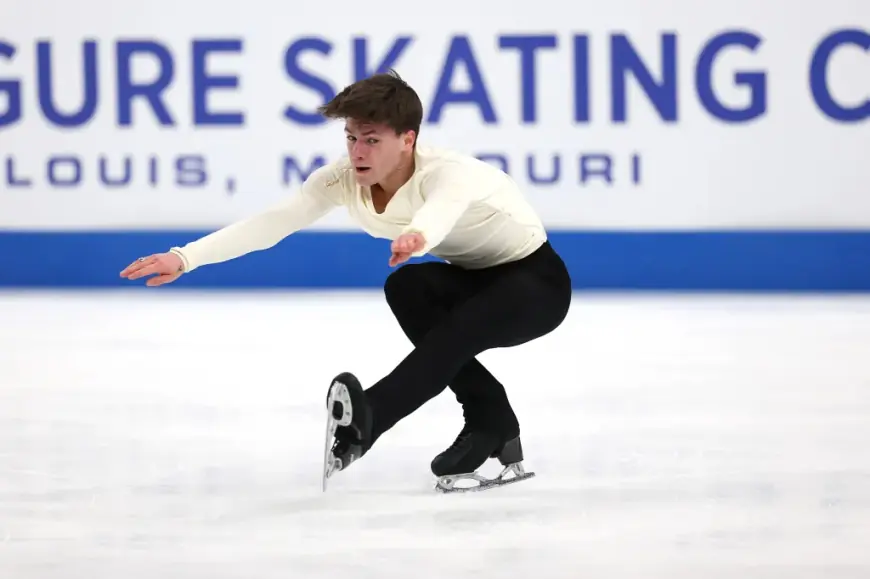
Team USA’s figure skating team-event win in Milan came down to the final skate and a one-point margin, the kind of finish that pulls even casual viewers into the sport’s quieter storylines. One of the names rising fastest in that afterglow is Maxim Naumov—not because he delivered the clinching points, but because the U.S. men’s picture for the rest of the Games is suddenly a three-man conversation, and Naumov is the wild card with momentum.
With the team medal secured, the attention now shifts to the men’s singles event, where the U.S. is deep enough to chase a podium and still need solid placements from its other entries to maximize overall impact at Milan-Cortina.
Why the team-event finish changed the lens
The team event tightened into a final-segment showdown and ended with the United States on top by a single point over Japan. That kind of razor-thin outcome tends to elevate everyone on the roster, including athletes who never stepped onto the ice during the team segments.
It also clarified the U.S. strategy: the team event was treated as a targeted mission, and the men’s portions were entrusted to Ilia Malinin. That decision preserved Naumov—and fellow U.S. men’s entrant Andrew Torgashev—for the individual event, where the stakes are personal and the margins are just as unforgiving.
Where Naumov fits in the U.S. men’s hierarchy
For the U.S., the men’s plan is built in layers:
-
Medal ceiling: Malinin is the clear headliner and the primary U.S. podium threat, with a technical layout few skaters can match.
-
Depth and damage control: Torgashev and Naumov are tasked with delivering clean, high-value skates that keep the U.S. competitive across placements—especially if the event turns chaotic.
-
Insurance and optionality: The decision not to use Naumov in the team event keeps his legs and focus fresh for the singles rounds, while also giving the U.S. flexibility if an unexpected issue arises.
Naumov is not entering as the favorite, but he is entering as a credible finisher with a profile that can rise quickly in an Olympic setting: visible momentum from nationals, a clear technical identity, and a reputation for fighting through programs even when the layout doesn’t go perfectly.
The “why him, why now” momentum
Naumov earned one of the U.S. men’s Olympic spots by finishing third at the U.S. championships in January with a total of 249.16. That result mattered not only because it put him on the plane, but because it reinforced that he can hold up under pressure against top domestic competition.
His arc also carries an emotional force that tends to sharpen focus around an athlete during the Games. That attention doesn’t score points, but it does change how a skater is watched: every clean landing becomes part of a larger narrative, and every mistake becomes a moment the audience wants him to overcome.
When Naumov skates, and why the start order matters
Naumov is scheduled early in the men’s short program start order, listed as No. 2. Skating that early can be a mixed draw: fewer ruts and less ice deterioration, but also fewer “reference scores” and sometimes tighter component judging for early groups.
The key men’s singles schedule in Eastern Time:
-
Men’s short program: Tuesday, Feb. 10 at 12:30 p.m. ET
-
Men’s free skate: Friday, Feb. 13 at 1:00 p.m. ET
In practical terms, the short program is where Naumov can put himself in the conversation. A clean short doesn’t win the Olympics, but it can keep a skater out of survival mode. For someone positioned as a high-upside spoiler, the goal is simple: stay close enough that the free skate becomes an opportunity instead of a rescue mission.
What Naumov needs to show to “hit” his Olympics
For Naumov, the success criteria is less about chasing the top seed and more about executing the kind of program that forces the field to respect him:
-
A short program without costly deductions: no falls, no time violations, no invalid elements.
-
Jump efficiency under pressure: clean rotation and controlled landings that don’t bleed momentum into the next elements.
-
A free skate that’s brave but realistic: enough difficulty to be competitive, but not so much risk that one miss becomes two.
If he delivers two clean skates, he can put real pressure on the tier of contenders beneath the top favorites—and become the kind of name that suddenly belongs in every conversation about the U.S. men’s future, not just this Olympics.
The bigger U.S. men’s picture after the team-event win
With team gold in hand, the U.S. now has a chance to frame the men’s event as more than a one-man story. Malinin can chase a medal, while Naumov and Torgashev aim to turn depth into relevance: two additional skaters who can move up if others unravel.
That’s where Naumov’s spotlight fits. The team event gave the U.S. a dramatic opener. The singles event is where Naumov can turn that borrowed attention into something earned—one clean short, one composed free, and a finish that proves the U.S. men aren’t a solo act.
Sources consulted: Reuters; U.S. Figure Skating; International Skating Union; The Washington Post