























Scottie Scheffler stays in the hunt at the Phoenix Open as equipment questions linger

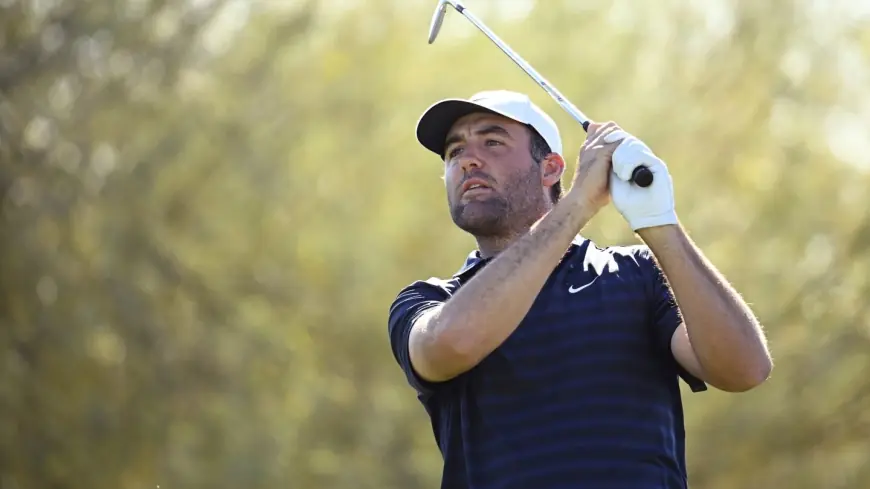
Scottie Scheffler’s Sunday at the WM Phoenix Open is unfolding in familiar fashion: steady scoring, relentless pressure on the leaders, and a quiet reminder of why he remains the top-ranked player in the world. Entering the final round at TPC Scottsdale several shots off the pace, Scheffler moved into contention with a hot stretch that put him within striking distance as the tournament headed into its closing holes on Sunday, February 8, 2026.
At mid-afternoon ET, Scheffler sat at 13-under par, tied for fourth, while Hideki Matsuyama led at 15-under with the final round still in progress.
A Sunday charge in golf’s loudest arena
The Phoenix Open’s energy is unique even by modern PGA Tour standards, and this year’s final day has had the feel of a sprint: a crowded leaderboard, aggressive pin positions, and the kind of momentum swings that can flip the top five in a handful of holes.
Scheffler’s push has been built on what usually travels best under noise—elite ball-striking and a refusal to leak strokes with big mistakes. His first round was uncharacteristically over par, but he corrected quickly with consecutive under-par rounds to climb back into the mix.
With multiple contenders bunched near the lead, the difference between “in it” and “chasing” has come down to single-shot moments: a converted par save, one extra fairway hit, one approach that ends inside realistic birdie range.
The driver testing storyline that won’t go away
While Scheffler’s results remain as consistent as ever, one subplot has followed him through the early 2026 schedule: equipment tinkering, specifically with his driver.
Scheffler has been evaluating a newer driver model in recent months, but he has also shown he’s unwilling to commit unless the change is clearly better than what he already trusts. That conservative approach is typical of players who win often—because the cost of a small downgrade at the top of the sport is enormous.
In Phoenix, the conversation has been less about a dramatic switch and more about fine margins: launch windows, dispersion patterns, and whether a “test club” can outperform a gamer under tournament pressure. The truth of the week so far is that Scheffler has kept himself in position to win even while still experimenting—an uncomfortable place for most players, but a manageable one for the current No. 1.
Momentum from The American Express still matters
Scheffler arrived in Scottsdale with a trophy already in his 2026 suitcase. He opened his season with a win at The American Express, a four-shot victory that marked the 20th PGA Tour win of his career and set the tone for another year where “top-10” is often treated as a baseline expectation.
That early win matters for two reasons. First, it reinforces that Scheffler’s floor remains extremely high even when he’s not at his sharpest. Second, it changes the psychology of weeks like Phoenix: he’s not searching for form, he’s deciding how aggressively to chase an additional title when the season’s biggest events are stacked ahead.
The consistency metric that defines his era
Scheffler’s reputation isn’t built only on trophies. It’s built on how rarely he disappears. His streak of made cuts has become a quiet hallmark of his dominance—week after week, even in tournaments where his game doesn’t look perfect.
That consistency has real competitive value. It keeps him accumulating points, keeps him present on leaderboards, and keeps pressure on rivals who know a single average week can be costly when the world’s best player keeps cashing checks and threatening wins.
In Phoenix, that stability has looked like a slow climb: early frustration, then an efficient reset, then a Sunday position where the lead is still within reach.
What this week says about Scheffler’s 2026 outlook
Win or not, Phoenix is serving as a useful snapshot of Scheffler’s season profile. His best weapon remains the same: he turns “not my best” into “still a contender.” That’s what separates the top player in the world from the group chasing him.
The broader calendar also sharpens the stakes. Signature-level events and major-season build-up are approaching quickly, and Scheffler’s team is balancing two competing priorities: keep stacking wins early, while also ensuring the equipment and performance profile is locked in for the biggest stages.
If the driver testing continues into the next stretch, it will be less a sign of uncertainty and more a sign of how narrow the margins are at Scheffler’s level. When a player is already winning, the only reason to change anything is to gain a measurable edge.
What to watch over the final holes
With the final round still live, three indicators matter most for Scheffler’s chances:
-
Whether he can keep producing birdie looks on the closing stretch without taking on unnecessary risk
-
Whether the leaders begin to tighten up on Scottsdale’s finishing holes
-
Whether the tournament turns into a “last-man-standing” test where one bogey decides everything
Scheffler has made a habit of being present when that kind of chaos hits. Sunday in Phoenix is simply the latest example: no panic, steady pressure, and a real chance to steal another title if the door opens late.
Sources consulted: PGA TOUR, Reuters, ESPN, Golf Monthly