




















Nancy Guthrie ransom note chatter spreads online, but officials focus on verifying messages and evidence—no confirmed proof-of-life details yet

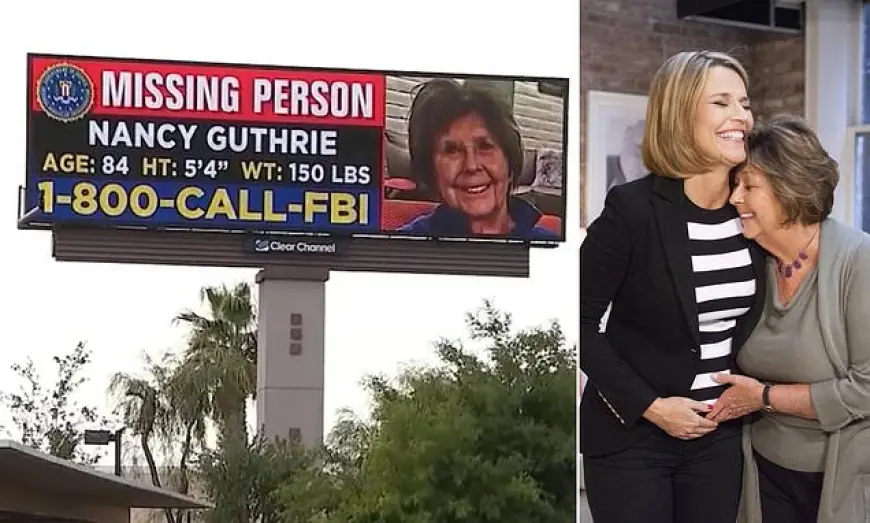
Online chatter about a “ransom note” in the Nancy Guthrie case has surged over the past week, but investigators say their focus remains narrower and more practical: verify which messages are authentic, preserve evidence, and build a defensible timeline of what happened during a tight overnight window. Despite the flood of screenshots and claims circulating online, officials have not confirmed any proof-of-life details publicly, and no suspects have been named.
Nancy Guthrie, 84, was last known to be at home late Saturday, January 31, 2026, after family dropped her off following dinner near Tucson, Arizona. She was reported missing around midday Sunday, February 1, 2026, after she did not arrive for church and family members could not reach her.
Why “ransom note” rumors are multiplying
The case has become a magnet for speculation because it combines a high-profile family, an urgent health concern, and fragments of information that feel incomplete. That mix fuels a predictable cycle online: partial details get amplified, timelines get reposted with additions, and anonymous claims get treated as fact.
Investigators have acknowledged receiving multiple messages tied to the case, including some sent to media organizations rather than directly to the family. That detail matters: in many abduction cases, sustained direct contact is a key marker of credibility. Here, officials have emphasized that authenticity remains under review and that the volume of noise—including hoaxes—has increased as the story has spread.
What investigators are prioritizing now
Authorities are treating the case as an abduction and have released several evidence-based details that frame their priorities. One of the most significant: blood found on the front porch has been matched to Nancy Guthrie through DNA testing. That finding reinforces the view that she did not simply walk away and that something coercive occurred at or near the home.
Investigators are also working a “digital perimeter” around the disappearance—home security logs, network interruptions, device data, and any nearby surveillance that could corroborate movement in the neighborhood. Officials have described a narrow window overnight when key systems disconnected, making those timestamps central to reconstructing events.
The overnight window investigators keep circling
Officials have pointed to a sequence of early-morning disruptions that help define when something may have happened:
-
1:47 a.m. ET (Feb. 1): Doorbell camera disconnects
-
2:12 a.m. ET: Software detects a person, but no video is available
-
2:28 a.m. ET: A pacemaker-related app disconnects from the phone
Those times do not identify who was present, but they provide anchor points for leads. If a neighbor saw a vehicle, heard a disturbance, or noticed unusual activity, investigators can test that tip against this window.
No proof-of-life confirmed, and hoaxes have already surfaced
Officials have not publicly confirmed proof-of-life. That absence is one reason investigators are cautious about publicly validating message details: it can inadvertently reward hoaxers, create copycat attempts, or push real perpetrators to change communication methods.
The risk is not theoretical. A California man has been charged federally after investigators say he sent false communications to the Guthrie family while posing as the abductor. The case underscores why detectives treat online “ransom note” chatter as a complication rather than a lead: attention attracts interference, and interference costs time.
What families mean when they say “we will pay”
Savannah Guthrie and her siblings have released video appeals aimed at whoever may be holding their mother, including a direct statement that they are willing to pay for her return. Families make that choice for one primary reason: to open a channel of communication that could lead to proof-of-life and a safe recovery.
Investigators generally try to balance two realities at once—public pressure can generate tips, but public promises can also trigger more hoaxes. In this case, officials have reiterated that their job is verifying messages and working evidence, not amplifying unverified demands.
The key tasks in the next phase
With no suspect named publicly, the investigation remains evidence-driven. The next phase is likely to be defined by whether officials can separate credible communications from noise and connect digital traces to physical movement.
| Priority | What it aims to confirm |
|---|---|
| Authenticate messages | Whether any communication is tied to the abductor |
| Build a minute-by-minute timeline | What happened between late Jan. 31 and mid-day Feb. 1 |
| Expand canvassing and video collection | Vehicles, people, or activity linked to the overnight window |
| Preserve and process items from the scene | Forensic traces and device data connected to the home |
| Protect the investigation from hoaxes | Prevent time loss and reduce harmful misinformation |
Why urgency is rising
Authorities have highlighted that Nancy Guthrie has serious medical needs and requires daily medication. That raises the stakes of every delay and shapes how investigators assess risk. It also explains why officials are careful with what they confirm: in cases involving potential ransom demands, public disclosure can change behavior on the other side of the phone.
For now, the clearest public picture remains consistent: online “ransom note” claims are circulating faster than verified facts, investigators are actively vetting messages and evidence, proof-of-life has not been confirmed publicly, and no suspects have been named.
Sources consulted: Reuters, The Washington Post, Associated Press, CBS News