
























Milan’s Duomo backdrop frames Olympic week for Egadze, Gubanova, and Gutmann

As the Milano Cortina Games settle into rhythm, the competition story is no longer confined to arenas and finish corrals. In Milan, athletes are arriving to a city that keeps staging its own visual: the Duomo rising over packed sidewalks, team gear mixing with fashion-week energy, and medal hopes tightening by the hour.
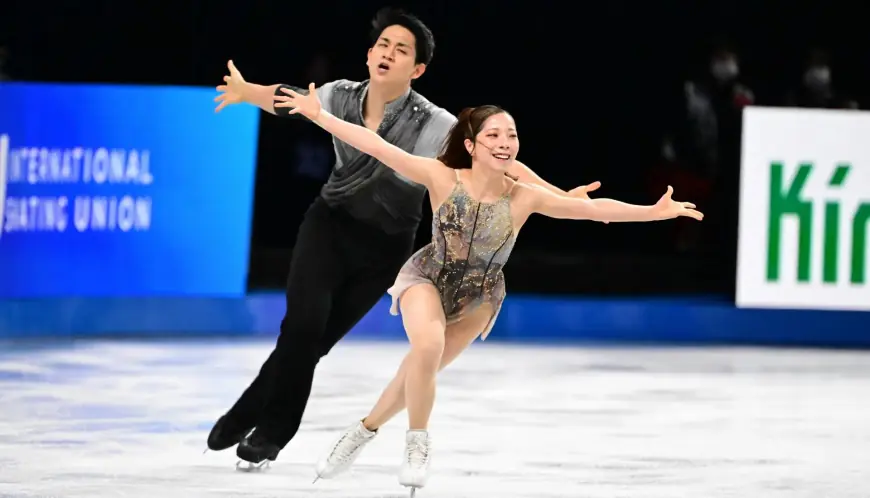
That atmosphere has tracked closely with the early Olympic headlines—especially in figure skating, where Georgia’s Anastasiia Gubanova and Nika Egadze have pushed into the medal conversation, and Italy’s Lara Naki Gutmann has given the hosts an emotional lift inside the arena.
The Duomo becomes the city’s center frame
Milan’s cathedral has turned into a recurring backdrop for Olympic coverage, fan photos, and sponsor activations, functioning like a shared “meet me here” point between events. A new narrated feature circulating during Games coverage has leaned into that symbolism, tracing the cathedral’s centuries-long construction as a parallel to the Olympic idea of building something bigger than a single moment.
It’s also practical: the Duomo area is one of the easiest places for visitors to anchor a day—coffee, photos, then transit to arenas—while the city stays walkable enough to keep Olympic crowds visible in the streets.
Figure skating team event tightens fast
The figure skating team event has produced one of the earliest, most watchable battles of the Games, with Japan and the United States locked together at the top heading into the final segment. Georgia has stayed within striking distance, helped by standout work in the women’s free skate from Gubanova, who finished second in that segment behind Japan’s Kaori Sakamoto.
The decisive men’s free skate is scheduled for 3:55 p.m. ET on Sunday, Feb. 8, with teams hunting points rather than individual medals—an unusual pressure cooker where even a “good” skate can be costly if rivals go clean.
Egadze’s score puts pressure on the finish
Egadze has been central to Georgia’s team push, delivering an 84.37 in the men’s short program earlier in the event. In the team format, that placed Georgia in the middle of the pack for that segment, keeping their medal hopes alive but leaving little margin for mistakes in the final skate.
The men’s side has also highlighted the depth of this field. France’s Kevin Aymoz posted 88.05 in the short program—strong enough to keep his team competitive in points, and a reminder that even nations outside the top two can swing the standings with one big skate.
Gutmann brings a home-ice surge
For the hosts, Gutmann’s role has been about momentum as much as points. Her women’s free skate score of 126.94 provided a meaningful boost and kept Italy close to the podium chase as the team event tightened.
In a Games staged across multiple regions, home advantage can feel abstract. Inside the skating arena, it’s not. Crowd energy tends to show up most in the technical disciplines—where a long buildup, familiar faces, and a loud building can turn a clean landing into a wave that carries through the rest of a program.
Beyond the ice: Beune and Wright add breadth to the narrative
The wider Games story is already spreading beyond figure skating. Dutch speed skater Joy Beune has been part of early-track action in Milan, one of several established names whose events now overlap with the figure skating schedule and pull fans in different directions across the city.
In the mountains, U.S. alpine skier Isabella Wright is among the American athletes drawing attention in speed events, adding another thread to a U.S. Olympic narrative that now runs from Milan’s rinks to the Cortina slopes.
Key moments to watch next
-
3:55 p.m. ET Sunday: men’s free skate determines the figure skating team medals
-
Georgia’s path: whether Egadze and Gubanova can convert strong segments into a historic podium
-
Italy’s pressure: Gutmann’s momentum and the home crowd effect as points tighten
What this week says about Milan’s Games
The early pattern is clear: Milan’s Olympic identity is being built in layers—big results inside, big visuals outside. Between sessions, the Duomo district has become a soft “fan zone” without needing a single fenced perimeter. That helps explain why athletes like Egadze, Gubanova, Gutmann, Aymoz, Beune, and Wright are being discussed in the same breath as the city itself: the setting is part of the story now.
The next few days will decide medals, but they’ll also decide which images endure. In Milan, the cathedral has made its case as the signature frame—stone spires over a city trying to hold together sport, spectacle, and a tight Olympic schedule all at once.
Sources consulted: Reuters; International Skating Union; Olympics.com; NBC Olympics