

























Lindsey Vonn crash ends Olympic downhill in seconds.. she’s airlifted out and undergoes surgery, with officials saying she’s in stable condition

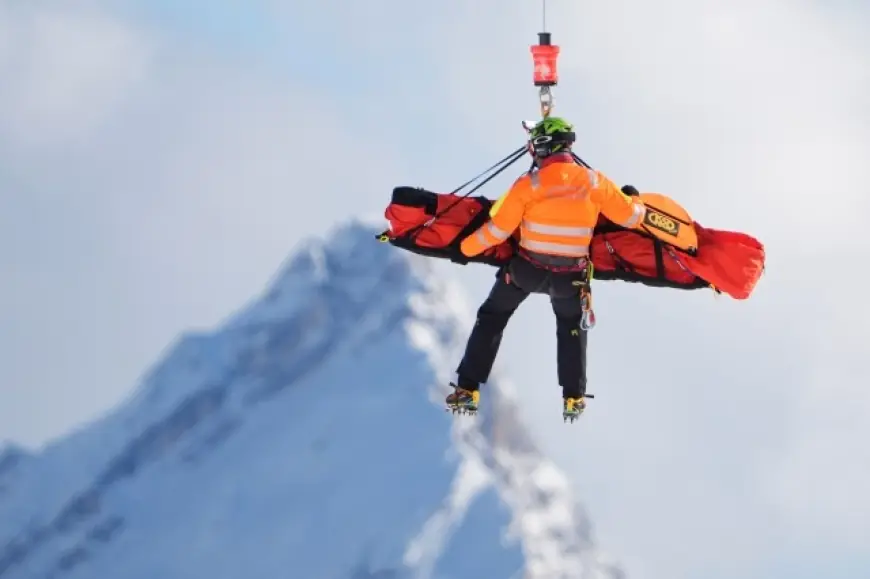
Lindsey Vonn’s bid for an Olympic downhill moment ended almost as soon as it began on Sunday, February 8, 2026, when the 41-year-old American crashed roughly 13 seconds after leaving the start gate in Cortina d’Ampezzo. She was treated on the slope, airlifted out by helicopter, and later underwent orthopedic surgery to stabilize a fracture in her left leg. Officials said she is in stable condition.
The incident jolted the women’s alpine program at the Milano Cortina Winter Games and immediately reignited debate about the limits of competing while injured—especially in speed events where small mistakes can become high-impact crashes in an instant.
What happened on the course
Vonn pushed out of the gate and quickly ran into trouble in the opening stretch of the Olimpia delle Tofane downhill. She clipped a gate, lost control, and went down hard, sliding and tumbling across the snow before coming to a stop.
Medical staff reached her promptly and remained with her for several minutes. The race atmosphere shifted from routine tension to concern as she stayed down while being stabilized. She was then secured to a gurney and evacuated by helicopter.
Because the crash occurred near the top of the course, it unfolded before the downhill’s later, faster sections—underscoring how little margin exists even in the first seconds of a speed run.
Video of Lindsey Vonn crash today fuels fresh debate over racing while injured
Hospital transfer and surgery
After being airlifted from the mountain, Vonn was first taken for initial assessment in the Cortina area and then transferred to a larger hospital in Treviso, Italy. Later Sunday, doctors performed an orthopedic operation to stabilize what was described as a fracture in her left leg.
She was kept under close monitoring afterward, including time in intensive care primarily for privacy and supervision rather than because of life-threatening complications. Officials emphasized that she remained in stable condition.
No full public medical breakdown has been released beyond the surgical stabilization and her current status, and there has been no public timetable for recovery.
The injury backdrop that amplified the risk
The crash landed differently because it came after

had already acknowledged racing with a serious pre-existing knee injury. In the lead-up to the Olympics, she had been dealing with major left-knee damage from a late-January crash, including a torn ACL, and she entered the downhill wearing additional support.
Downhill skiing puts enormous stress on the lower body—high-speed vibration, compressions, and sudden edge adjustments—making knee stability and reaction timing especially critical. That context does not prove the injury caused the fall, but it shaped how the public interpreted the decision to start: this wasn’t simply a bad break in a dangerous sport, but a high-stakes attempt made with known limitations.
A race that continued under a shadow
The women’s downhill proceeded after the stoppage, but the mood remained uneasy as the field watched one of the sport’s biggest names leave by helicopter.
When the event finished, the U.S. still walked away with a defining result: Breezy Johnson won gold, edging the field in a tight finish that would normally dominate headlines on its own. Instead, the medal ceremony shared oxygen with concern for Vonn’s condition and questions about whether this crash marks a hard endpoint to her Olympic return.
Why the crash is reigniting the “race while injured” debate
Vonn’s situation has become a case study in how elite athletes weigh “one last run” decisions. The Olympics compress years of preparation into a narrow window, and some competitors accept elevated risk to avoid missing the one stage that can define a career.
But the backlash and concern follow a familiar tension: in high-speed disciplines, the difference between heroic and hazardous can be one compromised movement, one late correction, one moment where the body cannot react at the speed the course demands.
The debate tends to center on three issues:
-
Who holds the final authority? Athletes can insist they feel ready, while medical teams may focus on long-term outcomes rather than a single start.
-
What counts as “cleared”? Being able to ski a training run is not the same as being safe at full race intensity in a downhill.
-
What is the true cost? Beyond medals, there’s the risk of permanent damage that affects mobility and quality of life after competition.
For now, the only clear conclusion is that the sport’s incentives—legacy, closure, and the Olympic stage—can push decisions toward the edge, and the edge is unforgiving.
What comes next
The next updates are expected to focus on recovery from surgery and whether any complications arise. The more complicated question—whether Vonn races again at any level—will likely depend on the fracture’s severity, rehabilitation progress, and the overall condition of her already-injured knee.
For fans, the immediate takeaway is straightforward: Vonn’s Olympic downhill ended within seconds, she underwent surgery on a left leg fracture, and officials have said she is stable.
Sources consulted: Reuters, Associated Press, ESPN, U.S. Ski & Snowboard