

























Ilia Malinin, Yuma Kagiyama set the pace for men’s figure skating at the Winter Olympics

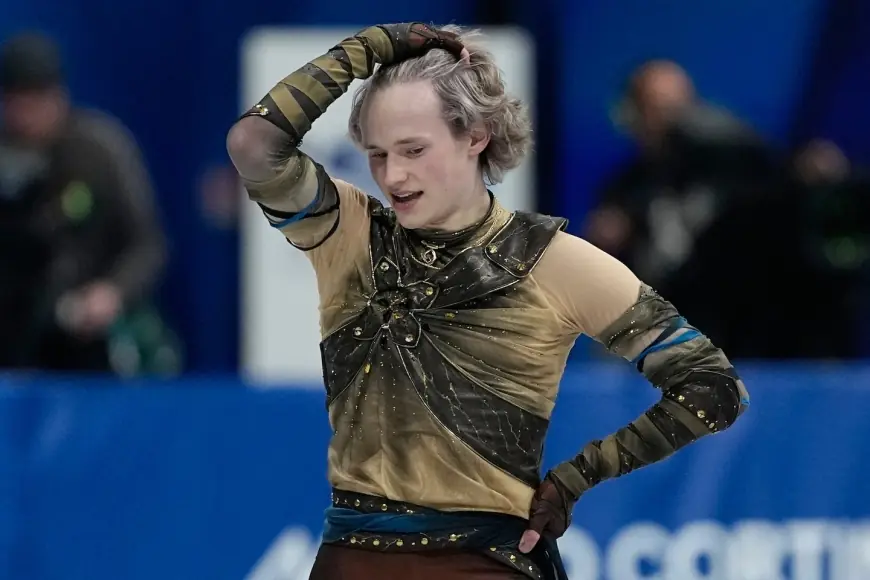
Ilia Malinin’s Olympic moment arrived with a jolt: a bold, crowd-pleasing team-event short program that still left him chasing Japan’s Yuma Kagiyama on the scoreboard. Now the focus shifts to the medals that define the sport—men’s singles—where Malinin, the “Quad God,” is aiming to turn highlight-reel difficulty into Olympic gold, with Kagiyama looming as one of his most direct threats.
Who Ilia Malinin is and how old he is
Malinin is 21. He was born December 2, 2004, and is from Fairfax, Virginia, growing up in the Washington, D.C., suburbs. The nickname “Quad God” follows him for a simple reason: he pushes the upper limit of jumping difficulty, including being closely associated with the sport’s most talked-about ultra-C element, the quad Axel.
His story is also a family one. Malinin’s parents—Tatiana Malinina and Roman Skorniakov—are former Olympic figure skaters who competed for Uzbekistan, and they have been central figures in his development as coaches and mentors. That background shows up in his skating style: aggressive technical ambition, but also a focus on clean edges, speed, and control that matters under Olympic judging pressure.
Malinin vs. Kagiyama: what just happened in the team short
The rivalry’s latest chapter played out in the men’s short program segment of the team event, where Kagiyama finished ahead of Malinin by more than 10 points. Malinin’s segment score landed at 98.00, while Kagiyama posted 108.67—a gap that reflected Kagiyama’s cleaner overall execution and stronger component marks.
Malinin still delivered a headline moment, landing a backflip during his Olympic debut—an eye-catching move that signals confidence and swagger, even as judges reward technical content and execution more than spectacle. In other words: the moment was huge, but the points still came down to the fundamentals—jump quality, landings, spins, and transitions.
For viewers, it set a clear tone for the singles event: Malinin’s ceiling is enormous, but Kagiyama’s consistency can punish even small mistakes.
When does Ilia Malinin skate next?
Malinin’s schedule depends on team selection decisions, but the published Olympic timetable shows multiple key men’s segments across the opening week. Here are the major men’s figure skating moments (all times ET):
| Event | Date | Start time (ET) |
|---|---|---|
| Team event — Men’s free skate | Sunday, Feb. 8, 2026 | 9:55 p.m. |
| Men’s singles — Short program | Tuesday, Feb. 10, 2026 | 6:30 p.m. |
| Men’s singles — Free skate | Friday, Feb. 13, 2026 | 7:00 p.m. |
Those windows matter because the men’s singles short program often establishes the entire week’s narrative: it defines who skates late (the prime ice), who is forced to chase in the free skate, and who enters the final with momentum.
Why “Quad God” difficulty can win—or backfire—at the Olympics
In men’s figure skating, the scoring math rewards difficulty, but only if it’s delivered with quality. Malinin’s identity is tied to pushing technical boundaries, which can create separation—especially if competitors play it safe.
But the Olympic judging system is unforgiving: under-rotations, shaky landings, or popped jumps can erase the advantage of a more difficult layout. That’s why the Kagiyama comparison is so sharp. Kagiyama has built a reputation on steadiness, flow, and polish—traits that keep scores high even when the base value is closer.
The most likely medal formula is simple:
-
Malinin’s best path is landing the planned difficulty cleanly, minimizing deductions and preserving speed.
-
Kagiyama’s best path is forcing Malinin to be perfect by delivering a near-flawless program with high execution and components.
Ice dancing vs. figure skating: what viewers are actually watching
People often say “figure skating” when they mean everything on the rink, but Olympic skating splits into distinct disciplines:
-
Men’s figure skating (men’s singles): One skater, heavy emphasis on jumps (quads), spins, footwork, and performance. Falls and jump errors carry immediate scoring consequences.
-
Ice dancing: A couples discipline centered on rhythm, edge quality, speed, holds, and choreography. There are lifts and twizzles, but no big overhead jump elements like quads. The sport rewards precision, musicality, and unison more than raw air time.
If you’re tuning in specifically for Malinin and Kagiyama, you’re watching men’s singles—where the short program is the first high-stakes checkpoint, and the free skate is where careers get defined.
Sources consulted: Olympics, International Skating Union, Reuters, Team USA