






















Billie Eilish and Kevin O’Leary clash draws new spotlight after Grammys speech

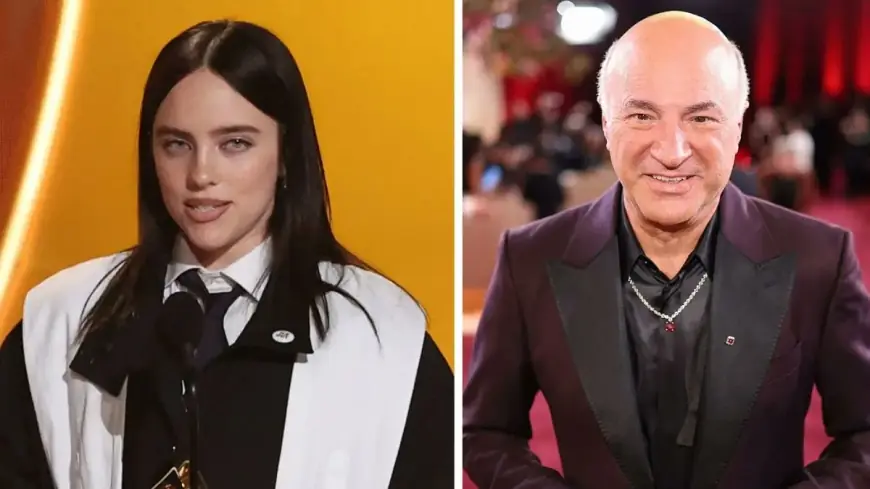
A week after Billie Eilish used her Grammy moment to denounce U.S. immigration enforcement, the debate around her remarks is still rippling—this time through a public back-and-forth involving investor and TV personality Kevin O’Leary and actor Mark Ruffalo. The sequence has turned a single awards-show speech into a broader argument about whether celebrities should weigh in on politics at all, and what that means for fans, brands, and public-facing careers.
The Grammys moment that set it off
On Sunday, Feb. 1, 2026 (ET), Eilish won Song of the Year for “Wildflower” alongside her brother and collaborator Finneas O’Connell. During her acceptance speech, she criticized immigration enforcement and delivered the line, “No one is illegal on stolen land,” with parts of the remarks bleeped during the live broadcast.
The night also featured visible protest messaging among multiple attendees, including “ICE OUT” pins worn by Eilish and others. The combination of a major win and a pointed political statement ensured the speech traveled quickly beyond music circles, becoming a headline on its own rather than a footnote to the award.
Kevin O’Leary’s response and the “just entertain” argument
In the days that followed, O’Leary weighed in publicly, arguing that entertainers should avoid politics onstage and focus on performance. In a televised interview that circulated widely, he used blunt language—urging celebrities to “shut your mouth and just entertain”—and suggested that speaking politically risks alienating audiences and hurting sales.
The point he was making is familiar in American pop culture: the idea that a mass audience contains competing views, and that political statements can trigger backlash strong enough to change consumer behavior. What made this round stand out was the timing and the target—an acceptance speech delivered at one of the industry’s biggest events, by one of its most prominent artists.
Mark Ruffalo enters the fray
The debate escalated when Mark Ruffalo responded on social media with a sharp rebuke of O’Leary’s comments, including telling him to “STFU.” Ruffalo framed the criticism of Eilish as an attempt to police speech rather than engage with the substance of what she said.
Ruffalo’s involvement matters for one key reason: it extends the story from a music-and-politics flashpoint into a cross-industry celebrity confrontation. At that point, the news hook is no longer only what Eilish said on Feb. 1—it’s the way public figures are lining up for and against the idea of political speech in entertainment.
A short timeline of how it unfolded
-
Feb. 1, 2026 (ET): Eilish wins Song of the Year and criticizes immigration enforcement during her speech.
-
Early Feb. 2026 (ET): O’Leary delivers public remarks warning celebrities to avoid political messaging.
-
Feb. 5–6, 2026 (ET): Ruffalo responds online with an explicit pushback aimed at O’Leary.
-
Feb. 7–8, 2026 (ET): The exchange spreads across entertainment news and talk segments, fueling fresh debate.
What it means for Eilish, O’Leary, and the wider culture
For Eilish, the immediate practical impact is less about awards momentum and more about narrative: her Grammy win is now linked in the public mind to a political stance, not just a song. That can strengthen loyalty among supporters while energizing critics—two outcomes that often happen simultaneously for high-profile artists.
For O’Leary, the comments keep him in the culture cycle in a way that fits his brand: blunt, provocative, and built for short clips. The risk is reputational rather than financial—being seen as dismissive of civic engagement or reducing complex issues to a marketing problem.
The broader takeaway is that entertainment’s “neutral zone” keeps shrinking. Awards shows remain one of the last places where a single message can reach a huge cross-section of the public at once. When a winner uses that platform for politics, the reaction now tends to follow a predictable path: clip circulation, counter-statements, social-media pile-ons, and a secondary argument about whether the first argument should have happened at all.
Sources consulted: The Washington Post, ABC News, Inc., Los Angeles Times, AOL News