

























Breezy Johnson wins Olympic downhill gold in Cortina, sealing a comeback year

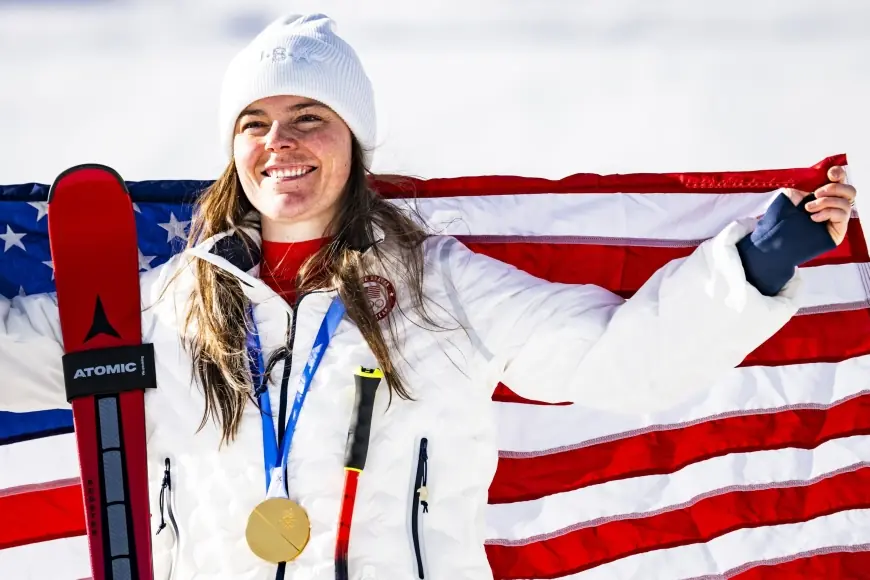
Breezy Johnson delivered the United States’ first medal of the 2026 Winter Games on Sunday, February 8, winning women’s downhill gold in Cortina d’Ampezzo with a run that held up through a tense, crash-marked race. Johnson’s time of 1:36.10 was enough to edge Germany’s Emma Aicher by 0.04 seconds, with Italy’s Sofia Goggia taking bronze.
The result is a career-defining moment for the 30-year-old speed specialist—one that lands with extra weight after years of injuries, a missed Olympics, and a 14-month suspension that forced her off the circuit during what should have been prime seasons.
A gold run in a race that felt on edge
Downhill is never a gentle event, but Sunday’s race carried an unusually heavy mood after multiple falls disrupted rhythm at the start and focus at the finish. Teammate Lindsey Vonn crashed early in her run and was evacuated for evaluation, an incident that visibly shook the finish area and put athletes into a difficult reset before pushing out of the gate.
Johnson skied through that atmosphere with a direct, committed line, keeping her skis running cleanly through the course’s fastest sections and limiting time loss on the flatter transitions where medals often disappear. When Aicher came up just short, Johnson’s time stood as the benchmark in a field where even minor mistakes carried major consequences.
Results snapshot from the women’s downhill
Here’s how the podium and top U.S. finishers shook out (times in seconds):
| Place | Skier | Time / Gap |
|---|---|---|
| 1 | Breezy Johnson (USA) | 1:36.10 |
| 2 | Emma Aicher (GER) | +0.04 |
| 3 | Sofia Goggia (ITA) | +0.11 |
| 4 | Jacqueline Wiles (USA) | +0.27 |
The long road back: injury, suspension, and rebuilding trust
Johnson’s gold is also a public full stop on a turbulent stretch. She missed the Beijing Olympics in 2022 after injuring her knee shortly before the Games, a cruel timing blow for a skier built around speed events that peak on Olympic cycles.
Then came a separate setback that complicated her standing in the sport: a 14-month suspension tied to anti-doping “whereabouts” rule violations, a compliance system that requires athletes in registered testing pools to provide accurate location information for out-of-competition testing. The suspension ended in December 2024, putting her back on snow with little time to regain race sharpness before an Olympic season.
What followed was the kind of return that only looks “sudden” from the outside. Speed skiing is confidence plus repetition: training runs, starts, course inspection habits, and learning how to attack while staying safe. Johnson rebuilt all of it, then validated the comeback by winning the 2025 world championship downhill—a result that made her a credible Olympic favorite without guaranteeing anything on the day.
A rare American downhill milestone
Johnson’s win is historically significant for U.S. women’s alpine skiing. Olympic downhill gold is one of the sport’s hardest prizes—course-dependent, weather-sensitive, and often decided by tiny differences in glide and commitment. By claiming it in Cortina, Johnson joined a short list of American women to reach the top step in the event at the Olympics.
It also reframes the early U.S. narrative at Milano Cortina. Before Sunday, the U.S. had been close in a few events without a medal to show for it. A first medal that is also a gold changes the team’s emotional center of gravity, especially in a two-week competition where momentum can influence how athletes approach risk and how coaches plan starts.
What Johnson’s win means for the week ahead
Downhill champions don’t get much time to enjoy it. The schedule moves quickly, and speed athletes often face a decision about how much to race—especially after an event that demands total physical commitment.
For Johnson, the immediate question is how her body responds to the downhill load and whether she can carry that confidence into the next start(s) without overreaching. For Team USA, her gold also creates options: pressure eases, tactics can be more selective, and younger teammates can race with less burden on every run to “save” the medal table.
Sunday’s win does not erase the hard years that preceded it, but it does something athletes chase their whole careers: it converts resilience into a result that cannot be debated.
Sources consulted: Reuters, Associated Press, International Ski and Snowboard Federation (FIS), NBC Olympics