
























Lindsey Vonn’s Olympic schedule, age, ACL situation, and how to watch her races

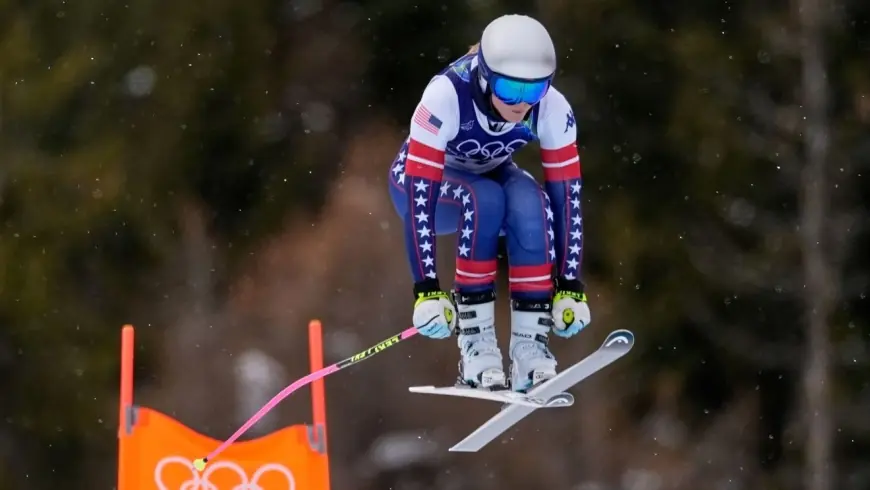
Lindsey Vonn is back on the biggest stage at Milano Cortina 2026, and her return has quickly become one of the Games’ defining stories: a 41-year-old Olympic champion lining up for the women’s downhill and super-G after confirming a fully ruptured ACL. The women’s downhill medal race is set for Sunday morning, and the timing is early for viewers in the U.S.
When does Lindsey Vonn compete?
Vonn’s two headline starts are the women’s downhill and women’s super-G in Cortina d’Ampezzo. Event start times below are Eastern Time (ET).
| Event | Date | Start time (ET) | Venue |
|---|---|---|---|
| Women’s Downhill (medal event) | Sun, Feb. 8, 2026 | 5:30 a.m. | Cortina (Tofane course) |
| Women’s Super-G (medal event) | Thu, Feb. 12, 2026 | 5:30 a.m. | Cortina (Tofane course) |
If you’re planning around “women’s downhill final,” the key detail is that it’s an early-morning U.S. start because the race runs late morning local time in Italy.
How to watch the Olympics and Vonn’s downhill
In the United States, the Winter Games are carried across:
-
the main broadcast network,
-
cable sports channels,
-
and the official U.S. streaming service for full-event live coverage and replays.
For the smoothest morning setup, many viewers use the live stream for the first run and then watch packaged coverage later in the day.
How old is Lindsey Vonn?
Lindsey Vonn was born October 18, 1984, which makes her 41 years old during the 2026 Winter Olympics. She is attempting to become the oldest Olympic alpine skiing medalist, an angle that adds extra weight to every training split and every risk decision.
How is Lindsey Vonn skiing with a torn ACL?
A ruptured ACL sounds like an automatic shutdown, but elite skiers can sometimes compete without it under specific conditions—especially in speed events where the line is smoother than slalom and the athlete can manage the knee’s “giving way” risk.
What makes it possible (and still risky):
-
Bracing and stability work: A rigid brace can limit certain motions that trigger instability, while exceptional strength in the surrounding muscles helps compensate for the missing ligament.
-
Course choice and technique: Downhill and super-G emphasize gliding speed and clean arcs. They’re still violent on the body, but they can be more “predictable” than quick-cutting technical disciplines.
-
Pain tolerance and swelling management: The knee has to stay calm enough to handle impact forces, vibration, and landings—especially on compression sections and jumps.
-
Experience: Vonn’s edge control and tactical discipline can reduce unnecessary load, but it can’t eliminate the underlying risk.
The danger is straightforward: without an ACL, the knee can slip in ways that threaten the meniscus, cartilage, and other stabilizing ligaments—particularly if she catches an edge, lands slightly back, or gets bounced off-line.
The bigger health picture: ACL plus a rebuilt knee
Vonn’s comeback has already been unusual because she returned after major long-term knee issues and surgery. That history matters now: her body is not only managing the new ACL rupture, it’s also balancing the stress of elite racing on a knee that has already required significant intervention.
That’s why her race-week approach has looked deliberate: get down the course cleanly in training, avoid extra risk, and keep the knee functional for the medal runs rather than chasing “perfect” training times.
Lindsey Vonn net worth: what’s a fair estimate?
Public estimates of Vonn’s net worth vary widely and are best treated as approximate. Recent widely cited figures generally place her in a high single-digit to low double-digit million-dollar range, driven mostly by sponsorships and media/business work rather than prize money.
A clearer, more verifiable datapoint is earnings: recent rankings of top-paid female athletes have listed her annual income largely from endorsements, with comparatively little from competition winnings.
What to watch in the women’s downhill
Downhill medals often come down to tiny margins and one or two sections:
-
the steep pitch (commitment and glide),
-
a key turn into compression (line choice),
-
and landing control off the biggest jump.
For Vonn, the storyline isn’t just speed—it’s whether the knee stays stable when fatigue and vibrations build late in the run.
Sources consulted: International Olympic Committee; Reuters; Forbes; International Ski and Snowboard Federation (FIS)