






















Kevin O’Leary lands in fresh spotlight after Grammys clash and hustle-culture pivot

Kevin O’Leary is back at the center of a familiar kind of news cycle: a high-visibility comment that ricochets across entertainment and business audiences, followed by a debate about what he “really meant.” Over the past week, the longtime investor and TV personality has drawn attention on two fronts—first for criticizing politically charged Grammy speeches by celebrities, and second for reversing course on the grindset messaging he has promoted for years.
Together, the episodes underline why O’Leary remains a reliable lightning rod: he speaks in absolutes, favors blunt sound bites, and treats controversy as proof his point is landing.
The Grammys moment that reignited the culture fight
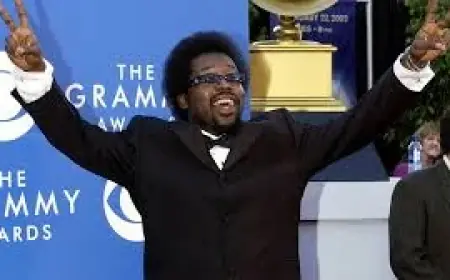
The latest flare-up traces back to this year’s Grammy broadcasts, where artists used acceptance speeches and symbols to denounce immigration enforcement. O’Leary criticized the practice, arguing entertainers should keep politics out of award-show moments and focus on performance.
The remarks sparked a quick public response from actor Mark Ruffalo, who blasted O’Leary on social media and framed the criticism as hypocrisy given O’Leary’s own frequent commentary on public issues. The exchange widened into a broader argument that has become routine in American pop culture: whether celebrities should “stick to entertainment,” and who gets to define which topics are acceptable on major stages.
The immediate impact is less about policy and more about positioning. O’Leary’s brand thrives in this lane—high-contrast takes that invite rebuttals, drive clips, and keep him in the week’s conversation even when he isn’t promoting a product.
“Stop glorifying 18-hour days”: O’Leary’s notable shift
In a separate strand of headlines, O’Leary has recently urged young founders to stop celebrating 18-hour workdays—calling the behavior reckless and counterproductive. The argument centers on decision quality and sustainability: exhausted leaders make worse calls, overwork becomes a liability, and burnout can derail businesses faster than competitors.
The pivot is striking because O’Leary has long been associated with maximalist hustle rhetoric, especially in TV-ready advice aimed at entrepreneurs. This week’s tone has been closer to operational pragmatism: optimize energy, protect the morning hours for key decisions, and avoid romanticizing self-destruction as ambition.
It’s a shift that can be read two ways. Supporters see a seasoned operator adjusting to what founders already know about burnout. Critics see a rebrand that’s easy to sell only after decades of celebrating the opposite.
His defense of billionaires, and the message behind it
O’Leary has also drawn attention for pushing back against rhetoric that targets billionaires and wealthy entrepreneurs, calling such attacks a “huge mistake” and emphasizing job creation and capital formation. The idea is consistent with the way he frames capitalism on television: founders and investors are the engine, and punishing them undermines growth.
That messaging lands in a moment when inequality debates remain politically intense and when public tolerance for wealth displays fluctuates sharply with the economy and the headlines. O’Leary’s approach is to go straight at the framing—less nuance, more provocation—then lean on the argument that outcomes (jobs, investment, innovation) justify the system.
Crypto and infrastructure: “power is more valuable” theme
Outside the culture-war noise, O’Leary has continued to talk up a more tangible investment focus: energy capacity, land, and infrastructure that can support data centers and industrial demand. He has described electricity and power access as increasingly valuable, tying the theme to longer-run demand from computing and AI-linked buildouts.
This doesn’t mean he has abandoned crypto talk entirely, but the emphasis has tilted toward physical constraints—sites, permitting, and reliable power—rather than speculative tokens. It’s an investment narrative that fits the broader 2026 business mood: fewer moonshots, more “pick-and-shovel” positioning around infrastructure.
What these threads say about O’Leary’s 2026 playbook
Taken together, the past week looks like classic O’Leary: straddle business advice and cultural commentary, keep the message simple enough for a clip, and accept backlash as distribution.
Key takeaways:
-
He remains willing to step into entertainment-politics crossfire, even when the dispute isn’t about his core business.
-
His founder advice is evolving from “grind harder” to “don’t be a burnout risk,” while still keeping the blunt style.
-
He is leaning into infrastructure and power as investable themes, framing them as more durable than hype cycles.
For audiences, the real story is not whether every statement holds up under scrutiny—it’s that O’Leary continues to treat the public square as part of the product. In 2026, that mix of investing talk, cultural sparring, and contrarian messaging is still generating exactly what it’s designed to generate: attention.
Sources consulted: Reuters, Fortune, The Independent, CoinDesk