

























Honda K20 vs K24 Engines: Key Differences Explained

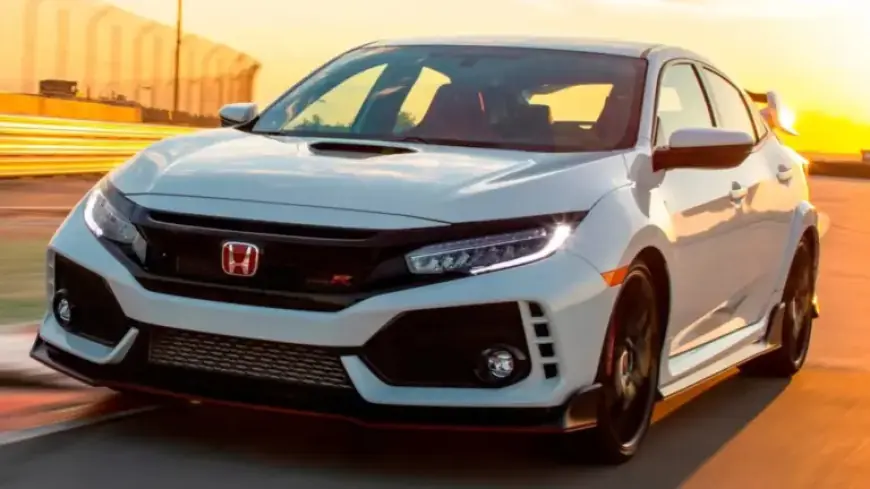
The Honda K20 and K24 engines have become staples in the automotive world, powering popular Honda and Acura vehicles like the Accord, Civic, Integra, and RSX. These engines are also frequently found in non-Honda models, demonstrating their versatility and reliability. Due to their robust aftermarket support, K-series swaps are highly sought after, rivaling the popularity of Chevy LS swaps among enthusiasts.
Honda K20 vs K24 Engines: Key Differences Explained
The K20 engine, a 2.0-liter inline-four, made its debut in 2001. It was followed in the next model year by the K24 engine, which features a larger displacement of 2.4 liters. This increase in size comes from modifications to the bore and stroke: the K24 has an 87-millimeter bore and a 99-millimeter stroke, compared to the K20’s bore of 86 millimeters and stroke of 86 millimeters. This change necessitated a taller cylinder, increasing the deck height from 8.3 inches in the K20 to 9.1 inches in the K24.
Despite its larger size, the K24 only weighs about nine pounds more than the K20, with the K20’s weight at 403 pounds. This all-aluminum construction contributes to the lightweight physicality of both engines.
Power Output Comparison
- K20 Variants: The K20 offers several versions, including the K20A, K20A2, and K20Z1, producing a baseline of 156 horsepower. The most powerful is the turbocharged K20C1, delivering an impressive 316 horsepower and 295 pound-feet of torque from the 2017 Honda Civic Type R.
- K24 Variants: K24 models range from 160 horsepower to the potent K24W7, found in the 2015-2020 Acura TLX, which produces 206 horsepower and 182 pound-feet of torque.
Performance Upgrades
Enthusiasts have reported incredible power potential from both engines. The K20 can be built to exceed 1,000 horsepower using stock components and nearly 1,400 horsepower with enhancements. The K24, when equipped with a turbocharger and upgraded components, can reach around 500 horsepower and, in extreme builds, even 1,600 horsepower.
This capability to harness such power has led to a surge in engine swaps, with the K24 being popular in various vehicles, including a notable K24-powered Ferrari and Mazda Miatas. Its adaptability makes it a prime candidate for enhancing performance in a wide range of applications.
In summary, understanding the differences between the Honda K20 and K24 engines is crucial for anyone looking to boost their vehicle’s performance. Both engines offer unique advantages that cater to diverse automotive needs, whether it’s a simple upgrade or a full engine swap.