
























Winter Olympics 2026 snowboarding: Men’s Big Air gold sets the tone in Livigno

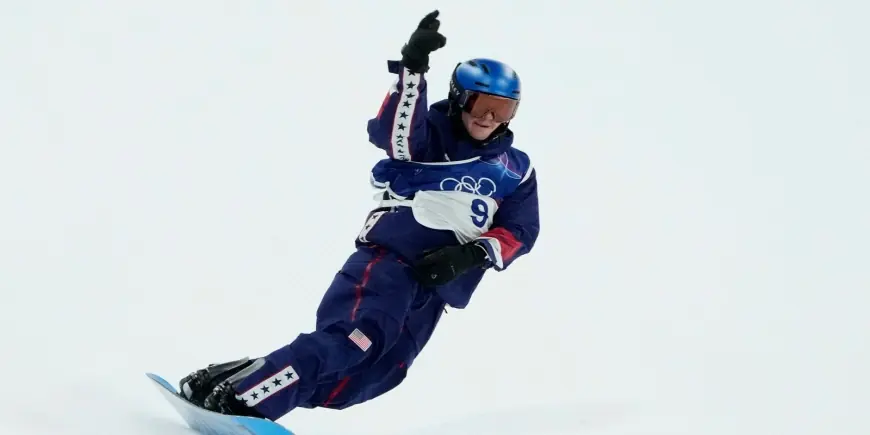
Snowboarding at the 2026 Winter Olympics is already delivering the sport’s signature mix of risk and spectacle, with floodlit Big Air in Livigno producing a podium swing that immediately reset expectations. Saturday’s men’s Big Air final ended with a Japan 1–2 and a tight bronze fight, underscoring how thin the margins are when medals hinge on two landed tricks and one moment of courage.
With parallel giant slalom up next on Sunday and halfpipe and snowboard cross looming later in the week, the snowboarding program is moving quickly from highlight jumps to a broader test of speed, tactics, and consistency.
Men’s Big Air crowns a new champion
The men’s Big Air final on Saturday, Feb. 7 (ET) belonged to Kira Kimura, who secured gold with a combined score of 179.50 across his two best jumps. Fellow Japanese rider Ryoma Kimata took silver on 171.50, while China’s Su Yiming claimed bronze with 168.50.
Big Air scoring rewards the best two jumps, which creates a unique kind of pressure: a fall can be survivable, but only if an athlete can respond with a clean, high-difficulty landing on the remaining run. That dynamic played out in the medals order, as riders chased high-rotation spins with switch takeoffs while managing speed, wind, and landing angle under lights.
What’s next: key snowboarding medal events
Livigno Snow Park is hosting the full snowboarding slate, with medal days clustered so fans can track the program without long gaps. Times below are listed in ET and are approximate for start windows.
| Event | Date (ET) | Approx. start (ET) |
|---|---|---|
| Women’s & Men’s Parallel Giant Slalom (Finals) | Sun, Feb. 8 | 3:30 AM |
| Women’s Big Air (Qualification) | Sun, Feb. 8 | 1:30 PM |
| Women’s Big Air (Final) | Mon, Feb. 9 | 1:30 PM |
| Women’s & Men’s Halfpipe (Finals) | Wed, Feb. 11 | 4:30 AM |
| Men’s Snowboard Cross (Final) | Thu, Feb. 12 | 4:00 AM |
| Women’s & Men’s Slopestyle (Qualification) | Mon, Feb. 16 | 4:30 AM |
Big Air runs in the evening locally, which is why it lands in the early afternoon in ET. Parallel giant slalom is the opposite: a morning local start means a very early ET window.
How Livigno is shaping the competition
Livigno’s setup has made Big Air feel like a true stadium event, with a towering jump and nighttime conditions that can change rapidly. Riders have praised the scale, but the same size that creates jaw-dropping amplitude also increases the cost of a small mistake: under-rotations and off-axis landings get punished immediately.
For the rest of the snowboarding program, the course and venue rhythm matter in different ways. Parallel giant slalom is about precision and timing, with athletes racing side-by-side where a tiny edge catch can end a run. Halfpipe is a repeatability test—stringing multiple hits cleanly under pressure—while snowboard cross brings traffic, contact risk, and chaotic race reads into the medal equation.
Stars and storylines to watch
The early men’s Big Air result also hints at what could come in slopestyle. Big Air medalists often carry momentum into slopestyle, but the disciplines reward different instincts: Big Air is two tricks at maximum difficulty, while slopestyle adds rails, varied features, and run-building strategy.
On the women’s side, Big Air typically becomes a battle between riders who can land elite spins reliably and those who can raise difficulty without sacrificing control. With qualification and finals split across two days, the storyline often becomes who shows the cleanest landings first—and who saves the biggest trick for the moment it’s needed.
Meanwhile, halfpipe is waiting in the wings as the sport’s marquee “streak-breaker.” It’s common for an athlete who misses out in Big Air or slopestyle to rebound in pipe, where amplitude, execution, and flow can reshape the entire narrative of a Games.
The bigger picture: why snowboarding’s early medals matter
Snowboarding tends to set the tone for the Winter Games’ youth-driven energy, and early medals can ripple across teams’ confidence and media focus. A gold in the opening week can change how a federation deploys athletes, how risk is managed, and which riders get the psychological edge when slopestyle and halfpipe arrive.
The takeaway from the first Big Air final is simple: the podium is wide open across events, and the athletes willing to take calculated risks—while still landing clean—are going to define the snowboarding story in Milano-Cortina.
Sources consulted: International Ski and Snowboard Federation, International Olympic Committee, Reuters, Wikipedia