
























Olympic figure skating schedule: Chock and Bates lead Team USA into ice dance week

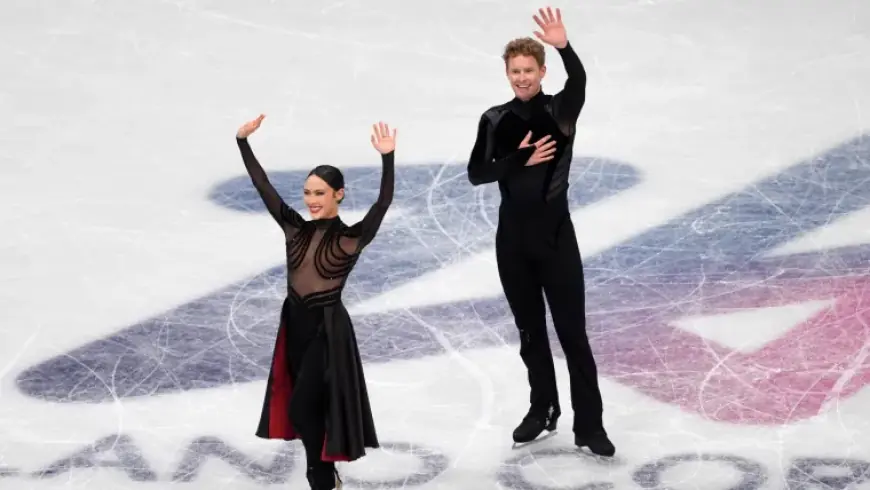
The Milano–Cortina Olympics 2026 figure skating program is shifting from the team event into the headline individual competitions, with ice dancing set to take center stage as Madison Chock and Evan Bates chase a long-awaited Olympic title. The next few days are pivotal: the team medals are decided on Sunday, then the ice dancing Olympics schedule begins Monday with the rhythm dance and continues Wednesday with the free dance.
For fans searching the olympic schedule 2026 and the olympic figure skating schedule specifically, the key is timing: most sessions in Milan land in early-to-mid afternoon in Eastern Time, with medal outcomes determined quickly in a compressed format.
Where the figure skating team event stands
After two days of action, the U.S. figure skating team is in front on 44 points, with Japan on 39, Italy on 37, Canada on 35, and Georgia on 32. Chock and Bates delivered one of the meet’s defining performances in the ice dance free dance portion of the team event, putting the Americans in position to control their path to gold.
Italy’s push has also become a story of home-ice momentum. Daniel Grassl skated the men’s short program for the hosts as they held third place, keeping Italy in the medal hunt heading into Sunday’s final segments.
Ice dancing Olympics 2026: Chock and Bates vs the field
Chock and bates enter the individual ice dance competition as a top favorite, with their style built around speed, precision, and high-drama choreography. Evan Bates and Madison Chock have been among the most consistent US ice dancers of their era, and their Olympic ambitions are now aligned with a schedule that offers little room for error: one rhythm dance, one free dance, and medals.
The rivalry picture is also sharper than in many recent cycles, with multiple teams capable of landing within a point or two if levels, twizzles, and step sequences swing on review. In this setting, execution and element calls matter as much as crowd-pleasing moments.
Olympic figure skating schedule: key sessions (ET)
Times below are listed in Eastern Time (ET) for the most-followed sessions over the next several days.
| Event | Date | Start time (ET) |
|---|---|---|
| Team event — pairs free skate | Sun., Feb. 8 | 1:30 p.m. |
| Team event — women’s free skate | Sun., Feb. 8 | 2:45 p.m. |
| Team event — men’s free skate | Sun., Feb. 8 | 3:55 p.m. |
| Ice dance — rhythm dance | Mon., Feb. 9 | 1:20 p.m. |
| Ice dance — free dance | Wed., Feb. 11 | 1:30 p.m. |
This is the stretch when “figure skating olympics 2026” searches typically spike, because team medals, ice dance standings, and individual qualification storylines overlap in a tight window.
Team Canada hockey roster interest rises as skating draws headlines
Even with figure skating dominating early buzz, “team canada hockey roster” and “canada mens hockey” searches have surged alongside “mens olympic hockey start,” a reminder that the Games calendar is now in full multi-sport mode. Men’s hockey begins later in the week, and the overlap matters for attention: ice dance medals will be decided just as the first men’s hockey games begin pulling viewers into a daily schedule rhythm.
The result is a real-time Olympics 2026 viewing challenge: skating sessions are landing in the afternoon ET, while hockey games often stack into morning and daytime blocks for North America.
What to watch next: pressure points and medal math
The immediate Sunday story is whether Team USA can close out the team event from the front, and whether Italy can turn home energy into a podium finish with Grassl and the remaining disciplines. Once that wraps, the focus shifts fully to ice dance, where small technical details can decide everything:
-
element levels and mid-program reviews in the rhythm dance
-
twizzle accuracy and timing under fatigue in the free dance
-
how judges reward speed and cleanliness versus theatricality and risk
For Chock and Bates, the mission is straightforward but demanding: translate their peak form into two clean programs on back-to-back pressure days, then let the scoring take care of itself.
Sources consulted: Olympics; International Skating Union; U.S. Figure Skating; Reuters