






















Billie Eilish’s Grammys moment drives fresh backlash, support, and renewed spotlight

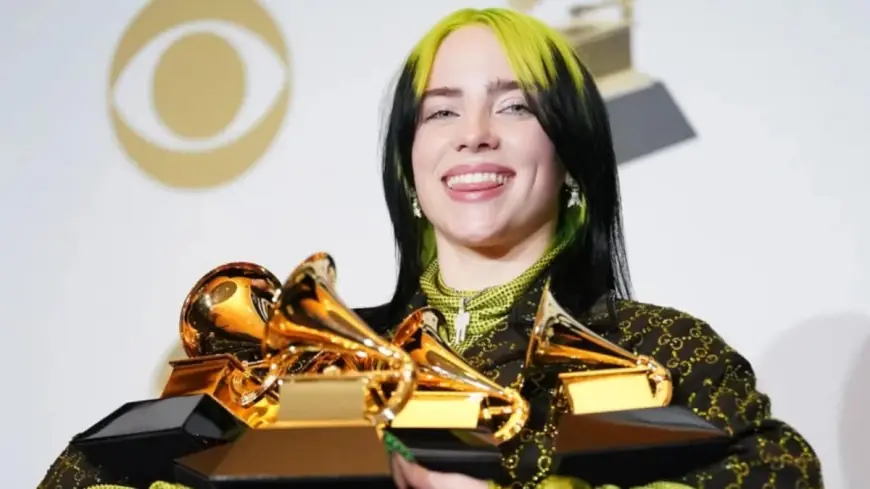
Billie Eilish’s latest headline isn’t about a surprise release or a tour extension. It’s about what she said onstage—after winning one of the night’s biggest awards—and how quickly that moment ricocheted into politics, online pile-ons, and a high-profile defense from her closest collaborator.
On Sunday, February 1, 2026 (ET), Eilish won Song of the Year for “Wildflower.” In her acceptance remarks, she used the spotlight to speak about immigration and protest in the U.S., including a pointed line directed at Immigration and Customs Enforcement. The speech triggered immediate praise from supporters and sharp criticism from opponents, turning her win into a broader cultural flashpoint that has continued through this week.
The win: “Wildflower” takes Song of the Year
Eilish’s Song of the Year win for “Wildflower” adds another major trophy to a career already defined by awards success at a young age. The category is one of the Grammys’ most watched because it recognizes songwriting, and it often becomes a shorthand for what the industry is elevating at that moment.
The acceptance itself, though, quickly became the larger story. The win set the stage for a speech that leaned less into gratitude and more into urgency—an approach that reliably creates split reactions, especially in a politically charged climate.
The speech: immigration, protest, and a line that drew heat
In her remarks, Eilish spoke about immigrants in the U.S. and framed her message as a call to keep speaking up and protesting. The most contentious portion was her blunt condemnation of ICE, delivered in a way that left little room for misinterpretation.
That directness is part of what made the moment travel so fast: short, easily clipped, and emotionally unambiguous. It also ensured that reactions would polarize immediately. Supporters read it as a rare use of prime-time attention on an issue they see as urgent. Critics framed it as inappropriate for an awards stage or as performative.
The backlash: how the argument shifted beyond the stage
Within days, the conversation broadened into familiar territory for celebrity activism: questions about consistency, lifestyle, and whether public statements translate into meaningful action. Some critics tried to undercut her message by pointing to her wealth and property in Los Angeles, arguing that political statements ring hollow when delivered from a position of privilege.
That critique doesn’t prove hypocrisy on its own; it reflects a recurring pattern in modern pop culture debates. In practice, once a speech becomes a political symbol, the argument stops being about the speech and becomes a proxy fight about the speaker.
For Eilish, the effect is double-edged. It places her at the center of attention—useful for relevance, risky for public perception. It can also distort the original context: many people now know the headline about the speech without having watched the full moment.
Finneas steps in: a personal defense turns pointed
This week, Eilish’s brother and producer, Finneas O’Connell, publicly defended her in a social media post and aimed his rebuttal at prominent critics. His message intensified the news cycle by escalating the tone from “I support my sister” to “I’m calling out who you are.”
That kind of defense does two things at once:
-
It signals that Eilish’s camp is not backing down or walking the speech back.
-
It widens the conflict, inviting further response from the people being criticized and the audiences aligned with them.
It also reinforces an important reality about Eilish’s public life: her art and her activism are deeply linked to the same tight creative circle, which means big cultural moments often become family-and-collaborator moments too.
What this means for her next chapter
Eilish’s recent touring cycle has been intense, and credible public information suggests she is not adding a new full tour slate immediately. That makes the Grammys stage even more significant: it becomes a primary “live” platform for defining her current identity—artist, public figure, or both.
The larger question isn’t whether she will keep speaking. It’s how she balances three pressures that are now colliding at once:
-
Awards momentum that keeps her in the top tier of pop’s attention economy
-
Political scrutiny that turns each comment into a referendum
-
Creative expectations that demand the next musical step, not just the next headline
If she releases new music soon, it will likely be heard through this lens—whether she wants it to be or not. If she stays quieter, the speech may stand as the defining public moment of her early 2026, until the next major appearance resets the narrative.
Sources consulted: Recording Academy (GRAMMY Awards), Reuters, Los Angeles Times, ABC News